by Felicien | Jan 26, 2018 | Education
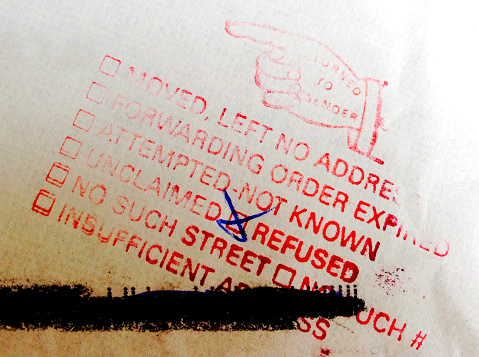
When we consider the security of our business technology, we often think of scams or phishing e-mails. These get easily shrugged off, as we assume no one would fall for e-mails that simply ask for money or state other falsities such as your having won a lottery in which you never participated. If we were to list the actual security threats of the companies, you would be surprised. The #1 data security incident reported in 2017 was misaddressed e-mails. Something as simple as typing too fast, or misspelling a person’s name can have huge repercussions for your business. The scary thing is any employee, at any moment in the workday, could make this terrifying mistake.
Two major issues result from misaddressed e-mails. One is the result of your e-mail being accidentally sent to the wrong person. Now, some person has information that wasn’t meant for them. This could be as small as a secret joke about the boss, or as treacherous as spreadsheets with a department’s payroll information. Either way, this simple mistake could have enormous consequences.
The second major security issue results from a more sinister adversary where something you send is accidentally delivered into their eagerly awaiting hands. This is known as “doppelganger domains,” where websites are similar to legitimate ones. These similar websites are bought for the entire purpose of capturing your misaddressed e-mails. How many misaddressed e-mails could there be that could do damage to the integrity of your business? Research shows in one case using only two researchers, in six months time, they managed to capture 20 gigabytes of information from various Fortune 500 companies.
The e-mails they captured contained various levels of confidentiality that ranged from employee username and passwords, to even legal documents such as contracts or affidavits. The scary thing is that while a company could catch an e-mail and be working on improving their security, it could be all too late. After a hacker has confidential information such as passwords and usernames, or payroll accounts, the business has all but already handed over the reins. Anyone of these items could be dangerous enough to seriously endanger the business, but all together? The outcome could be catastrophic.
If you were on the receiving end of an e-mail that was not meant for you, what should you or your employee do? The New York Times recently answered this question with the following recommendation, ”If the message appears life-threatening or otherwise very important, then you have a moral responsibility to reply back and try to get the e-mail where it was originally headed. If the message is not life-or-death, you can safely ignore it. That approach means you don’t punish people in need, but otherwise, you let Natural Selection do its thing on people who can’t be bothered to check e-mail addresses.”
Knowing the dangers of misaddressed e-mails is only half the battle. What can we do to prevent it and protect the integrity of our business? Basic e-mail policies are key to improve the security of your business. To do this, you should encourage the use of strong passwords, so they can’t be easily guessed or forged. Secondly, you should ask employees to memorize their passwords (rather than write them down, as this poses another security risk). Thirdly, remember to change their e-mail passwords frequently–it is recommended to do so every two months.
Training, in regards to e-mail and internet etiquette, go hand in hand with your business’s e-mail policy. Training should show employees the importance of always remaining vigilant in attempts to catch e-mails that carry malware or phishing attempts. To achieve this objective, employees should avoid opening attachments or click on suspicious links. Secondly, employees should be suspicious of clickbait titles and check their e-mails for names of unknown senders to ensure they are legitimate. Lastly, train employees to look for inconsistencies or style red flags, simple grammar mistakes or excessive or unusual punctuation.
Businesses do have other options in dealing with doppelganger domains. A study done by the University of Cape Coast shows that companies can buy their own doppelganger domains, thereby maintaining the integrity of their business. The research goes on to state that the business should “set it up so that when a message is received, it will automatically send out a failure notification. Awareness of the issue should be raised among employees.” This could capture any e-mails accidentally sent to the wrong address, and thereby maintain the business’s integrity.
After establishing good work policies for e-mails, there are further steps that you can take to ensure the safety of your business’s confidential information. Similar to how Grammarly checks for spelling and grammar issues, you can check for doppelganger domains. CheckRecipient is a next-generation e-mail security technology to prevent highly sensitive information from being sent to the wrong people. CheckRecipient uses artificial intelligence and machine learning to analyze historical e-mail data and automatically identify anomalies and mistakes in outgoing e-mails which may result in inadvertent data loss. Some of the world’s largest organizations rely on CheckRecipient’s technology across the financial, legal, professional services and biotech sectors.
by Felicien | Jan 26, 2018 | Education
Cybercriminals are everywhere. Both domestically and around the world, countless hackers work day in and day out to penetrate the digital defenses of businesses just like yours, using a variety of proven, effective, and ever-evolving methods. Whether they infect your system with malware hidden in a seemingly innocuous email attachment or con an unsuspecting employee out of vital information through social engineering, the end results are the same: data loss, financial damages, lawsuits, reputational damage, bankruptcy, and worse.
Our team of certified system professionals understand how serious the modern threat of cybercrime is to businesses in your industry, which is why we’ve developed this whitepaper as a vital resource to show you how hackers think, what methods they use, and how you can stop them from victimizing your business. Without the right knowledge, tools, and technology to prevent hackers from stealing your information, your business is left prone to a major data breach.
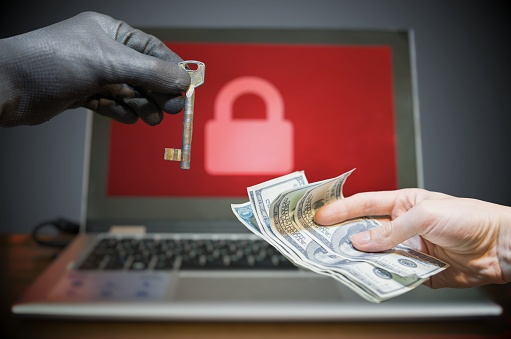
A recently popular type of malware is the “ransomware” variety, which encrypts a victim’s files (making them unreadable) and only offers the key to recover them after a ransom has been paid. The unfortunate reality is that when it comes to your business’ vulnerability to ransomware and other types of malware, it’s not a matter of IF, it’s a matter of WHEN. There are simply too many varieties of ransomware to guarantee total safety for your business.
IT security can be a complicated and scary subject when it comes to modern cybercrime tactics such as ransomware. Most business owners cannot confidently claim that their business’ network is secure. Can you?
When it comes to ransomware, the most important consideration is email security, and often, it can be as simple as ensuring that you and your staff know what to look for.
What makes a victim a victim?
The short answer is lack of awareness. Almost no hacking attempt can be a success without the victim playing at least some role in the process, such as:
Visiting a malware-infected, unsecured website, either via an email, inappropriate browsing habits, or otherwise.
Opening an untrustworthy attachment in an email from a hacker that’s disguised as coming from a sender such as a business contact, employee, client, government agency, etc.
Downloading files that include a stow-away malware program or virus.
Conducting any of the above while logged in with administrator rights provides even greater access to the hacker that’s infecting the system.
The bottom line is that digital security begins and ends with the user. Regardless of how modern, expensive or well-recommended your security software is, one wrong move by a single employee can be all it takes to infect your system. But that’s not the only threat to your security…
Is your technology making you an easy mark?
Outdated, unsecured, and just plain faulty technology is just as likely to make you an ideal target for hackers as an unsuspecting employee is. A major part of the investment in new technology is that it comes prepared to handle all previously identified hacking threats and security loopholes. The older your technology is, the more vulnerable it is to new hacking techniques.
Here are three vital considerations you should keep in mind when evaluating your current technology:
Patch regularly, and patch often: Did you know that the most common way cybercriminals get into a network is through loopholes in popular third-party programs? That means the computer programs you rely on to get work done every day could be leaving you vulnerable to security breaches if you fall behind on updates. That’s why patch management is such a crucial part of proper IT security, in order to help you stay ahead of the non-stop tide of oncoming digital threats.
End of Life (EOL) is FINAL: As good as it is to run a frugal business, it’s important to keep in mind that you’re not a college student trying to make an old, beaten up laptop last until you can afford a new one. You’re running a business, with much more to invest in and much more to lose. When your software reaches EOL, it will no longer receive the vital security patches it needs to keep you safe. At that point, as much as you may like the current operating system, you have to let it go and replace it with the new, secure version.
Legacy technology isn’t worth the risk: Legacy software is often the gap in an otherwise capable suite of digital armor. Your business may have a brand new infrastructure, top-of-the-line security technology, and fresh-out-of-the-box desktops, but in the end, your unpatched, out of date legacy web browser will be what does you in. Just as with EOL, don’t let your favorite bit of technology put you at risk.
What is malware, exactly?
It’s a word you’ve probably heard a lot. You know it’s bad, and that you have software (anti-malware) designed to help you stop it. But in the end, if you don’t really understand how the enemy operates, how can you expect to defeat it?
Malware comes in many different forms and is used by hackers in a number of different ways. It can be used to steal information, locate vulnerabilities in your IT systems for a secondary attack, or simply to cause damage. While cybercriminals continue to innovate new forms of malware and the ways they use it, there are currently three main types that you should be familiar with:
Malicious Scripts: This type attacks when you or a member of your staff visit the wrong web page. With the right conditions (user with admin rights, an outdated browser, lack of anti-malware software), simply loading the wrong web page is enough to infect your system.
Embedded Media: While this form also attacks from a web page, it is through an infected media that is embedded in the site, such as a video or audio file. If your browser media player isn’t up to date (which is extremely common among today’s users), simply playing the media file can lead to a malware infection.
Infected Files: The oldest form of the three is also the simplest. By downloading and running files (media codecs, screensavers, desktop images, etc.) that they haven’t properly inspected ahead of time, or that contain a hidden malicious file, the user openly invites malware into the system.
Types of Ransomware
While there are currently three basic forms of ransomware, cybercrime methodology is constantly evolving. In order to stay effective, hackers work non-stop to find new ways to deploy ransomware; keep in mind that best practices can quickly become outdated.
Locker ransomware: This type works by denying access to the infected device. Generally, the scheme involves posing as a member of law enforcement and claiming that the victim has been a party to illegal activity (copyright infringement, illicit photography or media, etc.).
CryptoLocker ransomware: This type employs powerful encryption to lock down the victim’s files and data, even if the malware is removed It usually makes its way to the user’s device through an email attachment that they are tricked into opening.
Crypjoker: This form emerged as recently as January 2016, specifically targeting Windows operating systems to encrypt and lock down the user’s data. As opposed to CryptoLocker, Crypjoker gets to the victim as a PDF file attached to an email.
How Can You Keep Your Business Safe From Ransomware?
When developing your ransomware defense, keep these recommendations in mind:
Make a considerable investment in a comprehensive backup data recovery solution so that you can restore your data at a moment’s notice when necessary.
Test your backup and cybersecurity measures thoroughly and regularly; create dummy files and then delete them to see how fast they can be restored, or schedule a day to literally unplug your critical systems to find out how long it takes to get online again.
Be sure to make the most of the available resources (both provided online and through expert IT consultants) to ensure that you’re not overlooking vulnerabilities in your IT security methodology.
Employ email filtering, encryption, and continuity solutions to ensure that your lines of communication are secured.
Equip your business with industry-tested security solutions like firewalls, antivirus, antimalware, and network monitors to keep your systems safe from external threats.
Make sure your software and browsers are updated and patched on a regular basis.
Train your employees in best practices for safe browsing and email conduct so that they don’t click the wrong link or download the wrong file.
Seems like a lot, right?
That can be a lot to handle for a business owner like yourself. You have clients to see to, employees to manage, and more on your plate every single day; should you really be expected to also oversee regular maintenance of your cybersecurity all on your own?
Of course not!
The best way to ensure that your business is kept safe is by outsourcing your cybersecurity management to a reliable and experienced Managed Services Provider like our Information Systems experts. For an easily budgeted monthly flat rate, you can enjoy the peace of mind that comes with knowing your business is safe from the whatever modern cybercriminals may throw at it.

by Felicien | Jan 25, 2018 | Education
Law firms once considered themselves to be immune from cyber attacks. However, this is no longer true. In fact, last year alone, cyber attacks against law firms increased. One report estimated that one in four law firms in America had suffered a significant data breach. In the UK, a recent PwC report states that 62 percent of the UK’s law firms were breached by cyber thieves.
In an industry where confidentiality is of utmost importance, many consumers believe that these numbers are unacceptable. Surely there must be a way to stop the increasing number of attacks against law firms. Though many firms are scrambling to get in front of any new attacks, others believe they are not in any real danger.
Attacks against two well-known law firms in New York have resulted in class action lawsuits. Those affected have sued the firms for not providing better protection to their highly confidential information. When you consider how important a law firm’s reputation is, it’s hard to visualize why so many law firms haven’t implemented stronger security measures to date.
Jay Edelson, the founder of Edelson LLC in Chicago, is handling one of these big class action suits. He states: “We’ve been saying for a long time that law firms are major targets.” He believes that “In certain instances, a breach in and of itself can mean the firm violated ethics or acted negligently.”
All experts agree that the threat of cyber breaches won’t just go away. This is something that every business in America must be prepared to deal with. Just last year, data breaches occurred in a long list of retail establishments, medical offices and hospitals, restaurant chains, cellphone carriers and many others. Though the public expects a certain level of protection from places like Verifone and Saks Fifth Avenue, consumers demand greater protection from their attorneys.
As we move forward, will the past repeat itself? Or will businesses across America finally take the necessary precautions to prevent any further data breaches? For those involved in the legal field, greater protection is essential for their business to survive.
Below, we discuss the three most surprising mistakes that law firms make that increase their chances of a data breach.
Mistake Number One
Smaller law firms almost without exception, believe that they won’t become a target of cyber thieves. After all, if a firm only has one or two lawyers, why would anyone want to spend the time and money breaking into their files? The answer is simple: Your attorney has a great deal more personal information about you than a retailer might. Not only do they possess all the standard information such as name, address, phone number and social security number, they also possess confidential data.
Your lawyer probably has personal and business financial information. A law firm often has confidential info about your spouse, children and business partners. They most likely have the contents of private emails that you wouldn’t want to be disclosed to anyone. Cyber thieves can use this information in any number of ways.
One major online threat that has recently increased is Ransomware. In this scam, cyber thieves lock your data records and refuse to release control until you pay the ransom. Even a small law firm would have a difficult time explaining how all their records and files were just published online for the whole world to view. A cyber breach like this might mean the end of your law firm. Your reputation would be ruined. You might have a hard time even getting hired by other law firms.
No matter the size of your law firm, protecting your client’s confidential information is of paramount importance.
Mistake Number Two
The second mistake many law firms make is believing that the standard methods of preventing a cybersecurity attack will be sufficient. In some cases, the firm doesn’t want to spend the money to increase its security. In other cases, attorneys believe that firewalls and antivirus programs are good enough to stop thieves. Standard perimeter security technology such as antivirus software and firewalls are only the first step in preventing attacks. Don’t stop there!
Often, cyber attacks come as a result of an uninformed employee clicking on a link in a bogus email. Just one employee who doesn’t understand what’s at stake can open the door for a full cyber breach. Disgruntled employees have been known to purposely steal documents from the firm before leaving. These are just a few of the growing number of ways cyber thieves can get at your confidential documents and ruin your reputation in the legal world.
All law firms large and small should employ some type of governance technology. This technology allows certain types of information to be viewed only by those in managerial positions. This one step alone could prevent the leakage of critical data. Lower paid employees doing menial tasks have no business with open access to the law firm’s confidential records. All sensitive client information should be partitioned off so that only those with an authentic “need-to-know” have access.
Mistake Number Three
Many companies including law firms, forget about third-party vendors. All those companies you do business with are a potential gateway that cyber thieves can enter through. In one breach, the resumes of people with top security clearances were left unsecured on an Amazon server for months. This can happen if your law firm (or any business) uses a staffing agency. These agencies often have a substantial amount of personal information about past and present employees. How good is their security? In the future, we will all have to ask ourselves these tough questions.
From the company that performs janitorial services to the one you buy office supplies from, you must consider whether they have sufficient cybersecurity programs to protect their files from intrusion.
The Future of Law Firms and Cyber Theft
These cautionary tales remind us of how costly any data breach can be. Consumers expect banks, government agencies, and law firms to be better protected than say, a restaurant chain or a retailer. The customer files a law firm handles might include information about a divorce or a paternity issue. They might have information about adulterous affairs. It’s important to think about the damage that could occur if data like this is made public.
It wasn’t that long ago that we learned about the Sony breach of 2014. This breach revealed a massive amount of information including the salaries of Sony executives, private emails from actors, photos of Sony employees and their families, and much more. This breach was not only extremely embarrassing for Sony, but it was also expensive, and it caused distrust between actors, Sony executives, and other employees. It’s still considered one of the worst corporate data breaches in history. Though it should have been a wake-up call for everyone, many companies, including law firms are still not prepared to deal with cyber breaches.
How to Protect Confidential Data
Remember that firewalls and antivirus programs are only the first steps. Even a small law firm needs the help of security professionals these days. Though it can be expensive, it’s a necessary expense for those who understand what’s at stake. Experts recommend doing your research to make sure you’re dealing with a reputable security company using today’s best technology.
It’s also important to remove older files that no longer need to be online. This should be done on an annual basis. Reduce the data you share with third-party vendors. Share only what is absolutely necessary to them. Never assume that just because you’re spending lots of money on cybersecurity, your measures are effective. It’s a good idea to ask for regular reports from those responsible for providing your law firm’s security. If you don’t have a background in this area, hire someone who does understand the jargon.
Institute a program that effectively monitors the information that employees have on their phones and laptops. In one Texas lawsuit against a law firm, client records were discovered on a laptop in a pawn shop. In another incident, thieves broke into the law firm and stole laptops over the weekend. There is an endless number of ways that cyber thieves can wreak havoc. We must all begin to think about the many ways data can be lost or stolen. We must be more diligent in protecting sensitive documents.

by Felicien | Jan 25, 2018 | Education
With TV shows like Black Mirror captivating audiences around the world, it’s no wonder this addiction to technology is also reflected in the marketplace. This theatrical fiction became true when it revealed the vulnerabilities in technology. The press named them Meltdown and Spectre.
Both Spectre and Meltdown allow attackers to access data. The difference between the two is that Meltdown gives an attacker access to data in programs that only administrators should have access to, and Spectre makes a program reveal data that should have been kept confidential. While both are worrisome, numerous patches for Meltdown have been deployed. Spectre, on the other hand, is a bit more complicated to contain.
Spectre affects modern processors and operating systems, including chipsets from Intel, AMD, and ARM. It also affects other systems such as Android, Chrome, iOS, and MacOS. Therefore, Microsoft advises customers to seek guidance from these respective vendors. News of this broke on January 6th when Google released this comment:
“Variants of this issue are known to affect many modern processors, including certain processors by Intel, AMD, and ARM. For a few Intel and AMD CPU models, we have exploits that work against real software. We reported this issue to Intel, AMD, and ARM on 2017-06-01 [1]. So far, there are three known variants of the issue: Variant 1: bounds check bypass (CVE-2017-5753), Variant 2: branch target injection (CVE-2017-5715), and Variant 3: rogue data cache load (CVE-2017-5754).”
Spectre is responsible for variants 1 and 2 and Meltdown for variant 3.
What devices can Meltdown and Spectre affect? –Workstations, laptops, in-house servers, smartphones, and tablets. While this can be overwhelming, there is good news. Microsoft and other systems like Android, Chrome, iOS, and MacOS have already put updates in place that can effectively protect and secure your devices. The key to keeping your devices safe, after updating, is to continue to monitor and detect for any first-warning signs such as phishing emails or browser-based exploits. Spectre and Meltdown use these as vehicles to obtain your confidential data. If you limit their transport capabilities, you can effectively protect your data.
It’s terrifying enough that this could affect personal devices, but now they are far more dangerous and could possibly enter your home or business via smart-home devices. This year at CES, tech companies, such as LG and Samsung, doubled down on connected platforms built on user data. In one year, we witnessed a jump from 29% to 35.9% in smart-home device use like Alexa and Google Assistant. With this latest threat and deep infiltration of technology, it’s more important than ever for companies to ensure their smart-home platforms and servers are secure. On this note, Google, Amazon, and Microsoft all say they’ve patched their servers against known exploits.
So how do we protect ourselves from these threats? The first step is to the make sure your systems are up to date. Microsoft released several updates to help mitigate these vulnerabilities. They also took action to secure their cloud services. Microsoft says these vulnerabilities haven’t been used to attack customers at this time. They continue to work closely with industry partners including chip makers, hardware OEMs and app vendors to protect customers. It’s recommended that you use available protections, including hardware/firmware and software updates. This includes microcodes from device OEMs, and in some cases updates to antivirus software. In addition to these operating systems updates, look for firmware updates that eliminate the vulnerabilities introduced via Meltdown and Spectre.
Microsoft goes on to say that antivirus updates should be installed first. Then make sure your Windows automatic updates are turned on. (If automatic update is turned on, the updates will be automatically installed.) Also, install hardware (firmware) updates from your PC manufacturer. You may need to proactively check with the device manufacturer for updates. This could require going to a device driver update page on the manufacturer’s website.
While updating helps to secure and protect your data, it has a downside. It’s important to note that you will see a difference in your device’s performance by installing this update. This can be as high as 42 percent but is dependent on the device and its use. For example, an article in PC World states:
“Here’s how much the Meltdown and Spectre fix hurt my Surface Book performance… the sequential read and write performance doesn’t change much…But…4K performance ain’t pretty. While 4K read performance was similar, the write performance dropped by 26 percent. Far worse, though, 4K read and write with high queue depth take a performance hit of 42 percent and 39 percent, respectively. Ouch.”
The age of an Intel chip can impact the effectiveness of the patch. Navin Shenoy from Intel, explains:
“On 8th generation platforms with SSDs it’s small…the expected impact is less than 6 percent.”
Some users have experienced a much more noticeable impact with web applications that rely on JavaScript operations. The good news in all of this is that companies have banded together to fight these common adversaries, e.g., Meltdown, and Spectre. This united front against these bugs has resulted in shared patches. Similar to the U.S. military’s war on terror, companies like Netflix and Amazon have developed a united plan of attack. This collaboration gives researchers the upper hand on Spectre and Meltdown for the first time since this technological chaos began.

by Felicien | Jan 25, 2018 | Education
Do you like to dance?
Dancing is both a science and an art. The waltz is a beautiful and romantic flowing dance, the foxtrot involves intricate alternating fast and slow steps, and the tango is rigid with its pace starting slow and increasing in intensity. Each of these is recognized by their steps and a set pace, and partners must step in sync or the dance results in absolute chaos.
A brand’s presence on Facebook is much like the tango: Your content must follow intricately timed steps that the famous Facebook algorithm uses to decide the fate of your post. This algorithm has the final say in the reach of your content, thus impacting engagement.
The Famous Facebook Algorithm
The Facebook algorithm is nothing new to brands that use Facebook to drive traffic. This algorithm is complex (and a closely-guarded secret formula), and prioritizes posts based on the meaningful interaction and discussion they inspire (or not).
The Social Network was born in 2003 and evolved into TheFacebook.com. TheFacebook was initially only available to students at Harvard but was wildly successful, and the rest is history. Considering that Mark Zuckerberg was a computer science student at Harvard when planning TheFacebook, it makes sense that even 15 years later its algorithmic secrets are enigmatic. More than a student directory, TheFacebook project was an edgy and innovative way to take socialization to new levels, paving the way for person-to-person interactions beyond the walls of a classroom or dormitory hall.
Fast-forward to 2018, and Facebook is still testing boundaries and pushing limits. From its humble beginnings as a student-to-student connection channel to today’s content-filled environment where brands compete with bodies for attention in a user’s Feed, Facebook is still focused on social interactions, but is embracing innovation and changing things up on us – again!
Evolution of the Feed
Facebook users were recently sent a survey, with no incentive to complete other than Facebook’s request to understand how users “feel” about the product. Why is this important? Facebook is a business like any other, right? Wrong. Facebook is a for-profit entity with the idea to facilitate interactions between people and to bring them together. The fundamental foundation of Facebook is people.
Facebook Feeds are increasingly becoming more populated with posts from brands and businesses; even the media deliver news via Facebook. Less personal interactions are taking place, and the overall “feeling” from people about Facebook is becoming largely negative. This is not the perception Facebook wants users to have for long-term success.
The last presidential election is a great example of overwhelming Feeds with more news and branded content than actual social posts from friends and family. Facebook has also been blamed for the demise of friendships and destruction of relationships and marriages, with social profiles being checked for “dirt” by attorneys to use in legal proceedings. Social media has been accused of facilitating cyber-bullying and linked to lowering self-esteem. Efforts to combat negativity have been largely unsuccessful given the very public nature of the channel.
Where did the “bad” begin? Even the algorithm can’t pinpoint the precise moment that Facebook started to take a turn. Around 2013, Facebook eliminated the ability for users to have their privacy settings remain invisible to the public and not appear in searches. The notion was that having a private profile on a social network was counterintuitive – and users couldn’t argue since Facebook is a public website. The change came as an unwelcome shock for many users “flying under the radar,” but as in any situation, users adapted to this latest change from the platform known for shaking things up once or twice a year.
What we know for sure
One thing we know is that change is afoot at Facebook: Zuckerberg & Co. want to get back to basics. That’s not to say much will change for users posting content, but brands are going to feel the difference where it hurts. Facebook is responsible for a vast amount of referral traffic from brands’ organic posts on their individual Facebook Pages.
The algorithm will focus on the quality of content, and prioritize people over public posts, pushing for more person-to-person interaction with a focus on community over profit in post content. Facebook is listening to feedback where users are tired of click-baiting, a practice where teaser headlines get users to click to consume content and are sometimes tricked by misleading headlines.
What does this mean for brands?
The bottom line for brands is to evolve or die. Facebook is envisioning a few key outcomes:
Users – people – will spend less time on Facebook
A decrease in user engagement overall
An increase in sharing of personal posts
More lively discussion among users
None of these are making brands do cartwheels with excitement. Engagement is what drives users – again, people – to be on-platform longer. If people spend less time on Facebook, this means less attention is given to brand content and fewer clicks. This translates into a major impact on referral traffic. It’s also going to force brands to re-think their definition of engagement. How can brands still reach users and connect with them? Brands are going to be forced to adapt and change their social media strategies.
The fascinating part of all of this is that Facebook wants an increase in the sharing of personal posts and more discussion among users. These posts are what drive their ad targeting system—Targeted paid advertisements are the way Facebook wants brands to reach their audience.
The bad news for brands is that ad costs have significantly increased in the last few years, a trend that is likely to continue for a few reasons. Facebook is a wildly popular platform and well aware of its position. Even with user churn, Facebook’s user base continues to grow – there are more new users than those who become inactive or choose to leave – thus establishing solid logic for advertising prices, as well as continually increasing the potential reach for a paid targeted ad.
When a brand uses its Facebook Page to post content, the goal is to be in the Feed of every user. This is, in fact, something Facebook has been scaling back since before 2012. Dancing to the tune of the algorithm has long been a challenge brands must overcome to survive and maintain a Facebook presence. Adversely, Facebook has an eventual goal of Page posts reaching no user Feeds at all. This is rumored to be labeled “Facebook Zero” – where only paid ads and “sponsored content” (paid posts) will target user Feeds.
Did you know that brands can use Facebook Messenger for promotions? They can message their customers directly within the Messenger platform and sidestep the Feed rules. Like email marketing, when deployed strategically, engaging with Facebook users via Messenger can yield impressive results. Brands can also use systems to automate updates sent to subscribers and responses to inquiries – at least for now.
The Exception to the Rules
Over half of Facebook users are members of at least one Facebook Group. The numbers speak for themselves: The number of Facebook users hovers around 2 billion, and Facebook Groups have a user base of more than 1 billion active users every month. There are more than 100 million users in Groups considered “meaningful,” in that the discussions are deemed informative, insightful, and intellectual – and users find them very helpful.
Did you know that the total count of users who are members of Facebook Groups outnumber Instagram and Snapchat total subscribers combined?
Zuckerberg & Co. believe Groups are underestimated and underappreciated. There is value hidden within Facebook Groups. In 2017 Facebook hosted a Communities Summit that was free for U.S.-based Group members, with Facebook covering the hotel and food tab for attendees.
What is the benefit for brands? To be heard through the noise on Facebook, a brand is going to need to get (even more) creative. A brand can create a Group through their Page, and follow a few tips and best practices to successfully incorporate Groups into their overall strategy:
Don’t confuse brand “sales” with Facebook’s “Buy and Sell” when choosing a Group Goal; “Buy and Sell” is widely used for garage sale-type Groups.
Choosing a “Closed” Group setting as a privacy option helps create the feeling of exclusivity for users.
Be careful not to be too detached in choosing your cover photo; a cold photo expressly aimed at generating a profit isn’t going to send the right message.
Invite members through Messenger with a personalized message. This is still an element you can automate, but remember to convey the value a member can find within the Group
Active Group discussions are key drivers of “free” post visibility. Above, we learned Facebook wants to focus on lively discussions among users. Carefully crafted posts in Groups for targeted, engaged members will yield incredible reach, all while playing Facebook’s game!
Time to Tango
For users, in a perfect world, they would see funny memes and videos of cats and updates from friends and family. Facebook maintains that memes and videos don’t offer the satisfaction and fulfillment that user interaction holds —And since they control the algorithm, they’re leading this tango. Brands that choose to dance need to stay in step, or they’ll be forced to sit the next one out.