
by Felicien | Nov 5, 2018 | Education
Today people are busier than ever. Whether you are overloaded at work or have mounting commitments away from the office, facing a long list of to-dos can quickly overwhelm even the most productive person. Luckily there is a way to get things done when the number of tasks you need to complete seems never-ending. The next time you begin to feel anxious about how much you need to get accomplished, try a few of these simple tricks to keep up your spirit and conquer your anxiety of a full schedule.
Ways to Become More Productive
Write a daily agenda. Even if you keep a monthly calendar or a weekly planner, invest 5 or ten minutes in the morning to physically write the day’s plan. Throughout the day, after finishing a task from your list, cross it off. Many people find that it is more effective and satisfying to create your daily agenda with a pen and paper, but you may prefer using your computer or phone.
Prioritize the tasks and your time. Everything is essential, but not everything is equally important. Separate your daily agenda tasks into different categories based on how essential they are for you to complete by the end of the day. Some tasks may have a real deadline, such as enrolling your child in school or paying a bill, while others may have an artificial deadline like finishing a book or going to the gym. Tackle the tasks with real deadlines first, and only when they are completed, move start working on assignments with artificial deadlines.
Break longer projects into smaller tasks which are easier to complete. Sometimes just thinking about the enormity of a project is enough to stop you from starting it. When you are facing such a task, try to break it down into chunks which you can tackle more easily. Ideally, you can break the longer projects into daily or weekly tasks, or even into smaller mini-tasks which you can complete in under 30 minutes.
Work in quick sprints, not marathon sessions. Since the vast majority of people do their best work in short bursts of time, don’t force yourself to concentrate for more than an hour or so at once. Working in this manner highlights the benefit of creating mini-tasks can help your productivity. Set a timer between 30 to 60 minutes, and work without interruption on one or two mini-tasks. When the timer goes off, take a quick break to refresh yourself. You will be amazed at how many mini-tasks you can through during the day.
Focus on the task at hand. Smaller tasks and shorter work sessions mean that it should be easier for you to focus all of your energy on the job at hand. Give your undivided attention to what you are doing. That means eliminate distractions including as a messy desk, chatting with co-workers, browsing online or chatting on your phone. If you can, try to clear from your head any thoughts which are not directly related to the task. In the beginning, this may seem impossible, but over time it gets easier.
Create rewards and consequences. Some people are motivated by carrots, while others by sticks. Discover which type of motivation factor works best for you and use it to your advantage. If you are someone who works better when you know a treat is waiting for you at the end, use your break between work sessions to reward yourself with something you want, a cookie or checking social media. If you are the type of person, who needs a good scare to get you to finish things, design a penalty for not completing a task like giving ten bucks to your office mate.
Be realistic when it comes to your expectations. Face it. Things are not always going to go as you plan. Deadlines get moved up; people get sick; appointments are missed — life happens. When the unexpected occurs, what makes the difference between a smooth recovery and huge issue is your ability to recover and make the changes necessary on-the-fly. Learning to adapt when things don’t go smoothly is critical for staying productive while busy. So never overpromise results and always give yourself enough extra time in case of a disruption.
Be kind to yourself. Whatever you do, don’t wind up pushing yourself too hard physically or emotionally. Control your stress levels, take care of your needs, and always remember there is still tomorrow.
Staying productive no matter is a skill even the most talented businesspeople isn’t born knowing is, but the tips above can help.

by Felicien | Nov 5, 2018 | Education
Phone systems might not be the most exciting entity, but they are a necessity for almost every business. Unfortunately, many business owners have dealt with phone system failures and the inevitable fallout that occurs when a major line of communications is down. With this in mind, Voice over Internet Protocol (VoIP) offers a new alternative phone system that is designed to replace traditional business communication platforms.
What Is VoIP?
It’s important to note that VoIP is a service, not a brand. This uniquely designed telecom solution delivers the dynamic communications that fast-paced businesses need to thrive. Through VoIP, businesses can send and receive calls digitally; they can also enjoy the cost savings, enhanced productivity, and flexibility that VoIP offers over traditional telecommunications solutions. In this vein, VoIP is built to leverage the high-speed power and reliability of the Internet to help businesses remain agile, focused, and available on a 24/7 basis.
The Top 3 Benefits Of VoIP
VoIP offers many of the same features that are found in traditional systems. However, unlike traditional systems, VoIP does offer several key benefits.
Voicemail To Email. — A modern VoIP system can easily transcribe voicemails before sending them via an email to the designated recipient. In an age where business operators are constantly on the go, reading a voicemail can not only save time, but it can ensure that all of the vital message details are already recorded in an easy to view, comprehend, save, and share format. This unique feature also allows users to check their voicemails online, which is especially convenient for any business associates that work remotely or are constantly traveling.
Call Routing And Conference Calls. — VoIP is designed to easily complete call routing tasks. At its core, call routing refers to a telecom’s ability to distribute incoming calls to certain personnel based on a number of factors, including a caller’s language preference, the time of day, the requesting department, or the extension number. In addition, to call routing, VoIP can be used to host conference calls. In fact, the days of hassle-free virtual meetings are here thanks to the simplicity of most VoIP solutions. Whether business owners want to host video conferencing meetings, manage the number of call attendees, share computer screens, record calls, or share documents, VoIP has the capabilities needed to transform the traditional conference call into something that is far more robust.
Remote Management. One of VoIP’s top features is that the entire system can be managed remotely. This feature is especially beneficial for small businesses who do not have the internal IT team needed to manage a robust telecom solution. Outsourcing the VoIP phone system management can deliver cost savings, while also increasing productivity, streamlining services, and ensuring that only a single internal VoIP administrator is needed to perform any updates or make changes to the system.
How Does Your Business Switch To VoIP Solutions? Migrating from a traditional phone system to a VoIP system is typically a straightforward process, especially when working with a proven VoIP solutions provider. With this in mind, there are two key factors that you will need to assess before you can migrate to a VoIP solution. These factors are bandwidth and SIP
Understanding Bandwidth Requirements. — Bandwidth typically refers to the Internet connection that you receive from your Internet Service Provider (ISP). In layman’s terms, the bandwidth refers to the amount and speed with which your business is able to conduct Internet-based actions, such as uploading or downloading files, streaming videos, emailing, etc. In order for a VoIP phone system to function properly, you must have enough bandwidth available. The correct amount of bandwidth will ensure that you can conduct all of your daily Internet functions and make Internet-based calls that are high quality and delay free. Since bandwidth requirements will vary depending on the VoIP system, it is important that you speak with your VoIP solutions provider to determine if you have the bandwidth required to enjoy a VoIP solution.
Understanding SIP Requirements. — Once you have determined that you have the bandwidth needed to support your new VoIP solution, you will need to consider Session Initiation Protocol (SIP). SIP ensures that the physical telephones used by you and your employees will be able to make the calls as you expected regardless of whether they are connected to a traditional landline or a VoIP system. Your selected VoIP solutions provider will provide you with the recommendations needed to implement a SIP network, as well as the guidelines needed to asses your phones and any other associated hardware.
Once you have assessed the bandwidth and SIP requirements, you and your VoIP solutions provider will be able to easily transition your business from a traditional phone system to the modern VoIP telecom solution.
The Bottom Line: It’s Easy And Effective To Switch To VoIP
Switching to a VoIP solution is about more than simply upgrading your business communications system. Instead, VoIP is designed to help you meet your business communication requirements and increase ROI, while simultaneously providing the flexibility and scalability that you need to continue to grow. At its core, VoIP phone systems are the efficient, fast, and reliable solutions that businesses need to succeed in today’s fast-paced and digitally driven world.

by Felicien | Nov 5, 2018 | Education
At a special event in October 2018, Apple unveiled two new versions of two of its IPad Pro tablet, a new MacBook Air and an updated Mac Mini.
For Australian businesses, Apple’s latest product innovations provide additional options for providing employees with the tools they need to be more efficient, productive and profitable. Here’s a closer look at the announced technology enhancements.
IPad Pros
Enhancements to the company’s premium tablets have been rumoured for months. The new versions bring over some recent features of the newest iPhones, including an edge-to-edge display and FaceID authentication.
The newest iPad Pros come in two sizes — an 11-inch model and a 12.9-inch model. The models feature a range of storage options, from 64 GB to 1 TB. Here are some other specifications and features:
Design. The new models are slightly thinner — 5.9 mm thick — than previous versions. The bezels aren’t as small as those on the latest iPhones. The design changes mean one radical departure — elimination of the Home button, meaning TouchID may be on its last legs across all of Apple’s newer mobile devices. There also isn’t the notch found on new iPhones, allowing for use of Apple’s True Depth camera functions, including a proximity sensor, ambient light sensor, front-facing camera, and dot projector that fuel the FaceID tech.
Technology. These iPad Pros use Apple’s Bionic SoC, giving users a 90 percent multi-core and 35 percent single-core performance edge over 2017’s models. Charging has also changed from the Lightning port to a USB-C for the first time among iPads and iPhones. The USB-C lets users charge an iPhone from the iPad and connect cameras and displays. There’s also no headphone jack.
Other Features. What else is included in the new iPad Pros? Here are a few other key features:
Gigabit LTE and eSIM capability
Bluetooth 5 support
Four-speaker audio with tweeters and woofers
12-megapixel camera that shoots 60 frames per second at 4K
Availability and Pricing. The latest iPad Pros are available as of 7 November 2018. The 11-inch model will start at $1229 and $1529 for the 12.9-inch model. Those base models include wireless access only and 64 GB of storage. Additional connectivity and storage are extra.
MacBook Air
This device has long been in need of an upgrade and the newest model delivers more speed … and a higher price tag. The MacBook Air has been a popular option for those users looking for a lower price and lighter design.
The resolution on the latest model is nearly twice that of its predecessor, with a 33.25-cm display at 2560×1600 pixels. Here’s a look at some of the other enhancements to the MacBook Air.
Design. The latest model includes a Force Touch trackpad that’s 20 percent larger than earlier Airs. The keyboard has also been redesigned. Apple has also moved beyond offering its standard silver color option by adding gold and space gray selections.
Technology. There are two memory options — 8 GB or 16 GM. The MacBook Air comes with a Core i5 processor (8th generation) at 1.6 Ghz. This version removes the SD card reader and USB-A ports. Instead, there are two Thunderbolt 3 USB-C ports. This feature allows users to work with external graphics processors and hubs that allow the Air to be converted into a desktop machine if necessary (though dongles likely will be needed).
Availability and Pricing. The MacBook Air is available as of 7 November 2018. The starting price is $1849, compared to $1499 for the older model.
Mac Mini
Apple last updated the small desktop computer four years ago. This workhorse has several processor options from Core i3 to Core i7 and includes up to 64 GB of memory. It features several ports, including HDMI 2.0, two USB-3, four Thunderbolt 3 and a headphone jack. For an additional fee, a 10-GB Ethernet port is available.
Improved performance is evident throughout the new Mac Mini. The base model may still be 8 GM of memory but that memory works faster. Better cooling capabilities allow the machine to run at a 70 percent greater maximum sustained power level. It starts at $1249 for a 3.8-Ghz i3 processor, 8 GB of memory and 129 GB of storage. A model with the turbo-boosted processor starts at $1699. Like the other new products, it’s available 7 November 2018.
Apple continues to provide businesses with new and innovative products that enhance productivity and operability that can be a differentiator, leading to better business outcomes.

by Felicien | Nov 2, 2018 | Education
As a business owner, executive or manager, you may use a lawyer for many different reasons. You may need a lawyer to look over your business contracts, to help when you buy or sell a business, to help you with any tax issues that may arise or to help with any personal injury lawsuits that may arise within your business. Friday, November 2, 2018, is Love Your Lawyer Day. This is a day that is set aside to honor lawyers and all that they do for individuals and businesses. On this special day, you may be looking to celebrate your lawyer, but you may not be sure how. Here are a few of the different ways you can recognize and celebrate your attorney on Love Your Lawyer Day.
Give Them a Phone Call
One of the simplest ways that you can celebrate Love Your Lawyer Day is by giving your lawyer a phone call on this day. The phone call does not have to be long and the conversation does not have to be in depth. Simply let them know that you appreciate the work that they are doing for you and you are grateful for the services they provide. A simple compliment and nice words can go a long way in brightening someone’s day and making them feel appreciated.
Send Them a Card
If you do not like to talk on the phone or you want to send something to your lawyer, you can send them a card. A thank you card or other similar note that lets them know that you are thankful for their hard work has the same impact as a phone call that praises them. If you want to do something a bit more than a card, you can always include a gift card to their favorite coffee shop or restaurant, or you can send flowers along with the card.
Post a Positive Review Online
Online reviews are important to businesses. When someone is seeking out a lawyer, they may do a Google search to see feedback on an attorney or law firm. You can help the lawyer who helps you by leaving a positive online review for the attorney this Love Your Lawyer Day. Unless we are mad or upset, many of us do not leave online reviews. Take the time to let other people know just how wonderful your attorney is and all of the positive things they do for your business.
Order Something for Their Business
Another gesture you can make when you are looking to celebrate Love Your Lawyer Day is to order something for their business. Have you ever spent time with your lawyer and noticed that they don’t have something that could help them get a little more organized? Or have they complained that they recently lost or misplaced something? It can be as simple as a business card holder or a Bluetooth speaker for their work desk. Personalized gifts that you put thought into are always appreciated.
Have Lunch Delivered
Speaking of items that are always appreciated, the last way you can celebrate Love Your Lawyer Day is by having lunch delivered to your lawyer. Who doesn’t love food being delivered right to their desk? If you know what kind of food your lawyer enjoys, consider ordering them a meal and having it delivered. Give them a heads up that you have a treat arriving and at what time to make sure they will be in the office though before you place the order.
This Friday, November 2, 2018 is Love Your Lawyer Day. This is the perfect day to recognize all of the hard work that your lawyer is doing for you or your business. There are many way you can recognize your lawyer, including giving them a phone call, sending a card, posting a positive review online, ordering something for their business or having lunch delivered. No matter how big or small, take the time to recognize your lawyer and let them know how appreciated they are this Love Your Lawyer Day.
by Felicien | Nov 1, 2018 | Education
Creating a comprehensive business plan is an important step for any blossoming business. Whether you’re hoping to attract new investors or qualify for a bank loan, you’ll likely need to present a documented plan to help clarify the ins and outs of your business for interested parties.
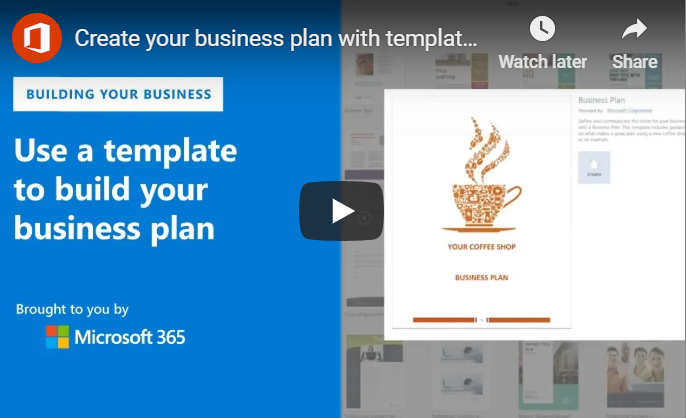
In a bid to woo the business crowd, Microsoft Word has developed a way to make the process of compiling a business proposal easier than ever. Microsoft Office offers more than a dozen business and marketing plan templates to help you create a coordinated, professional looking business plan with the potential to impress investors and other stakeholders.
If you’re using an older version of Word, you may need to visit the Microsoft website and download your business plan template from there.
But before you can begin compiling your business plan, you’ll need to sort out three important details about your business:
What are your expenses?
Do you have enough start-up capital?
What are your sales projections during your first year?
Answering these can be one of the most difficult parts of writing a business plan, but doing so is necessary to ensure your business has the potential to sustain itself. Determining a clear, concise game plan for how your business will be run can set the tone for success early on.
Every business is unique with regard to tone and style. Because of this, the program comes equipped with a variety of templates to choose from. Once you’ve got a clear picture of what your business is, where it is and where you’d like it to go, you can then begin to develop a solid strategy to help your plans come to fruition.
Choose A Template
First, you’ll need to begin a new Word document. You can use the suggested search options to find your desired template. The template will contain step-by-step instructions to help you build your plan.
While all business plans are unique in their content, they should still follow the same formula in order to cover all the bases of your business.
An effective business plan will contain key highlights such as your business concept, market summary, competition, goals, opportunities, financial plans and others.
Compile An Executive Summary
Every legitimate business plan will contain an executive summary that paints a clear picture of your business. This will contain the “meat and potatoes” of your idea, meaning it’s where you will offer details about what you do, your goals, your mission statement and how you plan to become a success. This is likely the first section your potential investors will see, and therefore, it’s important to invest time in accurately capturing your idea so you can organize it properly.
Describe Your Business
This is where you will begin to explain crucial details of your business. You’ll be asked to describe your company’s ownership, your location, products and services and hours of operation, among other things. Here you will also go in-depth about how you plan to carry out your goals, including listing your suppliers, services, manufacturing and financial management.
Lay Out Your Marketing
Marketing is an important aspect of any business, regardless of industry. It’s a topic all business owners must consider, and it can be of great use when included within a business plan. It can help determine how much of your funds should be allocated for attracting new business.
Just like rent, payroll and materials are all large factors for a new business, marketing is one area that requires due diligence. A thorough business plan may contain things like market analysis, reports on market segmentation, competition and pricing. These are all key to understanding how well your business will do within your industry.
Address Financials In The Appendix
The last section of your business plan will be the appendix. Your business plan’s appendix will contain further details about the finances surrounding your operations. You’ll need to list things like your start-up expenses, for instance. How much will it take to launch your business off the ground? Cash flow and income projections are also vital for your business plan, as are other items like balance sheets and sales forecasts. You may even include things like tax returns in this section.
Sharing Your Business Plan
Once you’re done, share the file with your team via OneDrive. This will ensure your team members are able to view and make edits as needed. With Microsoft, team members can even see each other’s changes in real time.
If you are using Microsoft Team for communication, you can create a file folder and share your business plan there. This allows for a focused discussion about changes that may be needed, even if part of your team is working remotely. It’s important to gather the insight of those who know your business best, which can help your plan convey the most significant aspects of your business.
Owning a company is hard, and creating an all-inclusive business plan is one of the many difficult tasks business owners are faced with. Microsoft Word is only one of the many tools at your disposal to create a business plan that paves the way for success.