by Felicien | Dec 6, 2018 | Education
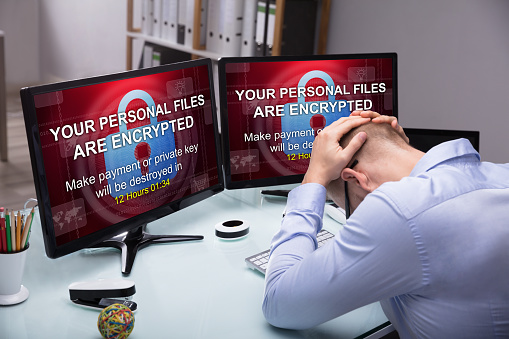
SamSam Ransomware is becoming a massive problem for multiple industries across the United States. In fact, the problem is so big that The Department of Homeland Security, (DHS), National Cybersecurity and Communications Integration Center, (NCCIC), and the Federal Bureau of Investigation, (FBI), have all recently issued a US-CERT alert due to the SamSam ransomware. Like other types of ransomware, files and networks are infected. In exchange for uninfected the system, hackers want a ransom, that typically costs thousands upon thousands of dollars. Every company that runs a network needs to be aware of SamSam ransomware. Here is what you need to know about this topic.
What is SamSam Ransomware?
SamSam ransomware is a type of ransomware that is designed to exploit Windows servers to gain access to your network. Once it is in the network, it uses the JexBoss Exploit Kit to access your JBoss applications. This type of ransomware is also able to use Remote Desktop Protocol to access your network. The virus is difficult to detect, due to the path it takes to access your system. Once the virus has made its way inside, hackers are able to get administrators rights, putting their malware on your server and basically hijacking your network. They do not release their hold on their network until you pay them the ransom they are asking.
What Can You Do to Decrease Your Chances of Getting SamSam Ransomware?
It is extremely important that you take the correct precautions to decrease your chances of getting infected with SamSam ransomware.
One of the steps you can take is to enable strong passwords and an account lockout policy. If you have strong passwords and a good lockout policy in place, it makes it much harder for the software to hack into your system and infect it. Enabling multi-factor authentication can also help. Before any new software can be installed, before software can be wiped or before changes can be made to your network, authentication is needed. The more authentication levels you have, the harder it will be for any ransomware to infect your system.
Unfortunately, while you can decrease your chances of getting infected with SamSam ransomware, there is no way to prevent infection altogether. As such, it is essential that you regularly install system and software updates and maintain a great backup system for all of your data and systems. This way, if you do get infected, you have a recent back-up for all of your system and data. You can wipe your current, infected system and start fresh from your backup point, without losing much at all.
How Can You Learn More About SamSam Ransomware?
If you are looking to learn more about SamSam ransomware, including the technical details surrounding it. It is highly recommended that you read through the SamSam Malware Analysis Reports that have been released by the US-CERT. A list of the reports, including links, are included here:
MAR-10219351.r1.v2 – SamSam1
MAR-10166283.r1.v1 – SamSam2
MAR-10158513.r1.v1 – SamSam3
MAR-10164494.r1.v1 – SamSam4
SamSam Ransomware is infecting computer systems and networks in multiple industries all across America. It is important that you learn what this ransomware is and how to protect yourself against it. Taking the right action can help to minimize the chances of your network being held ransom by SamSam ransomware.

by Felicien | Dec 5, 2018 | Education
In late September, Apple released the latest version of its Macintosh operating system—MacOS 10.14. Known as Mojave, the update includes a variety of useful tools designed to delight casual and fanatic Apple users alike. Here are the top five new features to look for in MacOS Mojave.
What Do I Need to Know About Security Changes in Mojave?
Apple is primarily known for having robust security features and this update is no exception, as it allows greater control over your personal information. Applications now ask your permission before accessing the camera or microphone. You’ll also receive a prompt for approval anytime an app attempts to access your message history or mail database.
Additionally, MacOS Mojave comes with an updated version of Safari, which includes an Enhanced Tracking Prevention feature. This tool puts a high emphasis at keeping your personal information private, including safeguarding against social media like, share, and comment widgets that track you without permission.
What Changes Happened to Quick Look in MacOS Mojave?
Although Quick Look has been around for a long time, MacOS Mojave makes it easier than ever to view photos and files without having to open them in an app. Now, you can utilize a selection of markup tools to add notations, shapes, or highlight important information with only a few mouse clicks. You can rotate or crop photos, and there are even a few tools to allow video editing without having to open QuickTime.
You may also use Quick Look to electronically sign a document with your digital signatures. This is especially handy for PDFs and scanned documents, where going through the process to open an application for a such a simple step is time-consuming.
How Have Screen Capture Functions Changed in Mojave?
Another exciting change in MacOS Mojave is the screen capture feature. In the past, users could only take a quick snapshot of their screens without needing additional software. Many users were fine with using QuickTime or other apps to get the job done, but Apple took note and decided to include updated functionality with the latest update.
Mojave’s built-in screen capture option now allows you take screen recording videos and set timers for when you want the feature to work. There are even special markup tools that will enable you to highlight certain elements you find most important.
How Do You Use Group FaceTime Calling in the Latest MacOS?
Perhaps the most anticipated feature of MacOS Mojave is the ability to FaceTime several individuals in a simultaneous group conversation. While it wasn’t initially included in the release of the operating system, Apple included it in version 14.10.1.
Group FaceTime supports up to 32 callers in a single call, which is especially handy for business users who want to add a particular element to video conferences or just those times when you want to get the family together virtually to share important news.
What’s the Stacks Feature in MacOS Mojave and How Does It Help Productivity?
If you’re like most people, your desktop organization skills need a little help. From old documents that you no longer need to icons that are just taking up space, it is easy to get overwhelmed by the digital clutter. That’s where the Stacks feature really comes in handy.
With a simple mouse click, Mojave’s handiest feature groups similar files together and “stacks” them on top of each other. Users have a choice on how this happens, for example by date last used, file type, or different classification categories. This add-on makes it easy to tackle your digital file keeping while giving you the appearance of a nice and clean desktop.
And Apple didn’t just stop there with these five features. A special dark mode feature provides a darker color scheme that’s less harsh on the eyes after a long day of work. For those who enjoy expressing themselves, an additional 70 more emoji now make it easier than ever. And a redesign of the app process is paving the way for a future ability to run your favorite iOS programs on your laptop or desktop.
These new features in MacOS 10.14 Mojave make everyone’s life just a little easier. Which one do you want to try out first?

by Felicien | Dec 5, 2018 | Education
As technology continues to evolve, a growing number of healthcare organizations are deciding to go paperless. There are several important reasons why the healthcare industry is increasingly turning to digital record keeping.
1. Improve Accessibility
Continually keeping paper records filed and organized so they are easily accessible can be an overwhelming task. When a staff member needs a file it is important that it can be found quickly and easily. Going through potentially dozens of filing cabinets to look for records is unacceptable in a healthcare facility. Once an organization has gone digital, the problem of accessibility will be virtually eliminated. With a few keystrokes, information for thousands of patients can quickly be found and brought up. When files are digital employees, have the option of accessing them through the cloud or a remote desktop system.
2. Cut Costs
Containing costs is a critical issue for almost every healthcare organization. Several specific ways going paperless can save money for a healthcare facility.
Employee Costs – The amount of manpower it takes to file and keep paper documents organized can be staggering.
Office Space – Cabinets and shelves to store paper documents are often expensive and require more space in a building.
Supply and Machine Expenses – Everything from paper and ink to copy machine maintenance can be avoided when going paperless.
3. Improve Security
Paperwork in a healthcare facility may go through several hands from the time the patient finishes it to the time it’s filed. Many employees in a hospital or healthcare facility sometimes have access to records they shouldn’t see. When an organization goes digital, only those who have previously been given access will have the passwords to access the information. Digital records can be encrypted, making them unreadable to anyone who doesn’t have clearance. When going digital, a healthcare organization may want to consider working with a managed IT service to keep their data organized as well as safe. An IT service can implement a variety of safety mechanisms including malware protection, improved firewalls, and offsite storage.
4. Save Time
Easy accessibility is only one way that going paperless will save time. Going paperless reduces redundant systems that are often time-consuming. With document management software, not only is paper eliminated but information can be downloaded into just one or two databases instead of several. There are several items in a healthcare facility that can be converted to digital files to save time.
Patient Records – Most facilities will accumulate thousands of patient records. Digital records are much easier to find than searching cabinets and files.
Human Resource Files – Employee files and records can be digitized as easily as patient records.
Medical Billing – Electronic invoices can save an organization an incredible amount of time while making billing easier for their patients. Making it easier for patients to pay their bills may also reduce delinquency.
X-Rays and EKGs – Digital radiography can provide numerous benefits. A few advantages include improved image quality and fewer files to store.
It is recommended to start converting the previous files one group at a time. Once all the files are converted and stored accurately, everything from patient files to x-ray records will be easy to find. This is perhaps one of the biggest time-savers of going digital. Staff can waste an enormous amount of time searching for paper files.
5. Reduce Errors
Human error is one of the primary reasons for mistakes in nearly every industry and organization. Patients filling out paperwork in a healthcare setting are often sick or in a hurry. It is not only patients that can make mistakes when filling out forms. Misplaced or lost files are a huge problem for medical facilities. Keeping stacks of papers and files on a desk is a recipe for confusion and lost items. Inability to read handwriting by both health professionals and patients is another way errors can be made. Finally, when there is only one access point for patient records, there is less chance that mistakes will be made. When a variety of administrative staff, nurses, and physicians each keep copies of their own records, each will likely end up with records that aren’t updated and complete.
6. Remain Patient Focused
The time it takes to fill out, file, and maintain paperwork takes an enormous amount of time from other tasks. From employees who check in and register patients to nurses and doctors, the staff in a healthcare facility will have more time to focus on each individual patient. There are several specific ways a paperless healthcare organization benefits patients.
Quicker Access to Files – Digital files can easily be transmitted between various departments. This means there is less time wasted when a patient is transferred from one department to another. Physicians will be able to bring up patient files with mobile devices from virtually any location.
Integrated Healthcare – Many patients will see several doctors and specialists during treatment. A paperless system will make it easier for each healthcare professional to instantly access a patient’s file.
Safer Radiology – Digital x-rays can dramatically reduce exposure to radiation and works without chemical developers. Physicians can also enhance images on demand. This means there is a greater ability to detect diseases and changes in a patient’s condition.
Improve Insurance Process – What insurance companies will and will not cover plays a part in what course of treatment a patient will take. Having quick access to this information will help both patients and physicians make informed decisions quickly.
7. Environmentally Friendly
Going paperless is an obvious and effective way to become an environmentally friendly organization. Several direct and indirect ways going paperless can help the environment. Not only does going digital save paper, but it also reduces the number of folders and binders that would be needed to keep all the necessary paper files. The need to dispose of ink cartridges can almost entirely be eliminated. Entire buildings can be designed with smaller offices because of the need for less overall space.
To stay competitive while providing the highest quality of patient care, it is necessary for every healthcare organization to consider going paperless. Even going semi-paperless can provide numerous benefits. Reducing or completely eliminating paper is not just a popular trend. Maintaining a paperless organization, whether it is in the healthcare field or any number of industries, is the future of doing business.
by Felicien | Dec 5, 2018 | Education
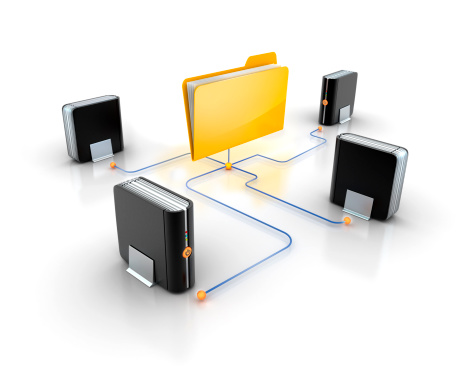
Disk cloning involves copying the contents of a hard drive to a replacement hard drive. It includes the file structure and system files and is used for a backup to upgrade, restore or move the drive data. The contents are typically written to one image file, which allows you to do the upgrade or restoration without reloading the operating system and applications. Cloning is different from imaging, which involves copying one or more partitions to an imaging file instead of an entire hard drive (HD) or solid state drive (SSD).
What are the Risks Involved in Cloning Your HD or SSD?
Cloning, by design, wipes out the contents of your computer and reloads them onto a replacement device. Doing the process incorrectly has catastrophic risks, so proceed with caution.
What Type of Cloning Software Is Available?
The manufacturer of the replacement SSD may have free cloning software. For example, Samsung has cloning software available to support its SSDs at https://www.samsung.com/semiconductor/minisite/ssd/download/tools/. The Samsung product only works with Samsung hardware and Windows operating systems, so be sure the drive you buy is compatible with your laptop or PC.
Other free software is more universal. Here are two of the most widely used and reliable ones.
Macrium Reflect 7 Free Edition: https://www.macrium.com/reflectfree
The above URL is the free version that works for personal or business computers. It’s menu driven easy to use. Because of this, it’s highly recommended for those who aren’t extremely tech savvy.
Clonezilla: http://www.clonezilla.org/
This powerful, free software is downloaded onto a USB and when it boots up proceeds with the cloning. It’s a bit daunting for anyone below the expert level but is decent software if you’re comfortable with the more complicated user interface.
How Is the Replacement Drive Prepared?
For the cloning process, you need to have two drives. The source drive is the one that’s in your computer now, and the destination drive is the new drive you want to install. If you’re using a laptop with a single bay for the HD or SSD, you’ll need to purchase an external SATA-to-USB adapter, enclosure or dock that allows you to connect the new drive to the computer. Next, you complete the cloning process and disconnect the new drive so that you can install it.
How Does the Cloning Process Work?
Before you start the cloning process, you should turn off Wi-Fi so that you don’t copy any incoming emails or other content. Using Macrium as an example, the next step is to open the software and set up the appropriate parameters, such as cloning the local disc to the SSD you connected for the cloning. You also have the option to optimize the space needed for the existing drive (the new one is likely bigger).
Cloning may take an hour or more, and you get updates when it starts and completes successfully. The final step is swapping out the old drive for the cloned one.
How Do You Swap the Drives?
Close down the PC and disconnect adapter from new SSD. Replacing the hard drive often means using a bracket or adapter because the new drive is likely to be smaller. This process varies depending on if you’re using a laptop or PC so it may take some research to figure out the correct procedure to replace the old hard drive with the SSD clone. Reboot the PC and check that the drives are still available.

by Felicien | Dec 5, 2018 | Education
Efficiency is one of the most challenging objectives for most companies to achieve. To be efficient, a firm needs to focus on optimizing limited resources to achieve the best results possible at the lowest cost. As you probably know from experience, this is far easier said than done.
To boost efficiency, a company needs to craft a strategic plan. In many cases, this strategic plan involves outsourcing. The term outsourcing refers to the business practice where a company contracts the services of an individual or another company to perform specific tasks, provide services, or handle operations that would otherwise be performed internally by employees. Outsourcing solutions are incredibly popular among companies these days. When utilized correctly, outsourcing solutions allow firms to operate at a higher level of efficiency.
Companies of all sizes are recognizing the cost- and time-saving advantages of contracting with independent service providers to provide services that don’t fall within the realm of their primary expertise. Small and mid-sized companies are turning to outsource solutions for remote IT support and management services as well as IT hardware maintenance.
This partnership between client organizations and managed IT service providers allows the client organizations to enjoy efficiency, productivity, lowered costs when it comes to IT operations. Best of all, the organization’s IT systems continue to run at the highest level of efficiency possible. This frees up valuable time and resources within the client organization, which are then directed to serving the needs of customers.
One primary reason so many small and medium-sized companies are turning to outsourcing is that they are finding themselves pressured to deploy the same level of technology functionality as larger companies merely to keep up with the competition. As you can imagine, it is often difficult for small IT teams to keep up with this pressure. This also causes small budgets to become strained. While some organizations may initially be hesitant to turn to a third-party for infrastructure support, these organizations can benefit significantly from such a move. These benefits come in the form of reduced costs and boosted revenue and efficiency.
Here is a guide to increasing labor efficiencies with managed IT services.
1. Focus on their Core Mission
One way that managed IT services increases labor efficiencies is by allowing companies to focus on their core mission. Organizations that spend most of their time and resources on their core expertise can pay more attention to boosting sales, building a strong brand, and increasing revenue. Your employees can focus on providing the best customer experience possible to your clients. The third-party company that you are in a partnership with can concentrate on keeping your organization’s IT systems in tip-top shape. Most managed IT service providers are flexible enough to increase their services when business volume rises and then decrease their services when business slows down.
2. Reduce HeadCount and Overhead
After you form a relationship with a provider of managed IT services, you should focus on reducing headcount and overhead. Now that you have a third-party that provide some or even all of your IT needs, it is likely that you will be able to reduce overhead costs and headcount significantly. Your provider of managed IT services will serve as an extension of the internal team within your company. Your company will benefit significantly from the expertise and resources of the managed services team. Economies of scale are one significant advantage of managed services. Managed IT Service companies provide high volumes of manpower and technology, which implies that they have the means to significantly reduce the cost of both factors.
3. Economies of Scale and Pass-Along Savings
One way your organization will enjoy increased labor efficiencies with managed IT services is through pass-along savings and economies of scale. Managed IT services provide client organizations with access to world-class assets at a fraction of how much it would cost to acquire these assets on their own. Managed IT service companies also pass on cost savings to their client organizations.
4. Consider Data Safety and Confidentiality
When choosing a managed IT services partner, one of the main factors that you should consider is their knowledge of reporting requirements that are industry-specific. Some examples of such reporting requirements include SOX, PCI/DSS, and HIPPA. You should also take into consideration their knowledge of personal clearances like DOD and technology partner certifications. If you don’t take these factors into account, it may end up hurting your organization’s labor efficiency. While you shouldn’t thrust the responsibility of data safety and confidentiality entirely on a managed IT services partner, working with a managed IT services company that takes data security and privacy into consideration will help labor efficiency. Some of the pressure that your IT team currently faces when it comes to keeping data secure and confidential will be alleviated.
For more information about how to increase your company’s labor efficiencies with managed IT services, don’t hesitate to contact us.