
by Felicien | Dec 18, 2018 | Education
In the first week of December 2018, WordPress announced the release of its much-awaited update WordPress 5.0. Researchers testing the new version almost immediately found several serious security issues which jeopardized sensitive personal data like user email addresses and passwords and allowed unauthorized access to content management functions on sites within the platform. All versions of the platform 5.0 and older were affected by the vulnerabilities.
Less than a week later, on December 12th, company developers responded with the release of WordPress 5.0.1, a patch intended to address the vulnerabilities in the earlier version.
The bug that allowed access to emails and passwords by exploiting the Google website indexing service was only a threat to users who had not changed their passwords after the release of WordPress 5.0. The new version fixes that bug.
Changes were made to the MIME validation process after security researchers discovered that an attacker working through Apache-hosted sites could create modified files to bypass the validation process and implement cross-site scripting hacks.
Ian Dunn, a WordPress developer, state, “ Before 5.0.1, WordPress did not require uploaded files to pass MIME type verification so files could be uploaded even if the contents didn’t match the file extension. For example, a binary file could be uploaded with a .jpg extension. This is no longer the case, and the content of uploaded files must now match their extension. Most valid files should be unaffected, but there may be cases when a file needs to be renamed to its correct extension”.
The new version addresses other vulnerabilities such as the ability to alter metadata to delete files without authorization and to craft input that would allow the creation of unauthorized posts. A full list of vulnerabilities found and fixes implemented with WordPress 5.0.1 has been published by the company.
Those users with websites on WordPress 5.0 should update to WordPress 5.0.1 as soon as they can. Those who have enabled automatic updates should already have the new version, but because of the types of vulnerabilities that were discovered, it is recommended they do it manually to be safe.
Those who are still using older WordPress 4.X versions should install 4.9.9 as soon as possible. There have been reports of automatic updates not working for this version. Again, it should be done manually to make sure.

by Felicien | Dec 17, 2018 | Education
Protecting data and information systems is a priority for nearly every type of business and organization. The state of Maryland has recently stepped up to support businesses by passing a bill that enables small businesses to invest in security technologies while earning tax credits. There are several aspects of the Maryland Cyber Security Tax Credit that business executives and managers may not be aware of.
What is the Maryland Cyber Security Tax Credit?
The Maryland Cyber Security Tax Credit is an incentive program for companies to buy cybersecurity technology from a cybersecurity provider. This particular tax credit encourages small businesses to purchase cyber technology which will ultimately help protect both their business and consumer information. It’s also being used to help promote the cybersecurity industry. Companies can apply for the tax credit anytime during the year. Applications must be submitted by January 31, however, to receive a credit for the previous year.
A company purchasing the credit can claim 50 percent of the net cost as a tax credit. It’s required that the credit is claimed for the same year that it’s purchased. The tax credit was initiated in 2018 and is awarded by first come, first serve. Currently, $1.5 million in funds is available through the Department of Commerce for cybersecurity technology while $500,000 has been set aside for cybersecurity services.
What are the Particular Benefits of the Tax Credit?
There are several specific benefits for companies when obtaining these tax credits.
A company can claim as much as $50,000 in tax credits in one year after purchasing cybersecurity technology from a Maryland provider.
A cybersecurity provider can claim tax credits in one year for $400,000 worth of cybersecurity sales.
Third parties are allowed to sell cyber security technology if the purchase price is reduced by 20 percent before the 50 percent credit is calculated.
Third parties must also have the name of the qualified Maryland provider on the invoice as well as describing the technology that was purchased.
Who is Eligible for the Tax Credit?
The tax credit is for businesses that meet specific criteria. Before receiving the tax credit, it must be determined that the services or products being purchased meet the required definition of cybersecurity technology. Cybersecurity technology must be proprietary goods and services that have been created to protect electronically stored information or data. The products or services are created to prevent data extrusion or unauthorized access to data and information systems. Besides meeting the defined criteria for what constitutes cybersecurity technology, both the provider and the business buying the services must meet several eligibility requirements. The following are a few of the requirements that need to be met.
Both the company providing or buying can be inactive business for no more than 5 years.
Both the company providing or buying the tax credit must file income taxes in Maryland and employ fewer than 50 individuals.
A cybersecurity provider in Maryland must be certified as either the company buying the services or selling to claim a tax credit.
To become a qualified cybersecurity provider in Maryland the company must be certified through the Department of Commerce.
How Does the Application Process Work?
There are several steps a business must take to be a cybersecurity provider or to qualify to buy the tax credit. The Maryland Economic Development Association explains the steps for either process. The process to obtain the tax credit or to be a provider both involve providing several types of documentation such as a detailed business plan and a Certificate of Good Standing from the state of Maryland. There are currently eight businesses in Maryland that are qualified to sell cybersecurity technology.
Business owners now have a tax credit option that can help them protect their vital data and information. Maryland has taken a positive step in assisting companies to improve their cybersecurity while promoting local business.

by Felicien | Dec 17, 2018 | Education
When you launch an email campaign, you want your message to be read and understood by as many people as possible, and one way to do that is by making your emails accessible to people with disabilities. Those with visual, cognitive, auditory, or mobility impairments have special needs that can be addressed by adhering to some simple practices and assistive techniques to ensure that your message can reach them too. Failing to take steps to include these individuals is not only considered insensitive these days, it’s legally required in many countries, and more to the point, it also costs your business.
Why Email Accessibility Is Important
There are a lot more disabled people in the U.S. and globally than those who aren’t affected by it personally realize. According to the National Institutes of Health, 37.5 million American adults, or 15%, have hearing loss, 1.3 million are blind, and another 2.9 million have low vision. The Centers for Disease Control says that 25% of adults in the U.S. experience some type of disability, and the World Health Organization states that hundreds of millions of additional people around the world are disabled.
From a business perspective, it has been estimated that people with disabilities in the U.S. have $1 trillion in total income and more than $220 billion in disposable income. That makes them a demographic that most businesses can’t afford to ignore, and if you’re not practicing email accessibility, you’re missing out on a big potential market.
So how can you start making your emails more user-friendly and understandable to those with disabilities? Here are ten methods you can start using right away.
10 Tips For Meeting Email Accessibility Standards
Create concise and straightforward content. This is something you should be doing for the benefit of all your readers. Stay away from language that’s too technical and trendy business jargon that can distract readers away from your message. It’s also a good idea to use very clear subject titles to help those using assistive technologies like screen readers understand what the email is about, and to include a link to a plain text version of the email.
Use a larger font size. This can be very helpful for those with low vision and for dyslexia sufferers too. Aim for at least 14 pixels or larger for the best results.
Consider your use of colors. The use of color can be important for branding and capturing attention, but it can be a problem for those with vision impairment. Text and other types of content need to have a certain amount of contrast against a background color to be visible, with the accepted standard being a ratio of 4.5:1. You can check your emails for the right contrast on any page with this handy online tool.
Break up text content with images. You probably already know that it’s good form to keep your paragraphs short and to use subtitles, but placing images that represent a visual depiction of what’s being conveyed in the text between longer paragraphs can help to increase engagement and message reinforcement for all your readers and also help those with disabilities to understand. Keep in mind that if you use animation or graphics that flicker or flash like a strobe that it can cause seizures in people with certain disorders.
Use alternative text for images. Alt text is an attribute that can be added to an email to display a box with a text description of what an image is for those who can’t perceive them.
Use mobile accessibility designs. With so many people using mobile devices these days, your emails should be mobile friendly for viewing on smartphones and tablets. You can make them even more accessible to those with disabilities by including the ability to easily resize content without using third-party technology and by using large target areas for your CTA buttons.
Use HTML5 semantic elements. Use the same heading and paragraph tags that you would use to render content on a regular web page to make your text clearer and more easily understood.
Use “presentation” in layout tables. It’s common practice to use tables for layout and formatting purposes in emails, and you can easily make them more accessible by adding the element role=“presentation”. This tells any assistive technology to read the content but to ignore the table properties.
Include a text description for hyperlinks. Someone using a screen reader won’t know where a hyperlink is taking them if the text just reads ‘click here’. Adding text to describe the content of the landing page will let them decide if they want to click the link or not.
Consider adding transcripts and captions to videos. This is essential for those with hearing and vision impairments and also allows for private viewing or reading in situations where having the sound up is impractical, and when someone wants to understand the video transcript for deeper comprehension and consideration.
Creating emails that are more accessible to people with disabilities is not only considerate to your current or potential customers, but it’s also just good business practice. You can learn more about best practices in the Web Content Accessibility Guidelines (WCAG). You should also make use of this helpful checklist, and take advantage of this list of evaluation tools to test your emails.
by Felicien | Dec 17, 2018 | Education
You have a lot going on during the business day and beyond, so any short-cut that adds productivity and efficiency to your day is a nice welcome. Microsoft recently updated its Word, Excel, and PowerPoint programs with a nifty even if simple tool: the @mention.
You have likely been there where you want to make a comment, you do make a comment, and that comment gets lost among all the other comments. Worse yet: the document you are reviewing will be reviewed by not just one but many other people. Without personalization in these comments, everyone will read each comment without knowing for whom it was intended. The @mention is a feature that solves these types of problems — problems that seem trivial at first but which can really add up. Here’s how to use the @mention feature and how to do so with success.
How to Use @mention in Microsoft Office?
The @mention feature is only available using Office 365. It allows you to tag someone who has permission to open the document for feedback by emailing that person with a direct link to the comment. It is really quite simple to use:
Make sure you are signed into Outlook and then sign into Office 365.
Open the document to be reviewed in either your SharePoint library or OneDrive for Business.
Go to Review > New Comment.
Type @-person’s-name within the comment.
The feature, for the moment, however, is only available online and to those who are Office Insiders using Windows or macOS. It is not yet available in iOS or Android.
How to Use @mention strategically?
Using the @mention strategically is what will really make this feature work for you. Here are a few tips to keep in mind:
Bring a comment to someone’s attention immediately by using @mention. Here, we specifically mean targeting a colleague who may have specific interest or knowledge of the matter or who may be loaded with work and an @mention may be the thing to get his or her attention.
For one comment, you can @mention more than one person, so there’s no need to draft more than one comment for the same issue.
You can @mention someone without permission to access the document — in this case, Microsoft will ask you to provide permission.
Make sure before starting the review that you have given permission to everyone who may also need access to the document so you do not need to worry about this additional step later.
Also, if you are wondering whether or not a person subject to multiple comments will now receive multiple emails, Microsoft has already thought about it, too. Microsoft will batch the links into a single email if there is more than one @mention for the same person.
Now that you know how to use @mentions in your Microsoft programs, and how to use it strategically, it is time to get back to get back to being productive. Sign in and try it out and see how soon other reviewers start responding.
by Felicien | Dec 17, 2018 | Education
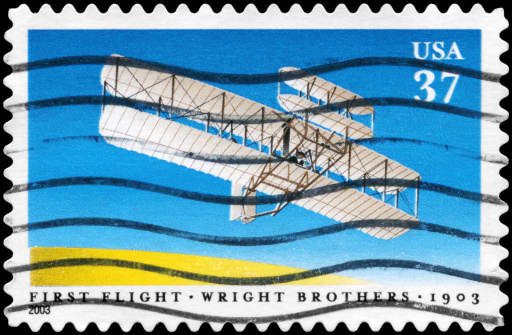
On December 17, 1903, Orville and Wilbur Wright made the first successful flight in a mechanically propelled airplane. To celebrate the accomplishment and commemorate the achievements of the brave brothers, December 17 became Wright Brothers Day by a 1959 Presidential Proclamation. Wright Brothers Day is now honored every year in the United States with festivities and activities.
A Land of Innovation and Invention
In the nation’s beginnings, the founding fathers had to cross an unfriendly ocean to live in uncharted land. Early settlers made their way across the vast landscape, using their strength and ingenuity to adapt to often harsh conditions.
Over the history of the US, Americans laid track to build railroads to span the nation, while other Americans built the cars that would change the way people live. The Wright Brothers succeeded in their revolutionary flight soon after.
What Was Once Thought Impossible
Before the Wright Brothers launched their flight, most people could not imagine that flight by humans was possible. Earlier efforts to leave the ground were limited, because there was no way to sustain flight or control a contraption in the air. The Wright Brothers knew that they would need to be able to control the wings and nose so that a pilot could navigate while in the air.
While it seems obvious now, their ideas changed the way humans view the world. People felt attached to the earth, trapped in two dimensions. Once people were able to fly, they could see the world from an entirely new perspective. Distances become relative, and the world seems both grander and more interconnected. The boundaries that used to limit people’s activities no longer hold that control over our lives.
Humble but Loving Beginnings
Milton and Susan Wright were the parents of Orville and Wilbur, and they encouraged their sons to learn about whatever they could and to travel to other parts of the world. Mr. Wright was a bishop in the United Brethren Church, and his position caused him to travel a lot for church business. While he was away, he sent many letters and gifts home to his family, exposing them the many fascinating wonders the world has to offer.
Wilbur and Orville started in the printing business and even had their own newspaper for a while. They started their own bicycle business in 1894, making and selling bikes to turn a profit. But their dreams were always bigger.
When Wilbur and Orville started seeing other inventors’ attempts at building flying machines, the brothers figured out where they were going wrong. Their first gliders did not succeed, but the Wright Brothers kept trying until they achieved their dream. The Wright Brothers decided what they wanted to do, and then they realized what other people couldn’t with their own abilities.