
by Felicien | Jan 15, 2019 | Education
Most of us, when asked if we would prefer to pay for something we could theoretically do ourselves, will opt to take care of the task personally – even if it’s not our strong suit, or indeed, if we lack all experience entirely. This is often the case with managed IT services.
Whether your company has an in-house IT team or is small enough that you hire only one person, chances are good you don’t spend much time thinking about whether you should update your approach. That could spell disaster for your company, though, especially in this day and age of cyber attack and data breach.
Here’s a quick look at what most people get wrong about IT management and six of the most common signs your company needs it.
Why Does IT Require So Much Management, Anyway?
The root of many companies’ unwillingness to bring on IT help stems from a fundamental misunderstanding about its nature. Most people think of computers and other technology as a blank canvas of sorts. You put your applications and software on them, type messages, input information, manage spreadsheets and message others using the systems IT makes available to you. But you rarely think about the systems themselves.
That’s a problem. If we compare it to dentistry, you’ll see why. No one would claim that you can eat and eat all day without ever worrying about your teeth. Taking care of your teeth requires both daily maintenance and constant vigil, looking out for any problems that might be headed down the pipeline. Brushing your teeth isn’t enough to stay safe and healthy, but neither can you neglect to brush your teeth simply because you watch for cavities.
Managed IT is like any other sphere requiring both care and prevention. Your daily activities are the food. Your hardware and software and network security protocols are the teeth. If they don’t stay healthy, you won’t have the tools to eat for long.
Sadly, most companies have neither the expertise nor the resources to care for your company’s IT the way it needs. The result is that they use IT systems until they break, at which time they cast about wildly for the quickest possible fix, so they can go on with business as usual. Sometimes your in-house team can handle it, but more often (at least when the problem is serious), they can’t. As for preventing those problems in the first place, that’s usually more than one small team or a single individual can handle on behalf of a company.
5 Signs Your Business Needs Managed IT Services
That’s where managed IT services come in. When you outsource your IT needs to an outside company, you have access to a true wealth of expertise and professional tools. Rather than the limited knowledge and skills of one person – and whatever budget you can put toward information technology in-house – you now have an entire business on your side.
Still, think you don’t need outsourced IT services? Here are five signs you do.
Tech issues stop productivity in its tracks: You’ve been there. The day was going just fine, and suddenly someone’s computer manifested a weird bug … and then everyone’s computer seemed to have it. Or maybe your SSL certificate grew outdated and no one fixed it; the network went down and no one could figure out why; half the people in the office were locked out and asked to create new passwords for no reason. These “temporary” problems might have solutions, but that doesn’t make them easy to deal with. If you’re facing a lot of them, it’s time to do something about it.
Your “IT guy” doesn’t have experience in your niche: It hardly bears saying that banking IT and artisanal grocery IT are not the same thing. While both require careful safeguarding of customer information, the former industry manages far more detailed, and personal data is under much greater scrutiny and is subject to particular federal laws regarding the safeguarding of information. To keep your company aboveboard, you need someone who knows exactly what they’re doing, both on the day to day, and in extreme situations or crisis.
You don’t have a security plan: One of the primary responsibilities of an IT staff is to ensure you have a good security plan and robust software to back it up. If you don’t have a strong defensive approach, you could find yourself at the mercy of cyberattackers and data thieves, so don’t wait for that to happen before contacting a real IT provider.
Your maintenance plan is casual at best: Again, many companies use a “break it, fix it” model, in which they turn a blind eye to systems until something goes wrong. With preventative maintenance, however, you can avoid many (if not most) of those breaks – but you need someone who knows what they’re doing. An expert can help you configure your systems most intelligently, reallocate resources as your company grows, protect new vulnerabilities that open up and stay on top of updates, so you’re always protected and functioning at the highest level of productivity.
You’re paying too much for IT: If you’ve ever asked yourself “Why does it cost so much to deal with this?” that’s a bad sign. Believe it or not, it often costs less to pay for outsourced IT, because you have access to economies of scale that you just don’t have if you employ a few people in-house. We challenge you to do a cost comparison and see what happens.
Don’t Wait to Get Started with Managed IT Today
In the end, your decision to outsource your IT services to a professional provider should be an easy one. It’s like getting a dentist. Is there really any doubt that your company needs one to stay healthy now and in the future?
Hint: The answer is no. If you want to stay safe from attack, steer clear of potential disaster and keep your business humming along at the most productive rate, it’s time to make the switch today.
by Felicien | Jan 15, 2019 | Education
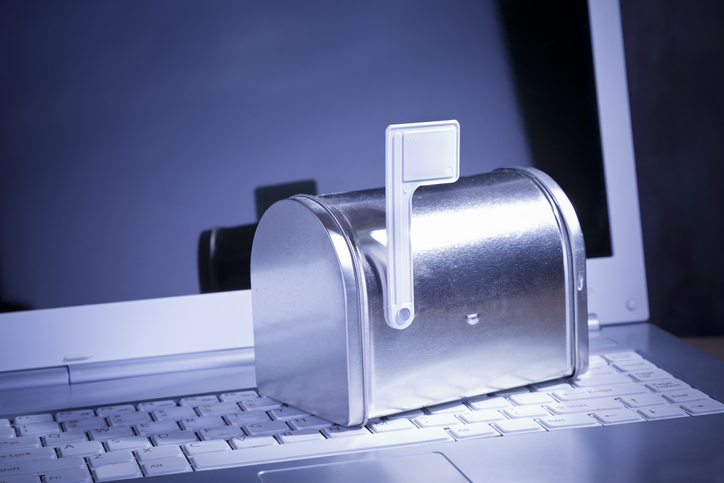
A shared mailbox in Microsoft Outlook will prove invaluable if your team is collaborating on a project, as they can exchange messages from a central platform. A communal email center is also an asset if your employees are responsible for responding to customer inquiries. Outlook Calendar allows members to create events or let others know when they’ll be out of the office. When you create a shared mailbox in Outlook, members can monitor messages via a public email alias, which usually appears as info@companyname.com. The sender appears under this alias, too, rather than by name. That group members can now communicate without logging into the mailbox or conveying personal information. If you’re new to using shared mail in Outlook, here are some “how-to” tips to help you get started.
Creating a Shared Mailbox in Outlook
Before you use the mailbox, you will need to have an office 365 admin for your company or organization set it up and add you as a member. If you are the admin, follow these steps:
Sign into Office 365 and select admin.
Go to Groups and choose Shared Mailbox.
Choose Add a mailbox and type in the name you want it to have. Many addresses begin with “support”, “info”, or “contact.” Then click Add.
When the wizard continues to Next Steps, choose Add members. It may take a few minutes to reach this step after you add the mailbox.
Add members by searching for them or selecting them from a list. When you’re finished, click Save, then Close.
If you want to make changes or updates at any point, select the new mailbox and click on Edit next to the information you want to modify.
Using a Shared Outlook Mailbox: Getting Started
Once the admin has created the public mailbox, close Outlook and restart it. The mailbox should appear automatically in the Folder pane. Note that it may take a few minutes to display after the admin added it, so if you don’t see it, wait a bit, then close and restart Outlook again. If you still cannot locate the shared mailbox, you will have to add it manually.
Once you’ve opened Outlook, select File.
Select Account Settings and then choose the Email tab.
Be sure that the correct account is highlighted, then select Change.
Select More Settings. From there, choose Advanced, then click Add.
Type the name of the shared email address, choose Ok and Next followed by Finish and Close.
Using the Shared Calendar
If you want to access the calendar right after the admin created the shared mailbox, you will need to close and restart Outlook to gain access to it. The shared calendar connected with the public mailbox is added to your Calendars list automatically. To use the shared calendar in Outlook, navigate to calendar view and choose the shared mailbox. From there, you can manage schedules and appointments. This feature allows all team members to be on the same page about schedules and appointments.
Using Shared Contact Lists in Outlook
When the mailbox has been created, the corresponding Contacts list is automatically added. To access it with Outlook:
Select People.
Look under My contacts to select the contacts folder for the shared contacts list.
Using a Shared Mailbox with a Mobile Device
If you or your team members need to take work on-the-go, you can access the shared mailbox from a smartphone or tablet, too. Unfortunately, the Outlook app on your mobile device won’t allow you to use the shared mailbox, but there is a workaround. Follow these steps to use your primary mailbox and the shared one simultaneously:
Right-click on the name of your primary mailbox in the left-hand pane, then select Add shared folder.
In the dialog box, type the email address or name of someone who has shared a mailbox with you, then click Add. Another option is to enter the name of the shared mailbox you are a member of.
In Outlook on the web, you should see the mailbox in your Folder list. Just as you can do with your primary folders, you can expand or collapse the shared mailbox folders. If you want to remove the shared mailbox from the Folders list, right-click Shared mailbox and choose Remove shared folder.
How to Use the Shared Calendar with Outlook on the Web
As a member of a shared mailbox, you also have access to the shared calendar. This feature allows you to create, edit and delete events (that you or someone else created) and make the information available to all members. To use the calendar from a mobile device:
Sign in using Outlook on the web, then select Calendar.
Right-click Other calendars, then select Open Calendar.
Use the from directory option to search for the shared calendar you need to access and click Open. You should see the shared calendar on your Calendar folder list.
A Few Things to Know About Shared Mailboxes in Outlook
With a shared mailbox, you can send, receive and reply to messages just as you do with your primary mailbox. However, if you want to send automatic replies, only the admin is authorized to set this up. You cannot give anyone outside your organization access to your shared mailboxes. If you want to include people outside your business in your group correspondence, you can create a Group in Outlook instead.
Creating a shared mailbox is a helpful way to ensure that your team stays up-to-date on appointments, schedule changes and group messages. It’s also a critical tool for connecting with customers and vendors. Keeping members “in the know” improves communication, employee performance and morale.

by Felicien | Jan 14, 2019 | Education
You already know what IT stands for: information technology. What you might not know is that most companies have a pretty poor grasp of how best to put IT to work for them.
Why? For the simple reason, that too few businesses take the time to consider the best approach to managing IT needs. They assume it’s as simple as keeping the computers running and the network humming, but that’s not it at all. Not by a longshot.
Actually, the nature of your IT setup has a significant bearing on the efficiency, productivity and profits of your company. By outsourcing your IT needs to an expert, you can majorly fuel your business growth today.
Outsourcing Is a Time-Tested Model
The first obstacle to overcome in using outsourced IT as a means of cutting costs and increasing profits is fear. Many people, unfortunately, are intimidated by taking this critical step.
Outsourcing IT is nothing new though, explains Business.com. “What started as a novel practice of U.S. companies sending IT jobs to India in the 1990s has now become a $88.9 billion industry that connects businesses with IT experts worldwide, from Belarus to Argentina.”
It’s not just big businesses, either: “Companies of all sizes make use of this service to cut down on costs, bring innovation into the business and open up more time to focus on core operations.”
In other words, this is a well-established business model that companies the world over are using the pad out their bottom lines and streamline their workflows. With time-tested results across companies and industries, there’s no reason to fear it – and that’s just the beginning of the benefits.
You No Longer Rely on a Break/Fix Model
Most businesses have a small IT staff on hand. Depending on the size of the company, that might mean a dozen personnel members, a single employee, or Richie over in accounting who is “pretty good” at troubleshooting network problems.
Now, that’s not to say that you can’t have your own staff and get along fine. But in this “break/fix” model, you’re waiting for something to go wrong before you respond. That means you could potentially suffer a breakdown during a seriously important time (Black Friday or April 15th, for instance), which would dramatically affect your bottom line.
It also means you have relatively little ability to forestall those breakdowns. Without the in-depth knowledge that comes from being steeped in the IT profession, you can’t predict coming obstacles and work around them before they become an issue. As you might expect, however, companies that manage IT for you can do just that.
Outsourced IT Can Help You Grow Intelligently
An unfortunate side effect of rapid growth, many businesses find, is that they quickly bloat their existing infrastructure and aren’t sure where to go from there. For instance, the number of orders coming into the system exceeds your ability to manage those orders. Or the number of new products creates a need for a vastly more agile website, but you haven’t created it yet, resulting in backlogged orders and emails.
Those are just a few examples, but they highlight an important point: Without an IT expert in your midst, your information technology fails to grow with your business. Instead, it can only hurry to catch up later on – at which point you might have ticked off many of your formerly enthusiastic prospects.
You can avoid that when you worked with outsourced IT professionals. They know exactly how to plan for changes coming down the pipeline and adjust your systems to accommodate them upfront. Next time you roll out a new product, for instance, they can adjust the infrastructure to handle additional orders. Or they might help you speed up your system at a crucial time – again, Black Friday and Tax Day come to mind.
Whatever you need, they can help you see it coming and respond intelligently, rather than just waiting for the worst to happen.
You Can Focus on What You Do Best
If you’re reading this article, then money says you’re not an IT expert. You are an expert in your niche industry, which is why you started a business in the first place. Logically, your best bet for growing your business is to continue focusing on what makes it thrive. That might mean:
Rolling out new products and services to keep your existing customers happy and bring on new ones
Creating value-added extras to make your products more appealing
Educating yourself, your employees and your customers about the nature and benefits of your products and services
Appearing at trade shows, attending conventions or throwing events to increase the awareness of your business
Negotiating new partnerships with others in your industry
As you can see, “Stopping in the middle of your busy day to fix a finicky router and get the finance department back online” is not on that list. That’s because it does not add measurably to your business growth. At best, you can address the issue quickly so that it doesn’t dampen your workflow.
An IT company, on the other hand, can help you avoid that altogether. They can take care of the issue – or even better, stop it from happening in the first place – while you focus on what made your company great in the first place: interacting with VIPs, attracting clients and customers, innovating.
The takeaway? By turning your IT needs over to a true professional, you can stop worrying about whether you’re “doing it right” and start focusing on what you do best. Say goodbye to the days of confusion, anxiety and technical failure, and hello to a new era of productivity and growth now.

by Felicien | Jan 14, 2019 | Education
Your business is at a higher risk for security breaches and data when you don’t utilize a managed IT services company. A managed IT service company is more affordable than you realize. Managed IT service can be priced as a flat monthly fee, a per-user fee or a per-device fee. Then your business has a fixed line-item on your budget, and the assurance that your risks are managed by a professional service 24/7.
Not convinced? Let’s look at the realities of not have a managed IT service company.
Uncontrolled Spending.
Have you looked at what your IT department is costing every month? You may be surprised at how much you’re spending, and yet, you are still unsure at how well your company’s data is protected. Unless someone within your company is monitoring your IT department, you might not even be aware of what they are doing.
Have they ensured that your data is backed up in a cloud or are they developing a new app that may or may not help your business grow? Is your firewall up to date? Are your employees well-informed on cybersecurity threats that come via email? An unsupervised IT department could be investing in hardware and software that doesn’t protect you or help grow your business.
Add in the cost of recurrent training to keep your employees up to date with the latest security threats and emerging technology, and your business could experience uncontrolled spending. Managed IT service companies offer different pricing modules so that you can pick the plan that best suits your company yet allows for growth.
Unsecured Network and Uncertain Data Back-Up.
No matter what type of business, your business is responsible for the secure storage of employee records, customer data or patient information, which is protected by HIPAA regulations. A cybersecurity breach has the potential to put your business out of business.
Besides employee and client information, your business has a considerable volume of transactional data and customer/patient history. Are you sure that your IT department could have you back up and running after a natural disaster, ransomware attack or network failure?
Speaking of natural disasters which seems to be happening more often and are more severe, do you have a disaster recovery plan? Has your IT department developed and implemented a disaster recovery plan? It’s not enough to have your data backed up to a cloud. Your business should have a plan of where you’d relocate and how you’d get back up and running again.
The Federal Emergency Management Agency estimates that 40 percent of the businesses hit by natural disasters do not reopen and 25 percent of those who do fail within the first year. The Small Business Administration found that 90 percent of businesses fail within the first two years after a disaster. Data loss is catastrophic when coupled with a natural disaster.
A managed IT services company will provide you with a disaster recovery plan that protects your data to help prevent business failure should a natural or man-made disaster occur. The recent Paradise, California fire is a prime example of what could happen to your business should the worst scenario happen. Could your business recover?
Qualified IT employees are in short supply.
According to the George Mason University School of Business, IT jobs have increased by 13 percent while graduates in IT have decreased by 11 percent. Recruiting and retaining qualified IT personnel is expensive and challenging.
If you contract for managed IT services, you don’t have to terminate your entire IT department. You might decide to have a managed IT services company oversee the complex jobs while allowing your in-house IT personnel to focus on new projects or new business initiatives instead of responding to IT crisis resolution.
Most likely, a managed IT service company is able to hire the most qualified IT professionals. Why not get these people to oversee the most complex parts of your business?
Timing of new technology purchases.
Your company could be operating with outdated technology that can’t be upgraded to new security and/or operating systems. Restoring data might become impossible with obsolete technology.
Personnel from managed IT services companies regularly attend the major technology shows and can easily spot potential problems in your existing technology systems that could create significant problems in the future.
A managed IT services company starts to work for you on the first day that you contract with them. They’ll evaluate your entire IT system and make recommendations for updates to ensure the best performance and longer operating cycle. An added plus is that your managed IT services company can recommend new products specific to your industry or business type.
Minimize risk.
Savvy businesses know that minimizing the risk of security breaches, ransomware threats and data loss is one of the best ways to ensure the continuity of the business. A managed IT services company is more than just an IT “guy” that someone recommended to you. They become a valued partner of your business ensuring that your files and data are protected and that you can focus on your business operation.

by Felicien | Jan 11, 2019 | Education
Ask any small or medium-sized business owner and they’ll tell you the same thing: They’re terrified of a data breach. Sure, their fears might not exist on the same plane as, say, a Target or a Wells Fargo, but that doesn’t mean they’re not real and quantifiable.
The average numbers are pretty scary, in fact. According to MarketWatch, citing a study by IBM Security and Ponemon Institute, “the 2018 Cost of a Data Breach Study found that the average cost of a data breach globally is $3.86 million, a 6.4 percent increase from the 2017 report.”
That’s just the average, mind you. Things get much more frightening on a large scale: “the study also calculated the costs associated with ‘mega breaches’ ranging from 1 million to 50 million records lost, projecting that these breaches cost companies between $40 million and $350 million respectively.”
These numbers become even more heart-stopping when you consider that a data breach’s costs don’t end at the financial. There are some hidden costs of data breaches that you may not yet have considered. While no one likes to conjure more bogeymen than necessary (isn’t the world scary enough?), it’s critical to take data breach extremely seriously.
Here are seven of the most notable – and the most frightening – hidden costs of data breaches.
1. Loss of Intellectual Property
One of the most significant losses associated with a data breach is intellectual property. This can include:
Blueprints for setting up a factory
Specs for a project
Code for a piece of software or another product
Proposals for new products or services
Recipes for proprietary dishes or ingredients (think “secret sauce”)
The means of replicating patented products
If an attacker gets their hands on this information, you might suddenly have a competition where before you owned a niche. This is bound to decrease your profits and impinge upon your success.
2. Disruption of Operations
Data breaches cause a lot of panic and havoc, and unfortunately, this means suspending normal daily activities in favor of dealing with the crisis. This can put your standard timelines behind by days, weeks or even months … which is time and money you can’t get back.
3. Destruction of Property
We tend to think of data breaches as a one-way flow of information out of the formerly secure system. This includes client or customer information, intellectual property, company figures and documents, or other pieces of information customarily kept private.
However, some data breaches also include an element of cyber attack, information flowing in that is harmful to the system. Perhaps the attacker sends through the malicious code to damage it. They may also attempt to shut it down while withdrawing the data, with the intent of making it more difficult for the company to protect itself. In some cases, these attacks leave long-term damage behind, and it takes thousands or millions of dollars to pick up the pieces.
4. Loss of Customer Relationships
For obvious reasons, your customers aren’t going to be thrilled to learn that their credit card information, medical records or private purchase histories are now out in the world. While some may forgive you, especially if you take the right steps to fix the problem as soon as possible, others will not. The loss of their business can majorly cut into your margins.
You may even face canceled contracts. Money that was already factored into your budget on a monthly or yearly basis is now gone, and it will take time to replace it through new clients and customers.
5. Disrupted Vendor Relationships
It’s not just customers you have to worry about. Most people don’t want their names associated with an accident or leak that gets their end users in trouble. B2B companies still worry about what consumers will think, especially when they’re products are used as-is and branded. They may pull out as well, forcing you to find new vendors for your goods.
6. Disappearance of Important Information
Client and customer information is precious to your company. Not only do good records allow you to keep serving your important people well, but they also form a valuable basis for your business in the future. In addition to creating acrimony between yourself and your clients, losing that information can cost you considerably.
For instance, consider a breach of your customer relationship management (CRM) software. You keep a lot of valuable information inside that system, such as:
Customer details, including their personal information
Records of past interactions with clients or customers, such as medical history or purchases
Contacts made with the customer
The nature of contact made, such as phone or email
Financial information
Personal notes regarding the relationship you’ve forged with each client or customer
… and additional information that helps you to relate to your VIPs day in and day out. Starting from scratch does more than failing to impress them; it can ruin all the hard work you’ve put in so far.
7. Increased Cost of Loans
Data breaches, despite your best intentions, send the signal that your company can’t be trusted. Usually, we assume that it’s consumers whose good opinion we’ll lose, but banks and other lending companies also tend to become a little cold.
Post-data breach, it’s very likely that your company’s credit score will drop. The results of this vary:
You might have a harder time getting loans or extending lines of credit
You may have to pay higher interest rates when you do get loans
You might not be able to get loans at all
Any of the above may hamper your growth and limit your ability to produce new revenue, which can cost just as much in the end as losing money you’ve already made.
Bottom line? You can’t take data breach seriously enough, so if you haven’t yet done a risk assessment and put a security plan in place, make that a top priority right away. Otherwise, you’re a sitting duck just inviting breach and attack, and that’s no way to run a business.