
by Felicien | Aug 2, 2019 | Education
The Rise of MarTech: Navigating the Intersection of Marketing and Technology
Is your organization struggling with the intersection of marketing and technology? If so, you’re not alone — marketers everywhere are.
There is a crisis in boardrooms and offices around the world: who owns marketing technology? Is it the CIO or CTO, who doesn’t always understand how data is utilized by the marketing teams or best practices to provide an exceptional customer experience? Is it the CMO, who is struggling to stay abreast of how all the various tech options fit together — and managing complex projects while staying on top of marketing initiatives? Or are these professionals working to bring their teams together into a new hybrid that is still being defined? Welcome to the rise of MarTech: where marketing and technology intersect. It’s not always a pretty landscape, but many organizations are navigating through this season of change within the business.
Marketers Love Their Technology
Marketers are generally a creative bunch and are increasingly engaged with the selection of tech, especially as it relates to their specific job functions. Today’s data-driven CMOs are looking for ways to measure their advertising spend, analyze their marketing program results and create timely and relevant messages for their audience. This requires a great deal of integration between the trifecta of communications infrastructure: marketing automation, website CMS (content management systems) and CRM (customer relationship management) solutions. Some smaller organizations are able to utilize a single system for several of these functions, but there is still a level of complexity involved in scoping functionality, acquiring trusted vendors, creating timelines and ultimately approving the user stories and processes. Enter the IT team.
IT Teams Want to Retain Control
Marketers love their data, but IT teams have historically retained control of everything database-related. This tension is an ongoing one, and one that can cause frustration on both sides of the spectrum. Marketers are constantly driven by a need for change and finding the best possible solution for their business needs while technologists tend to take a more sedate path to find a solution. This can cause marketers to go off the reservation and create an unruly tangle of solutions that not only don’t work well together — they often don’t work at all, and might be a security risk besides! It’s incredibly challenging to keep track of the volume of change in the MarTech world, as new platforms are cropping up on a daily basis. In fact, it’s so convoluted that ChiefMarTech.com puts out an annual supergraphic of what it calls the “MarTech 5000“. The 2019 edition has a note showing that the completely illegible list is now made up of over 7,040 entrants in a range of sections broken down into:
Advertising & Promotion
Content & Experience
Social & Relationships
Commerce & Sales
Data
Management
Oddly enough, data and management are two of the smallest buckets but ones that likely contain some of the most powerful tools in marketing — or technology.
Managing Disruption
“Marketers are being asked to do more with less and so they buy into the digital hallucinates that are out there,” according to Former Commonwealth Bank and Foxtel chief marketing officer Andy Lark. There are hundreds of businesses selling little more than “smoke and mirrors” instead of digging deep into the reasons that MarTech can work for the business. This means looking at the core business and marketing functionalities that are needed, a place where IT professionals and marketers can come together as they’re defining requirements instead of waiting for salespeople to come to them. No matter how easy technology salespeople say it is to manage these massive MarTech systems, there are still technical requirements that will end up either back in the hands of your IT department or with marketers needing the ongoing support of external technical staff. Either of these solutions can cause disruption to the business, which is why it’s critical that marketing and technology teams work in lockstep to determine which — if any — new platforms are implemented in the near future.
Even adding a simple module to SalesForce, Adobe or Oracle can have unintended consequences, especially when it comes to data privacy and security — a top concern for IT and marketing alike. The recent spate of legislation around privacy reminds senior leadership that this must be kept top of mind and managed actively. That can be difficult if organizations are saddled with a makeshift raft of platforms that float together well as long as the waters are not bumpy. When you need to track the specific actions of individuals through various systems, IT pros and marketers alike will be reminded that sometimes “less is more” when it comes to new systems and integrations.

by Felicien | Aug 2, 2019 | Education
Australian police ended a telecom scam in NSW closing the door on millions of dollars in theft.
The New South Wales Police has shut down a Sydney-based syndicate with members who posed as telecom technicians and persuaded victims to enable remote access on their home or business computers in order to “fix” a security flaw in their internet. NSW authorities arrested the alleged leader of the syndicate, a 25-year-old man originally from South Wentworthville, and closed the operation after receiving intelligence from the Fintel Alliance run by Australian Transaction Reports and Analysis Centre (AUSTRAC) which has the big four banks as members. The Fintel Alliance reported that it was able to provide the NSW Police Department with financial intelligence about an elderly customer who had $20,000 stolen from his bank account.
Banking Scam Syndicate
The syndicate “used a variety of methods to gain access to the financial accounts of victims and transferred the funds into accounts controlled by them” according to the NSW Police.
“The most common method involved members of the syndicate cold calling victims and asserting to be technicians from their telecommunication company,” AUSTRAC said in a statement. The syndicate convinced the victim there was a security flaw in their internet access and the victim allowed the syndicate to control their computer via remote access.”
National Australian Bank Security Assisted NSW Police
National Australia Bank had a role in this particular case. “We work hard to protect our customers, and by working closely together on issues like this we are able to deliver better outcomes for customers and the broader community” NAB enterprise security officer David Fairman said. “The threat landscape is constantly evolving and we continue to invest in both detection and prevention to protect our customers.”
NSW Police renewed calls to avoid providing any banking information to someone over the telephone unless you’ve taken steps to verify who the person calling and requesting is after the arrest and dismantling of the syndicate.
“Additionally, government agencies and most telephone and internet providers will not request you make payment via iTunes or Google Play or similar gift cards,” NSW police said.
Who is the Fintel Alliance?
The Fintel Alliance is a public-private partnership, launched in 2017, that brings together a wide range of organisations that are involved in the fight against terrorism financing, money laundering and other serious crimes. Remote-access scams like the one recently shut down are used to steal millions of dollars out of Australians. In May 2019, the Australian Cyber Security Centre reported that someone who was impersonating Australian Government cyber security personnel was trying to persuade individuals into revealing bank information and compromising their computers.
by Felicien | Aug 1, 2019 | Education
Protecting Your Data from SHTML Phishing
Data security is vital to any business. Learn how SHTML phishing works and how to minimize the risk of your data falling into the hands of attackers.
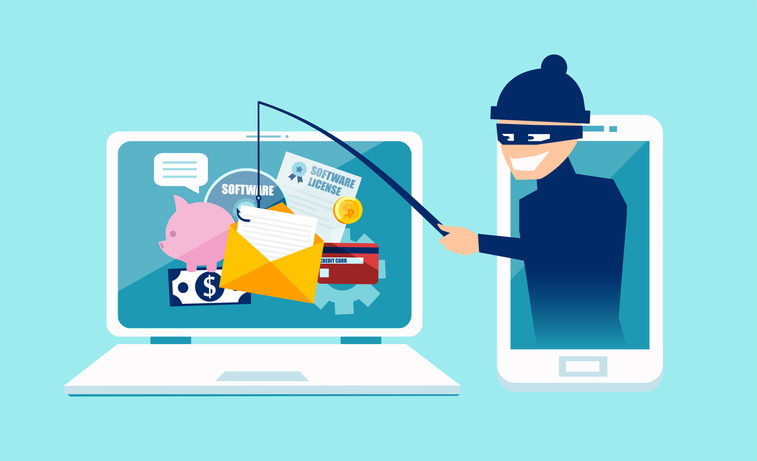
Email phishing has been in the playbook of hackers since, well, email. What’s alarming is the scope in which criminals can conduct these attacks, the amount of data potentially at risk, and how vulnerable many businesses are to phishing attempts. Here’s what you need to know to spot the hook and protect your data from being reeled in.
How Does Email Phishing Work?
A phishing email typically contains an attachment in the form of a server-parsed HTML (SHTML) file. When opened, these shady files redirect the user to a malicious website often disguised as a legitimate product or service provider. The website then requests sensitive information such as the user’s address, date of birth, social security number, bank account number, etc. in exchange for providing said product or service.
Users who comply end up giving their information to a criminal who may then sell it to various illegal organizations. Victims may end up losing money and having their identity connected to criminal activity. The attackers may even offer to sell the information back to the owner for a hefty ransom. For businesses, the damages can be irreparable. Phishing is often the launchpad for large-scale cyber attacks, and businesses that fall victim can lose not only cash and assets, but the trust of current and would-be customers.
Who Does SHTML Phishing Target?
While many individuals fall victim to phishing, the main targets are businesses in the banking and finance sector. The sender may use a seemingly legitimate email address, often posing as a trusted, reputable organization. They may goad users to open attachments by claiming to be the IRS, a wealthy businessman offering a lucrative deal, or, ironically, a security provider offering to scan the user’s computer for vulnerabilities. While many phishing attempts are obvious, some can be convincing, and all it takes is a hasty click to give the phisher what they want.
Types of SHTML Phishing
Depending on the attacker, a phishing attempt can range from simple and generic to detailed and personalized to fit the target. For businesses that conduct large quantities of transactions, a phisher may send a simple email claiming to provide a receipt for their purchase. Others may send invoices. Sophisticated attackers may gather information about the business including its suppliers, partners, and even names of individual employees. They may then create fake accounts disguised as these trusted entities, fooling the target into giving away sensitive data. While most phishing attempts fail, a convincing premise combined with a busy, distracted user can equal success – and disaster.
Potential Signs of SHTML Phishing
Being proactive and training your employees to spot phishing is the best line of defense. Here are some potential red flags that may, but not always, indicate that an email is a phishing attack:
Poor spelling and grammar
Strange characters and punctuation
Email addresses comprised of a seemingly random combination of letters and numbers
Emails claiming to offer large sums of money
Emails claiming that you owe a large sum of money
Emails claiming that your data is at risk and offering protection
An overly lengthy or short email body
Attachments with file types you don’t recognize
How to Protect Your Business from SHTML Phishing
While there’s no way to guarantee that your business will be 100% safe from phishing attacks, you can take precautions to greatly minimize your risk of becoming a victim. Many email clients have rules that automatically filter out suspicious or spam emails. Savvy IT professionals can create additional rules to identify and block phishing emails.
The greatest defense is training every employee to recognize the red flags, especially the not-so-obvious ones. Make basic data security a part of the onboarding process, and hold presentations and seminars several times a year to keep employees aware and bring to light any new threats they should look for.
Data security is more relevant than ever, and businesses need to stay up to date on the latest cybersecurity threats. Is your business taking the necessary precautions to keep phishers away?

by Felicien | Jul 31, 2019 | Education
You Can’t Get Away With Skimping on Technology
Is your IT a driving force for innovation, or simply being used to keep the lights on? Companies must fully leverage technology to compete — and win — in the future.
What does your company make or do? Chances are, the answer won’t be “technology”, but do you still have a tech slant to your business products, services and operations? Companies today can’t get away with simply saying “We’re not a tech company”, and shuffling off innovation. Technology is one of the most important tools that your business has to help bypass competitors and make a difference in the world. Investments in technology continue to rise, making many seniors executives question whether this trend of IT spending can continue — and whether it’s truly adding value to the organization. As a business leader, it’s crucial that you’re able to articulate what happens when you attempt to skimp on providing the necessary tech for your business.
Why is Technology Important in Business?
It may feel silly to even ask this question, but there are still people who struggle to see the fit for their business. Maintaining the status quo worked for generations, why is there a need to change and evolve? Operations are tightly integrated into technology, so every time your organization interfaces with another there’s a high probability that you will need some sort of technology solution. Your business technology handles everything from the way your customer service representatives answer the phone to routing orders and shipping products from your various facilities. The infrastructure that undergirds your business is an intrinsic part of your ability to thrive in today’s competitive marketplace. Simple solutions may miss the mark, costing you significantly more than expected in terms of remediation or hiring additional contractors to resolve any issues. Finding the right partner can make the difference between a well-scoped and successful project and one that runs significantly over-time and over-budget.
The Rising Cost of Technology Downtime
With the addition of more tech to your business, there’s always the potential for downtime and outages — something that is both increasingly familiar and increasingly expensive for your business. A study by AppDynamics examined the true cost of downtime and the failure of infrastructure, as a way to introduce the importance of DevOps cycling. This study showed that Fortune 1000 organizations are spending upwards of $1.25 – $2.5 billion on downtime each year, with the average hourly rate for downtime at $100,000. While this could be scaled down dramatically for a smaller organization, the scale of the impact is every bit as great. While downtime is something that is nearly inevitable, it can be minimized by creating a secure and redundant infrastructure that helps protect your organization in the event of a cybersecurity incident or other event.
Dire Results of Skimping on Technology
It’s not an overstatement to say that skimping on your cybersecurity or infrastructure technology could cost you your business. More than 60% of small businesses cease to exist within 6 months of a data breach, a sobering fact to say the least. These cybercriminals are targeting major enterprises, but these are the high-profile attacks that you see in the news. The more common M.O. for a hacker is to target small to mid-size businesses, as there’s the perception that these organizations are not as proactive about putting together proactive cybersecurity as their larger brethren.
While security is important, the overall experience of your customers is often the most critical measure of success for an organization. When there are competitors around every corner, your business must be able to differentiate in a way that provides unique value to your customers. That often comes in terms of superior customer service or more intuitive websites and interactions. Shoppers are often willing to pay 15-20% more for a better and more personalized experience, which offers even greater value back to your business. With an investment in your infrastructure, you’re not only improving your operational efficiency but also providing a more secure and robust platform with which your customers can interact. Customer experience may feel like a buzzword that is used by management gurus, but it’s a real concept for your customers.Reducing operational steps, driving efficiency back into your business and creating a truly customer-focused organization doesn’t always come cheap. When you reduce the quality of your operational infrastructure and technology support, you could be negatively impacting the future worth of your business — not to mention alienating the all-important customer.

by Felicien | Jul 31, 2019 | Education
Why Every Business Should Invest in Cybersecurity
Cyber security is essential to businesses of all sizes. Learn how to keep your business up to date and protected from the most common digital threats.
Cybersecurity is no longer a concern exclusive to large corporations. Since the infamous attacks on Equifax, Target, and Apple, cybercriminals have started to shift their focus towards smaller businesses. Without proper security protocols, small businesses are sitting ducks even for novice hackers.
In recent years, the cost of data theft targeting small and medium-sized businesses (SMBs) has risen significantly. The Ponemon Institute reports a 17% increase in the average cost of theft and damages, and a 26% increase in the average cost of disruption to operations. The threat has prompted many SMBs to invest more heavily in third-party data security services.
Cybersecurity in a Continuously Evolving Digital Space
Ever-evolving technology makes the world more connected, but also makes data more vulnerable to attackers. Gone are the days when an antivirus, firewall, and email filter were enough to earn a passing cybersecurity grade. As criminals refine and improve their methods of attack, businesses and IT professionals must step up their defenses.
The most recent trend in cyberattacks is a shift towards SMBs, many of which lack the breadth and depth of data security that larger corporations are likely to have. Illicit tactics such as email phishing, direct hacking, and installing ransomware can spell big trouble for SMBs. If your data is compromised, the results can extend to your customers and other members of your supply chain.
Consequences of a Data Breach
The fallout from a data breach depends on the scale of the attack and the value of the data stolen. Hackers may be able to seize control of accounts, drain funds, freeze assets, and access sensitive customer information. If you operate in the healthcare or financial sectors, you may be liable to pay reparations in addition to suffering the cost of stolen capital and the inability to continue operations. The cost of a large-scale data breach can devastate even the wealthiest of corporations, and will most certainly overwhelm a small business.
How to Improve Cybersecurity
A common misconception is that only large corporations can afford effective cybersecurity. In most cases, implementing cybersecurity isn’t merely a matter of money, but of proper training and awareness. A Ponemon Institute study linked 54 percent of data breaches to employee or contractor negligence. This includes email phishing, which is often the first step attackers use to conduct large scale theft of usernames, passwords, and other sensitive data.
Educating and training your employees on cybersecurity minimizes the risk of data theft at the point of contact. Your business should have protocols to identify signs of phishing, choose secure passwords, and grant or deny access to information. You can also inform your customers about how to keep their information secure. Taking this two-pronged approach shows customers how committed you are to keeping their data safe.
Being proactive and spreading the word on cybersecurity threats will help you protect your business from hackers. Whether you’re a multinational corporation or a two-person mom-and-pop shop, your customers rely on you to safeguard their data. Implementing the latest security practices lets them know that you value their trust.

by Felicien | Jul 31, 2019 | Education
What Is the Dark Web and How Can You Stay Off It?
Ever heard of the dark web? It’s definitely not a place you want your company’s information to be. Learn everything you need to know about the dark web here.
Most people have heard about the dark web in one form or another. It’s a place where criminal activity happens — from the purchase of illegal drugs to the hiring of assassins.
Of course, there is a legal side to the dark web as well; though, most people don’t know about. In fact, the origin story of the dark web is entirely legitimate and is even linked to the government.
Still, as a business owner or CEO, your relationship with the dark web (should you unfortunately have one) will not likely be good. It’s a bad sign if any of your information is found there. That’s why it’s important to know about what exactly the dark web is: Where it came from, what’s on it, and what you should do to stay as far away from it as possible.
What Is the Dark Web?
The dark web is essentially one “section” of the Internet. Specifically, it’s a section that isn’t included in mainstream search engines like Google. So, when you search a normal search inquiry, such as, “Where’s the best hamburger joint in downtown Pittsburgh?” you don’t get results from the dark web.
Instead, this section includes all sorts of illicit goings-on. Mostly, it’s a marketplace for things you shouldn’t be buying because they’re illegal to sell and/or buy. For instance, you can buy lifelong access to Netflix for a small price (six bucks). You can hire someone to hack into someone else’s computer for you and download their data or track their keystrokes. You can purchase credit card credentials. You can obtain prepaid debit card numbers and security codes.
How Does One Access the Dark Web?
We’ll reiterate again that the dark web is not a place you want to find yourself (or your information). However, for the sake of knowledge, we’ll explain that in order to access the dark web, you must download what’s called the Tor browser.
Tor stands for The Onion Router. This is basically the software that makes the dark web operate in the dark.
Where Did the Dark Web Originate?
The dark web began in the late 1990s as a way for the United States Naval Research Laboratory (NRL) to better hide their online communications. At this time, The Onion Router or Tor was brand-new.
Soon after its initial creation in 2004, the dark web’s Tor software was released for public use. Since that time, it has ceased to be solely a government resource and has turned into the “back alley” of the Internet.
How Can the Dark Web Affect Business Owners?
The dark web is a potential danger to all businesses of all sizes and in all industries. In fact, it can be a potential danger to individuals as well. But let’s talk about your business and the dark web.
Basically, it has been found that 60% of the web listings on the dark web could harm a business. That’s because, these listings offer individuals searching the dark web ways to obtain things like the following:
Customer data
Tips for hacking computers
Tips for hacking networks
Malware
Financial data
Phishing advice
Operational data
Intellectual trade secrets
Tutorials for cyber crime
Remote access Trojans (RATs)
Espionage services
Credentials access
How Can You Keep Your Business Safe From the Dark Web?
The best way to keep your business safe from the dark web is to have the proper cybersecurity measures in place. This means hiring a cybersecurity team or a managed service provider (MSP) to handle your company’s cybersecurity. Even if you’re a small business, hiring an MSP to have on retainer is a good idea.
They will make sure that you have firewalls and other detectors of malware in place for adequate security. It’s also essential to back up your data and to make everyone who works for or with your company aware of how to avoid phishing attempts.
Lastly, your cybersecurity team should be monitoring the dark web to make sure that none of your information lands there. This goes for personal information for you and your employees, as well as overall company information. Taking these measures is the only surefire way to ensure that your company does not end up on the wrong end of the dark web.