
by Felicien | Sep 22, 2017 | Education
Are you afraid of new technology disrupting the way you do business? Don’t be. These three tech trends will completely change the way people do business by 2027—And for the better.
Technology changes, but what it takes to run a successful business never does. The most capable business owners are the ones who have the foresight to adopt new ideas and to adapt to different ways of doing things.
{company} helps our clients use advances in technology to build their companies and to help them reach their personal and business goals. We believe the best way to grow any business is keeping one eye future while working hard today.
We’re living during a time of rapid innovation when it’s close to impossible to catch your breath between each new extraordinary development. Although it’s true that tech trends come and go, we believe these three technologies are here to stay—And they just might change the way you do business five or ten years down the road.
Three Digital Trends That Will Influence Tomorrow’s Business World
Artificial Intelligence.
Embrace it or fear it, AI is coming—And it’s going to alter everything. Already, AI programs have the capability to beat human players in games like Go and DOTA 2. While that may seem impressive, within the next ten years, the abilities of companies to harness the power of AI is going to be something to behold.
When you hear the term. “AI”, don’t imagine Andrew Martin, the android from “The Bicentennial Man”, or even HAL 9000 from “Space Odyssey. Instead, picture a powerful computer with the capability of self-monitoring and correction. This is the type of AI that will have the ability to increase productivity by completing tasks and helping humans to make better decisions. They will do this in part by analyzing the big data most corporations have been collecting for years—And, AI will do it better and more quickly than any human ever could.
Companies will come to depend on AI to make major (and minor) business decisions from the best way to market products, to making extremely accurate predictions regarding financial markets.
Augmented and Virtual Reality
Augmented and virtual reality is just now on the cusp of what these technologies will become in the future. Virtual reality (VR) is the technology that most are familiar with–However, augmented reality (AR) holds more promise for businesses.
As you probably already know, VR creates a fully simulated environment by using computers much in the same way as the holodeck from Star Trek. AR. It lets a user see the real, physical world but creates and superimposes images on top of it. A popular example of this technology is the Pokémon GO game.
Within ten years, companies will be able to take advantage of both technologies in a variety of ways. Virtual reality is a natural for immersive training scenarios, virtual meetings, and inspections, or for walking a client through a computer-generated model of a home. Augmented reality will let consumers “see” how they’ll look in an outfit, or if a new sofa will look good in their apartment before ordering it.
However, this technology offers more important capabilities. The real power of AR won’t be completely realized until technicians can use it to guide them through a critical repair, or doctors to perform delicate, life-saving surgeries.
The Internet of Things
The Internet of Things (IoT) will radically influence almost every aspect of the way large companies do business within the next ten years.
But what is the IoT? It’s a network of physical objects that constantly interact with one another, remotely. These connected objects can be anything from the cell phone you use to start your “smart” coffee maker, to Wifi-enabled chips to keep track of the precise, physical location of inventory items.
The IoT will also allow companies to make better and more timely decisions. This is because it can remotely monitor things. By using the IoT, companies will have access to a constant stream of up-to-date information. This is thanks to the use of connected sensors and cameras. Whether a business uses this information to decide when to fill up a vending machine or to know when it’s time to do preventive maintenance on an engine, depends on the type of company using it.
The IoT is a marketer’s dream. Using the IoT, businesses will be able to collect enormous amounts of data about the behaviors and preferences of customers from the ways they interact with their connected devices.
The future of business is here. If you want to remain competitive in your market, you should begin to investigate which future technology is best for your particular company. We can help. To learn more, contact the experts at {company} at: {phone} or {email}
by Felicien | Sep 21, 2017 | Education
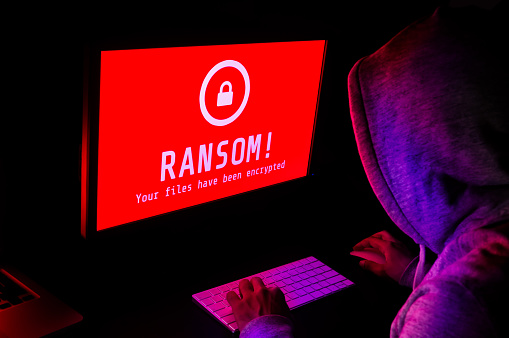
New Ransomware Threat Hitting US Businesses
On September 19th, Barracuda announced that they have been tracking an “aggressive” new ransomware threat. The ransomware attack appears to have originated largely in Vietnam, although other sources have been traced back to India, Columbia, Turkey, and Greece.
This latest attack, following right on the heels of WannaCry and Petya, has been identified by Barracuda researchers as a Locky variant with a single identifier. The significance of the single identifier is worth noting: since there are no unique identifiers for each victim, it’s impossible for the attackers to determine who has paid a ransom and who hasn’t. This indicates that the criminals have no intention of sending decryption keys to the victims who pay the ransom.
This threat should not be ignored. Barracuda monitored over 20 million attempted attacks within the first 24 hours of identifying the threat, and that number has been growing steadily since.
We’ve already seen a few businesses in {city} affected by this attack, so we wanted to remind everyone of the importance of a reliable, robust data backup system.
Here’s what you need to know:
These ransomware attacks are mainly coming through via email.
Current reports show that these attacks are coming in the form of spoof emails, usually branded with “Herbalife” logos or disguised as a “copier” file delivery. Though cybersecurity experts are working to stop this attack, the attackers are using randomly-generated payload files to stay ahead of anti-virus updates.
The latest variants include:
Email with ‘Emailing – .’ as the subject line. One example is: ‘Emailing — 10008009158.’
Email with a paragraph with legal wording to make the email seem legitimate.
Email with “payment is attached” in the subject line to entice people to click on it.
While some businesses are losing days of productivity due to encrypted workstations and servers, our clients who have chosen to protect their data and infrastructure with a reliable backup and business continuity solution are experiencing ZERO downtime. A proper business continuity strategy makes all the difference in these situations, and Datto has proven an essential part of such a strategy.
These unfortunate attacks are becoming more frequent and more difficult to contain. If your business hasn’t already been targeted, we urge you to consider the value of your data and the importance of your network’s integrity. Can you afford to lose days or weeks to a ransomware attack?
You don’t have to.
If you have any questions about this latest ransomware attack or would like to know more about business continuity solutions, {company} offers complete business continuity and cybersecurity experts at {phone} or {email}.
by Felicien | Sep 21, 2017 | Education
What a Virtual Private Network Is and Isn’t.
Virtual private networks are an understandably complex topic. We shatter all the myths here—Read on so you’re informed.
VPN is an acronym for “virtual private network.” It’s a term that describes a popular way to extend a private network across a public one (like the Internet).
Think of a VPN as a special lane on the highway that only you and your employees can use. You’re still traveling up the Interstate with hundreds or even thousands of other cars— Yet, anything you do in your lane stays safe and secure at all times.
VPNs are essentially like this, just played out across the technological landscape. They’re a fast, efficient and (most importantly) a secure way for you to send and receive information over the Internet without worrying about identifying the information being compromised.
Myth #1: Free VPNs Are Perfect for Your Business.
Perhaps the biggest myth surrounding VPNs is that you shouldn’t have to pay for them because there is a wide range of free options available. When you need a VPN for business use, this is absolutely not the case. Paid VPNs not only offer a higher level of security by way of better encryption, but they also provide faster speeds and larger data allotments.
Myth #2: VPNs Are Too Slow to Use.
Many people think that because VPNs encrypt data at the device level before transmission, they’re too slow to use for most professional purposes. This is only true if you’re talking about a free option. If you’re willing to pay for your VPN service (and you should be) this isn’t an issue because you’ll get priority service.
Myth #3: VPNs Are Too Hard to Use.
Another common misconception is that they’re too hard to use unless you’ve got an advanced level of technical knowledge. This may have been the case at one point, but it isn’t today. While configuring your VPN may take some time, it really isn’t difficult to do. Once you get your service up and running, you won’t have to think about it again. You’ll be able to use the Internet the same way you always have.
Myth #4: VPNs Are Completely Anonymous.
Many people think that because VPNs offer a sophisticated level of data encryption, their online activities are totally anonymous. This isn’t so. While it’s true that 256-bit encryption is difficult to break, it isn’t impossible. Likewise, your VPN provider will keep a log of some or all of your activities for a period of time dictated by the terms of service. You’ll be more anonymous and more protected than ever before, but nothing in life is certain – especially when you’re talking about technology.
Myth #5: All VPNs Are Created Equal.
This is another myth that creates problems, particularly among enterprise users. People think that because all VPNs work in essentially the same way, those VPN providers are all the same. In reality, there are a number of factors that separate one provider from another. Speed, supported platforms, the number of available servers, and price all play significant roles in the quality of the service you’ll receive. As always, it’s best to shop around to ensure you’re teaming with a VPN provider who can meet your needs.
Myth #6: When You Use a VPN, You’re Totally Safe Online.
Unfortunately, a lot of people think that because a VPN offers increased privacy and security, they are totally protected online. Just because you have a VPN doesn’t mean you can do whatever you want online (like clicking on that link in an email from a recipient you’ve never heard of without fear of consequence).
A VPN isn’t a suitable replacement for antivirus software, network protections, and good, old-fashioned common sense. All a VPN does is offer additional protection while you’re online, and allow you to keep some of your activities private. That’s it.
A virtual private network was not, nor will it ever be, designed to keep your browser safe and secure. As a business leader, you should continue to invest in additional training for your employees to prevent costly mistakes that could easily lead to a data breach or other cyber incident.
One thing’s for sure: As privacy and security become more important in today’s fast-paced digital world, technologies like VPNs are going to become more essential. However, at the same time, it’s important to always do your research to make sure you understand what a virtual private network can and cannot do. Only then, do you stand the best chance to stay safe from the types of people who want to do you harm?
If your business is in {city}, and you’d like to find out what type of virtual private networks is best for your purposes, contact {company} at {phone} or {email}.
by Felicien | Sep 21, 2017 | Education, General
Security vulnerabilities are no joke, especially in the healthcare industry.
See how keeping patches and security measures up-to-date will protect your patient data, and your organization’s future.
Healthcare poses a unique challenge for cybersecurity professionals, with some of the largest threats in recent history coming from ransomware attacks. With billions of dollars lost each year in data breaches, healthcare organizations have a lot to lose if personal data is breached.Hospitals, in particular, are vulnerable (as proven by the May 2017 global ransomware attack tied to a National Security Agency leaked exploit). The hospitals that hadn’t installed a critical Microsoft patch were susceptible to the hack. This could have been prevented by ensuring all maintenance tasks were up-to-date.
Healthcare Cybersecurity Threats Are Increasing!
As the IoT (Internet of Things) expands into the healthcare realm, security becomes an even bigger challenge for healthcare IT administrators. The cyber threat landscape continues to evolve, making it even more difficult to predict where attacks will come from in the future.The widespread use of healthcare-related devices such as heart monitors, mobile phones, and other mobile-ready devices provides a “playground” for individuals looking to hack corporate healthcare networks. The fast-paced adoption of digital health records continues to provide challenges to IT leaders due to the lack of interoperability between systems.
Fortunately, IT managed services firms like {company} offer a way for understaffed hospitals, healthcare providers and networks to leverage additional support to ensure that the “guardrails” remain strong, and threats are minimized.
Your Employees Are Your First Line of Defense.
Without extensive cybersecurity training, most employees won’t understand the potential severity of their actions. IT professionals should constantly be on the lookout for opportunities to preach IT hygiene with users, including the practice of limiting orphaned or untracked devices.There are plenty of headlines around cyber security threats from malware and hacking. And phishing is on the rise again as employees are targeted, being the weakest link in the security chain.
New staff members who aren’t familiar with security requirements, both physical and digital, may not be taking the necessary steps to ensure workstations are fully secured before stepping away. Passwords may be less-secure than administrators would like, and the fast-paced environment may lead to skipped steps.
Much of the work to educate employees about cybersecurity is left to business-level leaders who may not understand the full impact of the requirements themselves. This is why it’s imperative that IT security training is done by experts like those at Computer Network Systems.Improving Breach Response and Blocking Attacks with A Proper Defense.
A proper defense involves:
A diligent attitude about applying server and software patches. This can substantially limit the ability of hackers to gain digital entrance to your organization. While time-consuming to manage, keeping Windows and other critical patches updated can stop many widespread attacks. Microsoft provides immediate access to updates that are known vulnerabilities to help keep organizations safe. Take advantage of them.Penetration testing by IT experts with technical testing, and replace or refresh end-of-life platforms with options that can be more secure.The use of sophisticated detection software, as zero-day attacks, are likely to become more common and the overall sophistication of hackers will increase. Advanced anti-virus and malware detection solutions are critical, as well as upgrades to next-generation firewalls.
Controlling access to critical information. This provides hospitals and other healthcare organizations with a way to reduce the opportunity for social engineering or phishing hacks to occur. Personally identifiable healthcare information, also known as PHI, can be sold for as much as $50 per record on the open market, making it an exceptionally valuable target for hackers.
A need-to-know policy. If employees only have access to information that they need to do their jobs, then there’s less of a chance they’ll be able to inadvertently provide access to unauthorized parties. Limiting privileges at all levels of the hospital administration provides an intermediate step that helps manage support requests and reduce the number of potential breach incidents that happen on an ongoing basis.
Advanced tools to combat advanced threats. Attacks today can be focused on DNS servers, where hackers have the ability to knock out an entire range of systems in one fell swoop: email engines, web-based services and more. The level of disruption caused by this type of attack can be difficult to return from and causes a serious distraction from crucial patient care. The new AI (artificial intelligence) options, as well as behavioral analytics, are one way that organizations can help manage the potential threats through quick attention to any breaches.
The recent Equifax hack clearly demonstrates the importance of quickly rolling out security fixes, and ensuring that all patches are up-to-date. If the Equifax team had simply applied a security patch, it’s unlikely that the hack would have been successful–saving the company millions of dollars in remediation, notifications and lost business.

by Felicien | Sep 21, 2017 | Education
Do people respond to your emails?
YES – You probably do 5 key things.
NO – You could do 5 key things.
Subject Line:
Add “Response Needed” at the end of the subject line.
Greeting:
Make it positive and personalized to set the email tone and indicate this isn’t a mass email.
Call to Action:
Tell the reader what you want at the beginning of the email. Use bold, color or type size to further highlight your request/deadline.
Information:
Email content is best with:
1 subject per email, to stay on topic
1-3 short sentences per paragraph
bulleted points, for easy reading
Note: Emails between 50 and 125 words are 50% more likely to be read (according to Boomerang).
Closing:
Solidify your relationship with the reader and encourage/discourage a response.
Use these 5 key tips to get a response to your emails, as the average office worker receives 120 emails every day.
Thanks to Karen Turner for sharing this tip with us.
by Felicien | Sep 20, 2017 | Education
Are you one of them? If so, what should you do?
Addresses, social insurance numbers, and credit card details were compromised in the massive Equifax hack that hit 143 million Americans, and now we’ve learned 100,000 Canadians.
While 100,000 Canadian victims compared to the143 million Americans, seems quite small, if you’re one of the few whose confidential information was compromised, these numbers don’t matter.
Equifax set up a website for Americans to check whether their information was affected by the breach, but that website doesn’t work for Canadians! However, Equifax said that they’ll be sending notices out in the mail to all impacted customers, with instructions as to what to do. Credit card companies are also expected to reach out to those Canadians who were affected as well.
What’s not clear is whether those affected are limited to Canadians with dealings in the U.S. And you can only ask for a replacement SIN if you can prove to the Canadian government that it’s been fraudulently used.
In the meantime, take a proactive stance against identity theft:
Sign up for Equifax’s free credit monitoring and identity theft protection. Also, consider freezing your credit report. The majority of Canadian banks offer credit monitoring, which helps keep track of any suspicious activity that could potentially be linked to identity theft.
Be sure to scrutinize your credit card and bank statements every month for charges that you don’t recognize. (You should be doing this anyway.)
Watch out for any notifications that new credit applications have been filed on your behalf. If your personal information is circulated on the black market, other criminals will try to find ways to take advantage of it.
Keep a lookout for con artists. Cybercriminals often sell stolen personal information for use in email “phishing” and “spear-phishing” campaigns that persuade victims to hand over additional sensitive information, including bank account numbers. Never send sensitive information via email. Instead, contact the sender of the email by telephone to make sure the correct person really requested the information from you. And, don’t trust anyone who contacts you offering to protect you from the Equifax breach
For more information about what you can do, go to: https://www.consumer.equifax.ca/canada/equifaxsecurity2017/en_ca/
Or contact {company} in {city}. We’re always here to help. {phone} {email}