
by Felicien | Dec 6, 2017 | Education
Cybersecurity is something many of us are not entirely familiar with. It seems like something we do not need to worry about unless we work in the tech industry, because who ever heard of an individual being targeted on the web? As seemingly unlikely as it may seem there are cyber-attacks issued on individuals every day. This means that not only do large industries such as the banking and healthcare industry need to worry about cyber-attacks, but everyone including the average Joe should be aware of this potential threat. The sad truth is that if you are using the internet you have the potential to be targeted by hackers.
Why Cybersecurity Matters
Cybersecurity is essential in ensuring that private or sensitive information does not fall into the wrong hands. This is becoming increasingly difficult as the number of harmful material- such as malware- that is being launched daily has risen to nearly 230,000 samples. It can be difficult for people to determine what is safe and what is not safe on the internet these days with the rising number of hacking attempts. Already cybersecurity crimes are costing $100 billion dollars a year globally. This number is only expected to increase, and an estimated $1 trillion will be spent on cybersecurity between 2017 and 2021.
When hackers and cyber terrorists are making these attempts, there are usually sinister motives behind them. This is usually an attempt to steal information so that they may be able to commit fraud, harassment, or identity theft. If they are successful in their attempts hackers can do more than ruin your day, it could have lasting effects on you and your company.
Who is Affected by Cyber Crimes
Most of us know that large industries such as government, retail, and tech are at elevated risk for cyber-attacks if they do not take the proper precautions. In fact, 95% of breached records came from these three industries in 2016. This makes sense, as these are industries that hold a lot of information and are profitable, making the information they have desirable to hackers. Furthermore, malware has infected 75% of the healthcare industry over the last year. And since 2013 over 300,000 records have been stolen each day. This makes for an average of 44 records being stolen every second. This is confidential information that both companies and individuals work to keep secure. If these records are stolen it not only has an impact on the company but also on the individual. Because of this, it is important to remember that individuals must be aware of their own cybersecurity as well as that of businesses and companies. Small businesses face the threat of cyberattacks as well. 43% of cyber-attacks are aimed at small businesses, and 64% have experienced some form of web-based attack.
It is important for anyone who uses the internet to be aware of their online presence. There is an attempted cyber-attack every 39 seconds and one in three of these attempts will affect Americans. These attempts are not only aimed at large corporations like banks and government industries, but they can also impact individual internet users. Largely the place cyber-attacks are more likely to occur is on individuals using mobile devices. There was a 31.7% increase in mobile device attacks between 2011 and 2012 and with the increasing number of mobile devices the likeliness of an attack only rises. Currently, it is estimated that there are 25 connected devices- including mobile devices such as phones, tablets and the like- per 100 people in the United States. This number is expected to rise to between 50 to 200 billion devices by 2020. It is important for individuals to protect themselves and their devices from attempted cybercrimes.
How the Cybersecurity Industry is Growing and Why
The Cybersecurity industry is expected to have grown from a $106.3 billion-dollar industry to a $170.2 billion-dollar industry by 2020 in a matter of 5 years. The cause of this growth stems largely from the increased number of attacks being issued each day, and companies and individuals desire to keep their information secure. Currently, there are 209,000 cybersecurity jobs that are open, and more cybersecurity job opportunities are posted every day. By 2019 it is expected that there will be 1.5 million unfilled positions in the cybersecurity industry.
There is an increased demand for cybersecurity that is effective, as in the past it seems as if there has just been numerous attempts at securing companies and individuals online only to have the same headlines about cyber-attacks and their success appear on the news. The cybersecurity industry is growing, and specialists are joining the efforts to prevent cybercrimes every day. With only 38% of individuals claiming that they and their business are prepared in the case of an attempted cyber-attack, it is more important than ever to be aware of cybersecurity measures that can be taken to prevent the loss of valuable information.

by Felicien | Dec 6, 2017 | Education
We like tech, it’s what we do. As the holiday shopping season kicks into overdrive, we are bringing you 12 of the most requested, most wanted tech gifts for 2017. Check back each business day between now and December 19th for another must-have tech item and why you should check it out.
If you’re a gamer, especially a console gamer, you’ve no doubt heard of or are watching the Xbox One X. Microsoft has taken its flagship console, the Xbox One, and turned it up a few notches. Sporting 40% more power than any other console on the market and a 6 teraflop GPU (that’s crazy fast), it’s able to produce true 4K visuals.
The new Xbox comes equipped with a 4K Blu-ray disc drive (only console that has this), 4K DVR and 4K streaming, fastest load times of any console on the market, and is compatible with all of your Xbox One games and accessories. The Xbox One X comes with a 1TB hard drive and retails for $499.99 and is in stock at most retailers but you might want to check availability before driving down to your local retailer.
The Xbox One X is an impressive piece of hardware that brings 4K visuals to stunning life. Now you just need that beautiful new 4K TV. (check back next week for more on 4K TVs)
Happy Holidays and good luck on the tech hunt from all of us here at {company}!

by Felicien | Dec 6, 2017 | Education
When business owners regale the virtues of Office 365, others listen and say, “Well, maybe one day we’ll look into it.” The problem with this kind of thinking is that it puts O365 in a box only reserved for larger companies, and that’s not how the platform is designed to work. Many of the features Microsoft has recently added are beneficial for small businesses that want to grow.
An Upgrade from Traditional Licensing
New, small businesses tend to take a casual approach to licensing, buying individual licenses for their personal/work computers as needed. That’s fine, but only for a while. Eventually purchasing one-at-a-time licenses for the Office Suite or other important software becomes expensive and complex to manage from an administrator’s perspective.
O365 is designed for businesses that have grown beyond a few people, into a staff of employees with multiple desktop computers and mobile devices. When you purchase a package, you’re purchasing services based on the number of users, instead of trying to manage individual licenses, or one-time purchases. This makes it easy to plan for upcoming hires while creating a system that you can manage easily. It also helps you close the door on significant security vulnerabilities.
Collaboration Through the Cloud
Cloud tools are everyway these days, and O365 does a particularly good job of encouraging cloud collaboration. No matter what documents you’re working on, they are connected across Office 365 via platforms like SharePoint, so that you team can see them, share and work on them at the same time. Cloud collaboration is built in from the ground level for Word, Excel, Outlook, PowerPoint, and other core Microsoft apps.
Additionally, Office 365 adds powerful collaboration tools that help teams communicate.
The “Teams” app allows people to connect with each other and share information in a more casual IM/email combo.
Planner lets you to schedule events across the office, or assign tasks to specific teams.
Yammer is a social space where you can share docs, videos, updates and questions with your groups.
Office 365 comes with plenty of collaboration tools for the modern business—All you have to do is take advantage of them.
Syncing Data Across Everything
O365 is fully synced, another advantage of using cloud computing to share data. In other words, it doesn’t matter which device you switch to, your O365 apps will all be updated with the latest changes so that you won’t miss out on anything. This widespread syncing is a boon to young companies that need flexibility for their busy employees who hop from one device/location to another. Everything stays up to date, and no one gets confused because a meeting or document got changed.
Plus, syncing with Office 365 doesn’t require a VPN (virtual private network) or other complex setup on your part—Everything syncs right “out of the box” for the services you use, without any extra effort.
Cost Considerations
Startups may see higher fees when they first switch to O365, since the subscription-pay structure is more expensive than a one-time software purchase. However, Microsoft designed it this way to provide more value by including additional services and tiers for different types of businesses.
The good news about this subscription model is that fees are very predictable. They become a set item on the budget so you don’t need to worry about sudden expenses when adopting new technology or creating a new position.
Excellent Threat Intelligence
When you’re ready to upgrade your security, Office 365 is right there waiting for you to make the move. Part of the O365 package (including in the E5 Enterprise tier) is a new Threat Intelligence that includes tailored administrator reports about ongoing security efforts, new threats, and steps to take to secure data. These reports also access systems operations look for suspicious activity, and report it in alerts.
Remember, hackers love to target smaller companies because they often don’t have the strong security that larger corporations do. Prove them wrong by advancing your security efforts.
Reliability and Recovery
Microsoft aims for 99% uptime on its O365 services. If they do go down, you can bet that they’ll be available again in short order. This reliability is important to meet key deadlines – It’s also better than many smaller vendors can offer. Additionally, the cloud-based nature of O365, and the extended use of OneNote and backup services means that data is generally easy to recover if the worst happens and you lose information.
New Lead Management Services
One of O365’s newest benefits for smaller companies is Connections, an email marketing service that allows you to manage and automate leads from Outlook. Set appointments, keep track of contact information, reply to discussions, and much more. It’s very useful for a business that’s still building a customer base but isn’t quite ready for a full marketing platform.
Simplified Invoicing and Listing
Finally, Office 365 provides Listings and Invoicing, two vital services for small businesses. Listings helps you manage your online business profiles to make sure your contact/location information shows up where it should. Invoicing helps you quickly create, send and monitor invoices for clients, plus it’s customizable for a variety of industries.
Interested in Microsoft Office 365 for your business? Let’s talk about it! CompNetSys provides a variety of data services and IT consultations for companies like yours. Contact us at 1.866.205.8123 or sales@compnetsys.com to learn more.

by Felicien | Dec 5, 2017 | Education
We like tech, it’s what we do. As the holiday shopping season kicks into overdrive, we are bringing you 12 of the most requested, most wanted tech gifts for 2017. Check back each business day between now and December 19th for another must-have tech item and why you should check it out.
There’s little denying that this year’s “must have” tech item must be the new iPhone X from Apple. The iPhone X (pronounced “ten”) arrives during the tenth anniversary of the original iPhone back in 2007. Apple has released their iPhone 8 this year as well, but the big dog here is the iPhone X.
Sporting a 5.8-inch, OLED super retina HD display, the screen is capable of 4K video up to 60 frames per second, stunning colors, true blacks, and a 1,000,000 to 1 contrast ratio. It’s the largest iPhone screen to date. It sports dual 12 MP cameras that use facial recognition to unlock your phone. The home button is gone and has been replaced with facial recognition.
The phone is water and dust resistant and covered front and back in the most durable glass in a smartphone. The iPhone X has an all glass and steel construction including surgical grade stainless steel. The new iPhone charges wirelessly.
If all this sounds like your cup of tea, prepare to empty the bank to get one. The 64 GB model will run you $599.99 while the 256 GB model goes for $799.99, both prices are with a two-year contract. It comes in both silver and space gray. All Apple stores, carriers, and retailers have limited stock with several not shipping until mid-December. It’s best to get your order in as early as possible.
The new iPhone a bit too pricey this Christmas? Keep an eye out next week for a less expensive alternative for the must-have smartphone.
Happy Holidays and good luck on the tech hunt from all of us here at {company}!
by Felicien | Dec 5, 2017 | Education
Strategies for Telling the Difference Between Legit Companies and Scam Sites
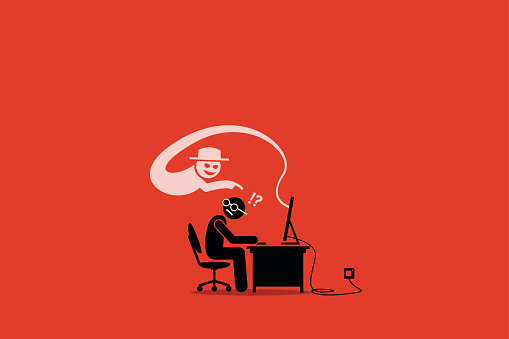
The online landscape can often feel like a field full of landmines. Phishing scams and infected websites are everywhere, waiting for unsuspecting victims to make a wrong click or inadvertently hand over sensitive data.
As technology professionals, we know the importance of being able to tell a scam artist from a legitimate service provider. We also know the value of using real-life experiences as teaching tools. That’s why we’re going to share a recent experience of ours.
How We’re Using a Message We Received to Empower Online Consumers
Not too long ago, we received the following message through our website:
I am highly concerned about getting my computer fixed through this company today. Is there anything you can send me to confirm this is not a fraudulent company?
First, we should make it very clear, that no, we are definitely not a fraudulent company. On Time Tech has been providing strategic and reliable IT support to individuals and businesses in all industries for nearly 15 years. The combined experience and expertise of our team allows us to deliver the highest level of IT service for California business owners. You can check out our wide variety of dynamic and strategic service offerings here.
However, we also want to say: we get it. In fact, we applaud the vigilance in the message we received. Trusting your personal or business devices with an external company for repair requires a certain level of assurance. Businesses and individuals alike should never haphazardly send information to a company before doing their research.
So, we’ve decided to use this message as a teaching tool. What strategies can individuals and professionals use to detect fraudulent sites from legitimate ones? Our goal is to offer concrete tools that will help consumers of all kinds feel more informed and empowered when navigating the online marketplace.
Tips and Tricks: How to Tell a Legitimate Site from A Phony One
As mentioned, trying to secure products and services online can be a tricky game. Cybercriminals are constantly coming up with new and convincing ways to trick consumers and get their hands on sensitive personal or financial information. Consumers shouldn’t have to use guesswork to figure out whether a company site is safe or not.
So, let’s check out the leading ways consumers can determine if a site is legitimate:
Examine the Site’s Security Status
As soon as you visit a website, the first way to verify if the site is legitimate is to check the address bar for the site’s security status. In most browsers, a “safe” site will display a green padlock icon next to the word Secure to the left of the website address. Even better? You can click on that padlock icon to verify the specific security details of the website, including the type of encryption used.
Check Out the Site’s Connection Type
You can also use the address bar to determine the website’s connection type. Websites that use the https tag are usually more secure and in turn more trustworthy than websites that use the HTTP designation. The reason is that https sites have the most legitimate security certifications available. For phony and illegitimate sites, going through the process to get these certifications is too much of a hassle so they use the HTTP tag instead.
It’s especially important to make sure the website’s payment page uses the https tag. However, it must be noted that websites using an https connection can still – on occasion – be unreliable or illegitimate, so it’s important to verify the website using other strategies as well.
Evaluate the Website’s URL
You can also break down the different parts of the website’s address or URL to determine how legitimate it is. A website URL consists of three different sections:
The connection type – http or https,
The domain name – like ours for example, ontimetech, and
The extension – .com, .net, etc.
Even if you’ve verified a secure connection it’s a good idea to look for the following URL ‘red-flags’ that may indicate a suspicious site:
Numerous dashes or symbols in the domain name.
Domain names that imitate legitimate businesses like ‘Wallmart’ or ‘Faceb0ok’.
One-off sites that mimic the site template of a legitimate website, like ‘visihow’.
Domain extensions like “.biz” or “.info” – these tend to be illegitimate.
IMPORTANT NOTE: It’s important to keep in mind that while “.com” and “.net” sites are not inherently unreliable, they are the easiest domain extensions to obtain. As such, they don’t always carry the same credibility as “.edu” (educational institute) or “.gov” (government) sites.
Look for Sloppy Content and Bad English
Once you’ve examined the address bar, it’s a great idea to scan the website for bad English or sloppily written content. If you notice lots of poor-spelling, missing words, bad grammar or awkward phrasing, that’s an indication to question the credibility of a website.
Even if the website in question seems technically legitimate so far, checking out the content and the way the site is put together can help give you a better idea if the source is trustworthy.
Watch for Over-the-Top Advertising and Pop-Ups
This is another huge element to be on the look for. If the site you’re visiting has a huge amount of flashy and annoying pop-up ad’s or ad’s that automatically play audio, the site probably isn’t legitimate. The following types of website ads are red flags:
Ads that take up the whole page.
Ads that require you to take a survey, or complete a task before continuing.
Ads that redirect you to another webpage.
Explicit or suggestive ads.
Use Google
Once you’ve explored the site content, if you still have doubts, use Google Reviews as a tool to determine legitimacy. Type the website in question into the Google search bar and review the results. Google compiles user reviews of high-traffic sites near the top of the search results – check and see if the site in question has any reviews and read them thoroughly. Make sure the reviews you read are from reliable, third-party sources.
Google also has a useful Transparency Report webpage. You can use this site to quickly run a website’s address through the Google transparency service to see the safety rating it’s been given from Google.
When in Doubt, Use the Website Contact Page to Reach Out
When it comes down to it, it’s always better to be safe than sorry. Most websites will include a Contact Us page where users can ask questions and send comments and concerns to the owner of the site. If you’re able too, call the number provided or send an email to help verify the legitimacy of the website. Sometimes getting in touch with another human is the best way to determine legitimacy. If the site in question doesn’t have a Contact page listed anywhere, it should be an immediate red flag.
Navigating a Dangerous Cyber Climate: Balancing Fear with Strategy
No matter what kinds of websites you’re visiting it’s always a good idea to be on the lookout for con artists and fraudulent websites. However, fear of being hacked or scammed should never take over your ability to connect with the companies you need to. You should never have to sacrifice getting things done because you’re afraid the internet isn’t safe.
That’s why it’s critical to get used to the detection strategies in this guide. If you rely on concrete strategies to assess website legitimacy and safety, you’ll feel much more empowered making decisions and handing over information on the world-wide-web. Furthermore, you won’t feel stuck or unproductive, because you’ll feel more confident in your ability to tell a scam from the real deal.

by Felicien | Dec 5, 2017 | Education
Apple has become an authority in providing us with useful software and the required fixes that inevitably come with the development of this software. This was proven true Wednesday, November 29th, 2017 after a bug in Macs High Sierra software was discovered. The bug was discovered by a Turkish software developer by the name of Lemi Orhan Ergin. Tuesday, November 28th Ergin made the announcement on Twitter, directing the tweet at Apple. The tweet reads “Dear @Applesupport, we noticed a huge security issue at MacOS High Sierra.” By Wednesday morning Apple had resolved the issue, meaning that their response time was less than a day after the issue was reported. If this isn’t an example of dedicated customer service I’m not sure what is.
The bug was only apparent in MacOS High Sierra 10.13 or 10.13.1 software. This bug caused a security issue in many Macs running the latest software as it allowed unauthorized personnel unchecked access to anything that existed on the Mac in question. Not only did it allow full access from the lock screen by simply choosing “other user” upon login, but it allowed access to the Mac through the use of the word “root” as the login name, without the requirement of a password. Ergin gave us the how-to on Twitter, listing the steps that would need to be taken as “System Preferences>Users and groups>Click the lock to make changes. Then use “root” with no password.” Ergin ended his tweet by saying “The result is unbelievable!”
Not only did the bug allow those with physical access to the Mac the ability to hack in, but it was also a potential issue with screen sharing. Through screen sharing hackers in remote locations could gain access to the information on the affected computers.
MacOS High Sierra 10.13 and 10.13.1 were the latest software update for the Mac, however, it has since been replaced with a software that fixes this bug. To correct the problem Mac users need only to update their Mac to the latest software. This can be done in the App store on your Mac. By first opening, the App store and then selecting updates in the toolbar users can see which software they are currently using. Here you can select the update button to update your Mac to the latest software. All updates that have occurred in the last thirty days will also be visible here so you can see if you were running High Sierra 10.13 or 10.13.1. This will give you insight into whether you had the potential to be affected by this bug.
It is fortunate that this bug was discovered and fixed so quickly. However, it also puts into perspective how sensitive the information we store on our devices may be, and even more how we should work to protect this information. Since the main threat of this bug was through physical access to Macs it is important to remember to keep sensitive devices in secure locations. If you don’t want others gaining access to your personal or private information precautions must be taken. It is also important to be aware of what software you are using on your devices and whether there are any known or reported issues with the software you are using. Mac users are able to find out which software they are running by selecting the apple icon in the left corner of the screen and then clicking “About this Mac.” After you are aware of what software you are using it is important to be aware of updates or new information that may surface regarding this software. There is no such thing as being too informed where the issue of security is concerned.
The High Sierra security issue is just one bug of many that Apple or any company work to fix each time a new software is released. This is to be expected, as fixing problems before they arise seems pretty much impossible. What is important to take away from this is the amount of effort we should all be put into keeping our devices locked and safe. To ensure that the files we consider to be for our eyes only are in fact only viewed by ourselves. We must remember to keep our devices in safe places, where not everyone will have access to them. It is also a good idea to be aware of what software’s we are running and when, as well as any potential issues the software might have. Staying informed however cannot ensure that there will not be issues, which is why people like Lemi Orhan Ergin and companies like Apple are essential to ensuring device security.