
by Felicien | Sep 4, 2018 | Education
Why are Tech Giants Diving into the Health Care Business?
In a report by Christian Holz and Edward Wang of Microsoft Research, the researchers revealed that Microsoft is creating eyeglasses that measure blood pressure. What Microsoft is calling Glabella, the glasses are equipped with optical sensors hidden inside the frame. These sensors can recurrently measure pulse waves at three different locations on the face. By gauging the time and rate between these three areas and the heart, it can determine the user’s blood pressure. Concurrently, the eyewear can be used as an activity tracker as it also collects information on the individual’s physical activity.
Tech Giants Clamoring to Enter the HealthCare World
Microsoft’s newest eyeglass patent arrives on the heels of its rivals. Apple, Google, Amazon, and Samsung have also filed patents for products in the area of healthcare technology. Google has already filed a patent for eyeglasses that monitor heart rate and Apple recently filed a patent application for a monitoring cuff that measures blood pressure. Samsung’s forthcoming new Galaxy Watch is rumored to be able to calculate your heart rate by using polarized light that can identify the amount of the scattered light.
Amazon is working on a new partnership with JPMorgan Chase and Warren Buffett. Apple is building state-of-the-art medical clinics. Google’s umbrella company Alphabet, is entering the Medicaid market with plans to serve low-income urban residents covered by Medicaid and Medicare. Also, studies show that more and more people are opting out of emergency ambulance service in favor of Uber taking them to the hospital.
Why Are these Tech Giants Making Big Health Care Moves?
Why are the most proven and forward-thinking companies in the field of technology deciding that healthcare should be their next big move? With technology rapidly advancing, these tech titans are noticing a health care system full of administrative ineptitudes, out of control prices, and frustrated customers. To the movers and shakers in Silicon Valley, they see this as a huge opportunity to enter the complex world of health care and make it better.
The Pros and Cons of Tech Businesses in the Healthcare Field
Is health care similar to other areas of the economy that Silicon Valley currently manages? Health care is one-sixth of the American economy, and it is currently managed by a scrambled assortment of manufacturers, providers, administrators, payers, and patients. The complex, murky, and massive healthcare industry has many vested players. They aren’t going to stand idly by and allow Silicon Valley to unseat them.
Also, health care operates in a highly regulatory environment with its complex interactions between patients, health providers, and insurers. For example, Amazon has taken interest in online pharmacies. Look at the complexity of entering the pharmacy world:
The Food and Drug Administration regulates drugs.
Health insurers try to rein in their drug costs.
Drug manufacturers set their own list prices.
Pharmacy managers coordinate deals between health insurers and drug manufacturers.
Consumers are trying to traverse through all this complexity and get their medications at the lowest prices.
In contrast, the benefits of the tech giants’ entrance into the healthcare industry cannot be overstated. Electronic medical records, mobile phones, and health assisting apps have slowly received widespread implementation by the healthcare world. The conglomeration of the two worlds has been at play for several years now. And yet, health care is still incredibly timid in its use of information and consumer technologies.
With the huge amount of money at stake in health care, the tech world’s disruption of this industry could be just what the doctor ordered. Imagine companies like Microsoft adding their knowledge, expertise, organizational skills, operational know-how, and other advantages to the healthcare industry. Patients will receive much better care at a fraction of the cost.
Can They Just Get Along?
Whenever the new kid shows up on the block, there is always fear, mistrust, and jealousy that is felt throughout the neighborhood. In order for tech companies to succeed in the healthcare market, they will ultimately need to forge relationships with professionals who are deeply rooted in this tangled system.
But when push comes to shove, they both can learn from each other. Case in point: Microsoft’s Glabella, which will try to replace the traditional cuff monitor with eyeglasses for tracking blood pressure. The sensors on this new product have only been shown to be accurate for taking the systolic pressure. For optimum accuracy, blood pressure should be measured by taking both systolic pressure and diastolic pressure.
According to the CDC: “The first number, called systolic blood pressure, measures the pressure in your blood vessels when your heart beats. The second number, called diastolic blood pressure, measures the pressure in your blood vessels when your heart rests between beats.”
While systolic pressure is commonly recognized to be more important than diastolic pressure, both readings are important. Systolic pressure is better at assessing your risk of having a stroke or heart attack. Diastolic pressure shows whether or not the heart is relaxing enough and can help doctors prevent future cardiovascular problems in a patient.
As Microsoft’s prototype medical device evolves, developing a way to measure both systolic and diastolic pressure is a perfect example of why the tech and healthcare people need to find common ground in the modern world.
Wrap Up
Consumers in general will benefit greatly from the excellence that companies like Google, Apple, and Microsoft can bring to the healthcare industry. And, most people will agree that this is one area that has not been well-organized for many years. Pharmaceutical companies are well-known for suddenly raising the price of drugs to ten times what they were for no apparent reason. With these tech giants in control, prices should be reasonable. They should stabilize. Care should be improved as well. And with wearable healthcare devices, people will be able to better monitor their health.
In the end, consumers will be the real winners here. For too many years, the healthcare industry has loomed out of control and missed opportunities to provide better care for patients. Their bottom line has always been profit over patient care. With these tech giants now pushing forward, we can expect all that to change.
by Felicien | Sep 4, 2018 | Education
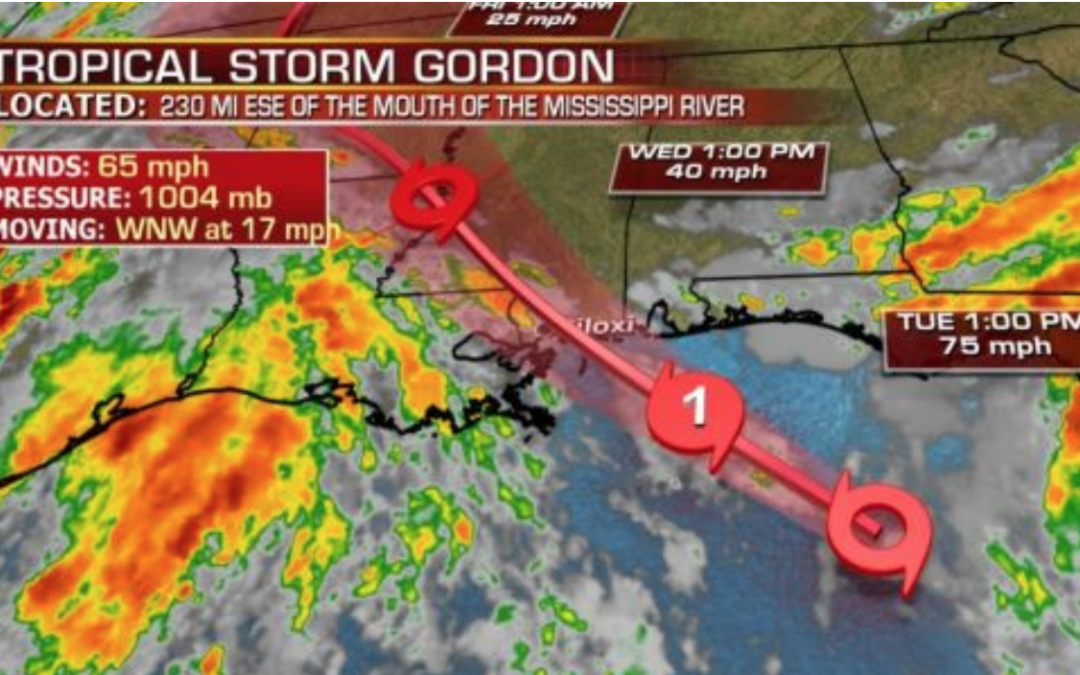
Are You Ready For Tropical Storm Gordon?
Gordon made landfall over the southern tip of the Florida Peninsula on Monday, September 3rd.
It’s now predicted to make its 2nd landfall as a Category 1 Hurricane over the central Gulf Coast from Louisiana to Mississippi late today (Sept 4th).
Are you ready for the storm?
(Courtesy of Fox News)
Tropical Storm Gordon is continuing to gain strength this morning and is expected to become a hurricane by the time it hits the central U.S. Gulf Coast, including coastal Mississippi.
Voluntary evacuation orders have been issued for parts of Louisiana for residents in areas outside the levee protection system.
We’re looking a 3 to 5-foot storm surge along the coasts. And the Weather Channel is predicting 75 mph winds on the Alabama and Mississippi borders. They also warn that there will be flooding inland, so even if you’re away from the coast, you should still make plans to protect your property. That means your business technology.
Here’s What You Should Do Now:
Make sure all of your computer equipment is off the floor, in case of flooding.
Back up all of your critical data in case your computers fail.
Unplug all of your computers when you leave the office.
Make sure everyone reviews your disaster plan in case you need to put it into action.
Keep backup copies of your important documents, such as insurance documents and vendor contact information. Take them to an area that won’t be affected by flooding or high winds.
According to FEMA you should also take these precautions NOW:
(ELEVATE, WATERPROOF, AND CLEAR DEBRIS Your goal now, before a flood occurs, is to reduce the risk of damage to structures from flooding.
This means elevating critical utilities, such as electrical panels, switches, sockets, wiring, appliances, and heating systems, and waterproofing basements. In areas with repetitive flooding, consider elevating the entire structure.
Make sure that basements are waterproofed and that your sump pump is working and then install a battery-operated backup in case of a power failure. Installing a water alarm will also let you know if water is accumulating in your basement.
Clear debris from gutters and downspouts. Anchor any fuel tanks. Move furniture, valuables, and important documents to a safe place.
Know your evacuation routes; plan your transportation and a place to stay. The safest way to survive a flood is to evacuate the area if advised to leave. To ensure that you will be able to act quickly should the need arise, you need to plan ahead. – Know your community’s local flood evacuation plan and identify several escape routes for your location if roads are blocked; include plans to evacuate people with disabilities and others with access and functional needs, pets, service animals, and livestock.
If you will evacuate by car, keep your car fueled and in good condition. Keep emergency supplies and a change of clothes in your car.
If you will need to share transportation, make arrangements now.
If you will need to use public transportation, including paratransit, contact your local government emergency management agency to ask how an evacuation will work, how you will get current information during an evacuation, the location of staging areas, and other information.
If you need to relocate for an extended period of time, identify a place away from home now where you could go if you had to leave. Consider family or friends who live outside of the local area.
If you expect to go to a shelter after evacuating, download the American Red Cross Shelter Finder app. This app displays open American Red Cross shelters and provides the capacity and current population of each shelter. Visit https://www.redcross.org/get-help/disaster-relief-and-recovery-services/find-an-open-shelter.html You can also text SHELTER + your ZIP code to 43362 (4FEMA) to find the nearest shelter in your area.
If you have pets and plan to go to a shelter, call to inquire whether the shelter can accommodate your pets. Shelters will accept service animals.
Imminent Flooding Action Plan (Courtesy of Interstate Restoration)
If you are in an area where flooding or flash flooding has been an afterthought, and are suddenly facing the possibility of a flood, or you simply haven’t prepared, your top priority should be the safety of customers and employees. Here are some key steps to protecting people and your business:
Pay attention—In addition to listening to local weather alerts, keep an eye out in your area for signs of trouble.
Don’t wait to move or act—If there is a chance of flash flooding that could impact your business or leave people trapped in your business, heed official advice for evacuations or other measures and carefully consider the best evacuation routes. Remember as little as six inches of fast-moving water can sweep a person away, and two feet of running water can move a vehicle.
If you have time, grab key documents and information—Hopefully, you have backups of key insurance and business information at another safe site. If not, and the circumstances allow, try to get your most important documents and information to a safe place.
Be safe everyone. Remember, we’re here to help with the restoration of your technology if you need it.
by Felicien | Sep 3, 2018 | Education
Happy Labor Day (Labour Day – International Workers Day – May Day)!
You’ve worked hard all summer. This Labor Day before going back to work and back to school, take some time to relax and enjoy one more backyard barbeque, one more trip to the beach, one more night sleeping under the stars, one more bonfire, and create one perfect summer memory. After all, you’ve earned it!
When Is Labor Day Celebrated Around The World?
In both Canada and the United States, Labor Day is celebrated on the first Monday in September. It’s to honor the achievements of American and Canadian workers. In Australia, it’s celebrated on different days according to which state/territory you’re in.
For some countries around the world, it’s connected to International Workers’ Day that’s celebrated every May 1st. And yet for others, it’s celebrated on different dates that hold a unique significance for their labor movement. Over 80 countries around the world celebrate International Workers’ Day on May 1st.
The History Of Labor Day In The U.S.
The first national Labor Day was held in 1885. The late 1800s was in the height of the Industrial Revolution in the U.S. At this time, the average laborer worked 12 hours a day, 7 days a week. Plus, children ages 5 and above worked in factories, mills and even in mines.
On May 11, 1894, laborers in Chicago working at the Pullman Palace Car Company went on strike. They were protesting wage cuts and the firing of union representatives. Because of the massive unrest, it caused, and to repair relations with American workers, Congress made Labor Day a legal holiday.
As the story goes (no one is really sure) Peter J. McGuire, general secretary of the Brotherhood of Carpenters and Joiners and a co-founder of the American Federation of Labor, suggested we honor our workers.
But some believe that Matthew Maguire, a machinist, was the founder of Labor Day. He was also the secretary of Local 344 of the International Association of Machinists in Paterson, N.J., and it’s said that in 1882 he proposed we have a holiday to celebrate the work our laborers do. At this time he was serving as secretary of the Central Labor Union in New York.
The History Of Labour Day In Canada
In 1872 the Toronto Trades Assembly organized Canada’s first demonstration for worker’s rights. It was held to promote the release of 24 leaders of the Toronto Typographical Union who were imprisoned due to a strike they held for a nine-hour working day. Trade unions were illegal at this time.
There was such an uprising of support that the house of Canada’s first prime minister, Sir John Macdonald promised to repeal all Canadian laws against trade unions. This led to the Canadian Labour Congress in 1883.
In 1894, Labour Day which had been celebrated in the spring, was changed to the fall to be held on the same day as the U.S. The celebration of workers’ rights continues, and many Canadians take the day to relax, take a late summer trip or get together with family and friends at picnics, fairs, and festivals.
Labour Day In Australia
Labour Day in Australia is held to honor the granting of the 8-hour working day and to recognize the contributions of workers to the country’s economy. Before then, the workday was 12 hours and people worked 6 days a week.
In Australia, Labour Day varies between its different states and territories.
In New South Wales and South Australia, Labour Day is celebrated on the first Monday in October.
In Tasmania and Victoria, it’s recognized on the second Monday in March. (Tasmania calls it the Eight Hours Day).
Western Australia celebrates Labour Day on the first Monday in March.
Queensland and the Northern Territory celebrate it on the first Monday in May, and they call it May Day.
On Christmas Island, they celebrate it on the fourth Monday in March.
Labour Day Is Called May Day In The United Kingdom
May Day is a bank holiday in the UK and coincides with Labour Day. It’s also known as Labour Day. It’s commemorated on the first day of May each year.
May Day goes as far back as the Gaelic festival Beltane. In Britain, communities celebrate May Day with village gatherings where folks erect a maypole with ribbons attached that children and adults hold onto while dancing.
A competition is typically held to name one of the girls the May Queen in honor of the Roman goddess Flora. The winner then dresses in a white gown and a crown of flowers is placed on her head. Then, she leads the others in a May Day parade.
Labor Day/Labour Day/ May Day/ International Workers Day
Labor Day, Labour Day, May Day or International Workers’ Day, it’s a public holiday for all to enjoy. Whatever you call it, Labor Day constitutes an annual national tribute to the contributions workers have made to the prosperity of our countries. So, take the time to celebrate. You work hard, and you deserve a nice long weekend!
by Felicien | Sep 3, 2018 | Education
Happy Labour Day (Labor Day – International Workers Day – May Day)!
You’ve worked hard all summer. This Labor Day before going back to work and back to school, take some time to relax and enjoy one more backyard barbeque, one more trip to the beach, one more night sleeping under the stars, one more bonfire, and create one perfect summer memory. After all, you’ve earned it!
When Is Labour Day Celebrated Around The World?
In both Canada and the United States, Labour Day is celebrated on the first Monday in September. It’s to honor the achievements of American and Canadian workers. In Australia, it’s celebrated on different days according to which state/territory you’re in.
For some countries around the world, it’s connected to International Workers’ Day that’s celebrated every May 1st. And yet for others, it’s celebrated on different dates that hold a unique significance for their labor movement. Over 80 countries around the world celebrate International Workers’ Day on May 1st.
The History Of Labour Day In Canada
In 1872 the Toronto Trades Assembly organized Canada’s first demonstration for worker’s rights. It was held to promote the release of 24 leaders of the Toronto Typographical Union who were imprisoned due to a strike they held for a nine-hour working day. Trade unions were illegal at this time.
There was such an uprising of support that the house of Canada’s first prime minister, Sir John Macdonald promised to repeal all Canadian laws against trade unions. This led to the Canadian Labour Congress in 1883.
In 1894, Labour Day which had been celebrated in the spring, was changed to the fall to be held on the same day as the U.S. The celebration of workers’ rights continues, and many Canadians take the day to relax, take a late summer trip or get together with family and friends at picnics, fairs, and festivals.
The History Of Labor Day In The U.S.
The first national Labor Day was held in 1885. The late 1800s was in the height of the Industrial Revolution in the U.S. At this time, the average laborer worked 12 hours a day, 7 days a week. Plus, children ages 5 and above worked in factories, mills and even in mines.
On May 11, 1894, laborers in Chicago working at the Pullman Palace Car Company went on strike. They were protesting wage cuts and the firing of union representatives. Because of the massive unrest, it caused, and to repair relations with American workers, Congress made Labor Day a legal holiday.
As the story goes (no one is really sure) Peter J. McGuire, general secretary of the Brotherhood of Carpenters and Joiners and a co-founder of the American Federation of Labor, suggested we honor our workers.
But some believe that Matthew Maguire, a machinist, was the founder of Labor Day. He was also the secretary of Local 344 of the International Association of Machinists in Paterson, N.J., and it’s said that in 1882 he proposed we have a holiday to celebrate the work our laborers do. At this time he was serving as secretary of the Central Labor Union in New York.
Labour Day In Australia
Labour Day in Australia is held to honor the granting of the 8-hour working day and to recognize the contributions of workers to the country’s economy. Before then, the workday was 12 hours and people worked 6 days a week.
In Australia, Labour Day varies between its different states and territories.
In New South Wales and South Australia, Labour Day is celebrated on the first Monday in October.
In Tasmania and Victoria, it’s recognized on the second Monday in March. (Tasmania calls it the Eight Hours Day).
Western Australia celebrates Labour Day on the first Monday in March.
Queensland and the Northern Territory celebrate it on the first Monday in May, and they call it May Day.
On Christmas Island, they celebrate it on the fourth Monday in March.
Labour Day Is Called May Day In The United Kingdom
May Day is a bank holiday in the UK and coincides with Labour Day. It’s also known as Labour Day. It’s commemorated on the first day of May each year.
May Day goes as far back as the Gaelic festival Beltane. In Britain, communities celebrate May Day with village gatherings where folks erect a maypole with ribbons attached that children and adults hold onto while dancing.
A competition is typically held to name one of the girls the May Queen in honor of the Roman goddess Flora. The winner then dresses in a white gown and a crown of flowers is placed on her head. Then, she leads the others in a May Day parade.
Labor Day/Labour Day/ May Day/ International Workers Day
Labor Day, Labour Day, May Day or International Workers’ Day, it’s a public holiday for all to enjoy. Whatever you call it, Labor Day constitutes an annual national tribute to the contributions workers have made to the prosperity of our countries. So, take the time to celebrate. You work hard, and you deserve a nice long weekend!
by Felicien | Aug 31, 2018 | Education
What Are ATP and Safe Links?
ATP is a form of security feature developed by Microsoft for Office 365, an acronym for its Advanced Threat Protection software package that users are able to purchase for improved security features within the program. They are recommended by Microsoft for business use, claiming to help organizations better secure their operations through the providence of programming that verifies the websites used in emails and document files created through the software within its packages.
After the upgrade to Office 365 is purchased and installed, users working as administrators can create a custom ATP policy that affects website recognition and email security features across the entirety of the network. Additionally, security reports can be reviewed to show sources of attempted violations, potentially identifying internal vulnerabilities or violators in addition to providing some groundwork for ongoing security developments and improvements.
The security feature has been increasingly used in businesses since the final business quarter of last year, and now is considered a viable benefit in addition to email account securities. According to Microsoft, businesses should consider whether the software is a worthwhile investment, while users may wish to combine the investment with Gmail accounts to avoid vulnerabilities to BaseStriker approaches to email phishing.
How Can ATP and Safe Links Help Against Cyberattacks?
Microsoft has developed a number of improvements to ATP in an attempt to increase the security of their customers’ accounts. Following their initial development and release for sale, the software has been upgraded several times. As of last year, Safe Links were added to ATP to relate to URLs for the ProPlus documents of Office 365, including those that are connected to Excel, PowerPoint, Visio, Word, and Office apps available on iOS and Android.
In March of this year, Safe Links were improved to be used to address security vulnerabilities involved in emails sent by business employees and users. To better address security violations and potential hacking from all sources, Microsoft has applied numerous patches and upgrades.
As this threat had not been considered sufficiently addressed through previous versions, new upgrades would be considered beneficial to users and organizations. Safe Links were further improved for application in commonly used Office 365 programs for their online versions, better protecting online users of Word, Excel, PowerPoint, and OneNote.
The software was further updated to better protect Mac-based ProPlus users. In May of this year, ATP developments have been upgraded as well to give more consideration to color schemes, email details, and site links. While ATP is included in extended Office 365 subscriptions, such as the Enterprise E5, Business, and Education A5 subscription packages, it is not offered to basic users. Microsoft currently recommends that users reaffirm the effectiveness of their purchased ATP Safe Link protection through the maintenance and examination of the latest threat reports possible through ATP, as well as updated Safe Links policies. These explain the extent that the features apply to hyperlinks in messages and files.
While Safe Links are considered a useful and practical improvement, they have security vulnerabilities that should be addressed. They are regarded as a fundamental step in protecting against phishing, but are not considered all-encompassing. Outlook email accounts can experience better protection against phishing vulnerabilities when various security programs are combined.
Avanan recognizes Gmail as being the best choice for use in combination with ATP and Safe Links, although this may change in the future as both security and the nature of remaining vulnerabilities change in line with phishing developments.
What Is baseStriker?
BaseStriker is an example of a phishing approach that currently can bypass even the more advanced ATP and Safe Link developments. It involves the use of an additional tag that the security features of Microsoft alone currently cannot detect. This has led to the recommendation that organizations use Gmail rather than Outlook to safeguard against this aspect as well.
Avanan also recommends that users give consideration to the potential for Safe Links to be bypassed with misdirected IP traffic. In addition, they may have the capacity to be bypassed with obfuscated URLs, and the inability to perceive where email links go.
According to findings at Vanderbilt University and through program use, one of the biggest criticisms of Safe Links is that they create false senses of security. Users may believe they are protected against certain phishing and cyber threats when they are not. Therefore, businesses that fail to use other recommended precautions can actually increase their vulnerability. In the end, Microsoft Office 365 security is better than many other similar programs available.
What’s The Bottom Line?
ATP and Safe Links can:
Protect users from harmful links recommended in emails
Check Microsoft’s database for blacklisting and exclusion demands upon clicks
Redirect users to safety
ATP and Safe Links do not, however:
Provide a universal solution to phishing
Protect against BaseStriker or base-tag HTML disguise attempts
Reduce the overall demand for common practice phishing security recommendations