by Felicien | Sep 19, 2018 | Education
What Is Phishing?
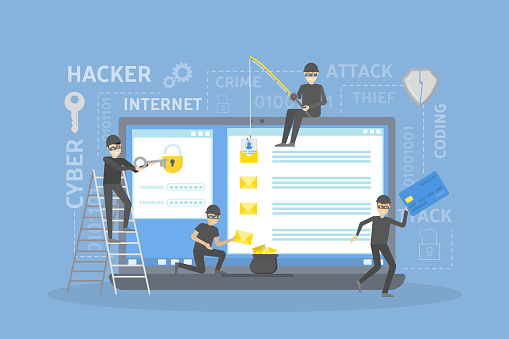
Phishing is the act of sending phony emails to people for the purpose of tricking them into revealing their user name and password. The sender pretends to represent an organization that has a viable reason to make an information request. For instance, you might get a genuine-looking email that looks just like it’s from Paypal. The sender will be claiming that there’s something wrong with your Paypal account. They want you to click on their link and go to your Paypal site and then log in and change your password or some other action.
Should you follow their instructions? No! These are cyber thieves trying to get your personal and financial information. Their goal is to steal from you. Hacking has become big business around the globe.
Microsoft Office 365: How It Works
Office 365 is a longstanding software package developed by Microsoft. It includes Word, Excel, PowerPoint, and other commonly used software applications that are used in business. Office 365, unlike previous versions of these applications, operates through yearly subscriptions. Updates are performed regularly. You have access to the latest programs so you can work more efficiently both at home and in the office.
There are good reasons to operate under a yearly subscription plan using these programs. They’re always current and up-to-date and you never have to worry about maintenance issues. Office 365 is available for phones, tablets, computers and you can work from anywhere there’s an internet connection. Microsoft has consistently created the best security programs and systems to guard its products from hackers. And yet, cyber thieves are finding ways around these security protocols.
What Potential Is There For Phishing Scams?
Any hacker can potentially claim that they represent Microsoft. These thieves have been able to replicate an authentic email very well. People who are not paying attention might fall for one of these phony emails. These hackers can sound like they have a viable reason to request information or actions that could place the account holder at risk.
Using good business imagery and closely matching email addresses, recipients may be fooled. Hackers can easily cut and paste company logos into these emails to make them even more convincing. Meanwhile, users that fail to take a second look may be fooled. They can inadvertently reveal log-in information, credit card numbers, or banking information.
Can Hackers Get Around Microsoft’s Security Features?
Recently, hackers have been using certain phishing methods to bypass the current Safe Links security features found in Office 365 software. Safe Links have been a basic aspect of the organization’s Advanced Threat Protection (ATP) program, which has been helping to protect businesses from receiving damaging links that are sent through phishing.
These links scan the URL in attempt to match it to those entered into a stored blacklist, notifying the user of detections. By using tags in HTML headers, hackers have been able to bypass the detection of harmful listings.
Many users of Outlook have been affected by this approach, and while Gmail’s security has evolved well enough to avoid these kinds of bypasses, similar updates are recommended for Microsoft. SecurityWeek explained that users now have the capacity to block URLs on gateways. While this has helped prevent attacks, software developers will be required to address all these new threats as they design their software programs.
Microsoft has been updating aspects of its security to increasingly protect against the improvements of phishing and hacking actions. Along with their central ATP features, which allow users to customize their account settings, users can create their own system-tailored anti-phishing policy. It will update across the range of datacenters within 30 minutes of activation.
These help but there is now a full range of phishing attack types, including ‘spearfishing’ and ‘whaling.’ These both target specific individuals in an organization—normally someone in a high position such as CEO and CFO.
One of the problems with Office 365 security is that ATP is not available with the basic subscription. Users must purchase the security feature or a different version of the software in order to get the best protection against the latest hacking schemes. Once the additional protection is purchased, users should optimize the wide range of settings available within advanced ATP features to get the best security.
According to The Hacker News, cyber theives have been adding words hidden to the user, reducing their font size to zero, in efforts to make phishing emails appear normal to security code while bypassing its detection features. This method has been used to improve the potential and frequency of phishing scams. There’s now a greater demand for updated security features that are able to detect writing with a font size of 0.
CSO reported that there has been an increase in phishing scam types, and while the zero-font method may be addressed with security code improvements, another type of bypass method will likely be developed by hackers.
What Should I Do?
Microsoft recommends that users follow common practices in addition to optimizing program features to best protect against hacking scams. These may include:
Learn about ATP and its advanced features and security upgrades.
Establish an optimized ATP policy for your business.
Learn about ATP anti-phishing policy options.
Set up an ATP anti-phishing policy that addresses your company’s distinct needs.
Research and upgrade security options and features as needed.
Continue to follow statistics and trends regarding hacking and the efforts of cyber-thieves.

by Felicien | Sep 19, 2018 | Education
Discipline, honor, tradition, and excellence—these could previously be described as the foundation of the legal profession. After decades of consistency, however, the field of law is experiencing an extensive transformation with far-reaching effects. For better or worse, much of this has been attributed to the millennial generation: those individuals born between the early 1980s and 2000.
In the TIME article titled: “The Me Me Me Generation,” Millennials are described in the following way:
“They’re narcissistic. They’re lazy. They’re coddled. They’re even a bit delusional. Those aren’t just unfounded negative stereotypes about 80 million Americans born roughly between 1980 and 2000. They’re backed up by a decade of sociological research.”
However, other research has suggested that this generation is responding to an evolving world defined in part by rapid technological changes. Millennials have become the largest generation wielding a projected spending power of $1.4 trillion by 2020. Attorneys and law firms that wish to succeed in the future should take note of these current trends, which are anticipated to continue.
How Have Millennials Changed the Legal Landscape?
There are many ways that this demographic has influenced changes in how most business is done. This includes business conducted within the legal profession. These changes are evident in response to millennial members of the legal profession, as well as clients of that age group.
First, perhaps above everything, Millennials appreciate the flexibility. They prefer using technology that allows them to work remotely and set their own hours. Billable hours, routine, and face-to-face interactions are less of a priority.
Second, members of this generation require frequent feedback. Whether as a client or a colleague, they prefer platforms where they can monitor progress. Associates also want a clear view of how they are performing in real time.
Third, Millennials value information. They are more likely to want to know the “big picture” rather than being satisfied to just follow protocol. They want to know “why” certain practices are in place. Additionally, they are likely to research employers, colleagues, and clients, etc. A quick google search helps them to determine which firm to hire or work for.
In What Ways Did the Information Age Change the Way Data is Managed?
Rather than file cabinets full of hard-copy documents, and legal teams scrambling to find them, today’s law offices depend more heavily on digital platforms. With the enormous volume of data in a variety of formats, it has become increasingly more important for law offices to take advantage of cutting-edge technology.
Contemporary online data management rooms handle PDFs of paper documents, electronic documents, emails, social-media postings, and text messages. Innovative technologies allow small firms to compete with larger companies like never before. A few of the most popular include the following:
Artificial intelligence
Cloud computing
Predictive coding
Platforms
This results in lower overhead and less expensive services for clients. What lawyers give up in billable hours, they make up in quantity.
Why Are Online Communities Being Created?
Attorneys have always depended on communities to mentor each other, share insights, make cross-referrals, and find clients. Today, lawyers who wish to succeed in the legal profession are building and/or joining communities online.
Communities like LawyerSmack—previously LawyerSlack—are increasingly becoming the go-to locations for brainstorming, mentoring, sharing files, and engaging in discussions with colleagues. Intended for use by individuals and teams, they can be used across a variety of platforms and devices.
LawyerSmack, in particular, can also be integrated with the following apps and services:
Giphy
Skype
Trello
Uber, etc.
Although social media venues like Facebook, LinkedIn, and Twitter still have a place in legal marketing, communities like LawyerSmack provide much more.
How Is Virtual Reality Being Used in the Legal Sector?
Virtual reality (VR) and augmented reality (AR) are among the most highly anticipated and intriguing technological advances. These will potentially find a place in the courtroom, as well. In recent years, evidentiary rules have begun to accommodate technology in a variety of ways. Examples include the introduction of DNA evidence and videotaped depositions being entered as evidence.
Additional ways VR and AR could be used in the legal sector are with the presentation of evidence. It would be possible for crime scenes to be virtually recreated and presented to jurors. Another method would be to use a drone with a small camera to show the crime scene and surrounding areas in real-time.
In the not-too-distant future, it is not unrealistic to envision trials occurring with the assistance of virtual reality technology. Jurors could remotely participate in a trial, and even deliberate with other members of the jury over an online platform.
In Conclusion
The legal profession has a history of being rather conservative. Recent trends, however, indicate that is no longer practical. Online formats continue to alter how communities are built and data is managed and shared. VR and AR will become more prevalent in the courtroom. In fact, as technology becomes an inevitable tool in the modern law firm, it is increasingly important for attorneys to embrace it or risk being left behind.

by Felicien | Sep 19, 2018 | Education
Healthcare workers are stressed. Physicians have burnout and the highest suicide rate among the traditional professions. Nurses somehow soldier through it all, but everyone in healthcare who provides support to physicians and nurses feels the stress.
A few innovations, like medical scribes, have eased the burden a bit and let physicians focus more on the patient and less on the EHR. Though this is helpful, the entire healthcare industry needs a boost into the 21st century. The obvious solution is better for EHR systems.
What if EHRs were intelligent enough to record everything and populate the records automatically?
That day is not far off. Speech recognition is advancing by leaps and bounds. All the physician would have to do is correctly pronounce the name of the field, then begin speaking about the patient and their visit.
Of course, the EHR will require review before it’s final, but the burden of data entry would be greatly reduced. EHR records have some of this functionality already; they can search for diagnosis codes via voice, for example.
However, the developing abilities of AI and other technologies are good enough that we can now ask how they can be used to improve communications between staff members—and between staff and patients.
What Are Some Communication Problems?
The biggest, and potentially the most critical problem is getting information back and forth between nurses and doctors. This is still often done by pager, which is a technology first developed in the 1950s.
With a pager system, if the physician does not respond, the nurse has no way of knowing if the doctor got the message. This increases tension and will prompt more pages to the physician, which will increase frustration on both ends. A smartphone with voicemail (and automatic transcription of voicemail messages) avoids the problem and does not require the physician to answer.
The same logic applies to communications with patients. Many health systems are now using patient portals that allow email between the care team and patients. Yes, health systems need to drive office visits, but requiring an office visit for everything would swamp any practice. Like so much of health care, the division between what is charged for and what is not rests on old traditions that barely acknowledge what technology can do. So far, bundled payments are the only option that makes sense and allow the health system to decide how to obtain revenue.
What Really Counts?
Research on communication has shown that there are five important aspects of healthcare systems:
All communication should be two-way, with acknowledgment of receipt at both ends.
Communications technologies should be as simple as possible. The tech should not get in the way of the message.
Communications technologies should foster and automate to the extent possible, collaboration among the healthcare team.
Communications technologies should be designed to make mobilizing the right resources at the right time easy.
Support has to be ongoing. 24/7/365 tech support is essential. Redundancy and automatic failovers when systems falter is essential.
What’s The Future?
McKinsey, the world-renowned consulting firm, thinks that we are in a “quiet period” in AI development when things being perfected now in labs will burst on the scene in five years or so and produce dramatic and disruptive changes. One of the areas of high interest is “virtual agents,” software entities that can play the role of humans.
The key difference here is that AI virtual agents have improved a great deal. They’re no longer static programs that answer calls and ask us to press “one” or press “three” if we want to hear everything in Spanish. They can learn from their own operations and become better and better over time.
Right now, Amazon offers tools for building “skills” into its Alexa products. AI-enabled virtual agents can learn to run a healthcare organization. Gartner, a consulting firm, estimates that by 2022 it will be possible to reduce the “toil” components of nursing by 50%, freeing up time for patient care instead of administrative duties. One has only to be a patient and watch the nurses and support staff see that this is probably optimistic. Healthcare organizations are still pretty much at the start of the learning curve.
What Are The Barriers To Change?
Healthcare organizations are legitimately concerned about several factors related to data and its use:
Privacy
Security
Errors in data
Errors in analytic results due to outdated or just wrong data
Compliance
Conclusion
Privacy and security worries can be greatly reduced by moving data to the cloud, using either the public cloud, private cloud, or a hybrid cloud. Regardless of which is used, security will be greatly enhanced, and privacy risks reduced.
Errors in data can be handled by error-checking software, but the price paid for that is “alarm fatigue.” This is an area that is ripe for AI. An AI can learn the practice patterns and idiosyncrasies of the entire staff, knowing that an error for Dr. Jones is not an error for Dr. Smith, who likes off-label uses of drugs.
Alarms can quickly be reduced and accuracy improved. This inherent capacity to adapt to the wide variations in practice in health care organizations is one of the great strengths of AI and can be a major selling point for pushing adoption of the technology. And this, too, represents improved communication.

by Felicien | Sep 18, 2018 | Education
New grants from Health and Human Services are aimed at boosting the health information technology for smaller hospitals.
The United States Health Resources and Services Administration (HRSA) is awarding $125 million in grants to community health centers to, among other functions, improve their use of health IT in primary care.
Healthcare By The Numbers
Community Health Centers (CHC), usually invisible to those with private insurance or Medicare, provide basic health care to one in twelve US residents. For certain populations, the percentage is far higher – one in three people in poverty, one in five rural residents, and one in seven children 17 or younger. There are 1,400 CHCs in the US, which together operate more than 11,000 point-of-care sites and serve 27 million Americans. 1.4 million of those served are homeless, while 355,000 are veterans.
The quality of care provided in CHCs is demonstrably good. 67% of diabetics treated at community health centers achieved a glycosylated hemoglobin (A1C) level of 9% or less, compared with 57% of patients overall. 63% of those treated for high blood pressure achieved control, compared with 56 percent of patients overall. 90 percent of CHCs provide mental health care. 70% provide addiction treatment, including medication-assisted treatment.
Coordinated delivery of primary care services by CHCs is cost-effective. Overall, their cost per patient is 24 percent less than for patients overall. Their patients have 25 percent lower admissions than the overall population and, when admitted, have 27 percent lower costs. With healthcare costs rising at alarming rates, this is a pretty big deal.
The CHC patient population faces the challenges of poverty, locations distant from care sources such as tertiary care centers, possible disability, obesity, homelessness, and substance abuse. It is a challenging population to treat. The use of electronic health records (EHRs) helps with continuity of care and avoidance of unnecessary and duplicative testing and prescribing, driving service costs even lower.
Healthcare Services Available For Everyone
CHCs serve all comers. Even in Massachusetts, which has achieved rates of insurance coverage as high as 97% after the start of MassHealth (which was one of the inspirations for the Affordable Care Act (ACA), 36% of those seeking family planning services at CHCs in Massachusetts were uninsured. (Of course, if the patient has insurance, the CHC bills it.)
CHCs have demonstrated a positive impact on mortality. After the start of the CHC program in 1965, mortality among those over 50 fell by between 7 and 13 percent. This reduction is between 20 and 40 percent of the poor/non-poor morality gap, even when the simultaneous start of the Medicare program is considered. Why would a drop of this magnitude be seen in a population that was, courtesy of Medicare, suddenly insured? Part of the answer lies in the fact that CHCs penetrated rural areas where primary care had simply not been accessible before they arrived.
Targeting Major Health Risk Groups
One of the major health issues for the CHC population is smoking Although smoking has fallen to 16% of US adults, rural and poverty populations – the population largely served by CHCs – remains high. Use of EHRs to target smokers for intervention by CHCs has been effective. A study in New York City, where 18.9% of those with Medicaid were smokers, found that using EHRs to flag smokers for intervention by their primary care providers increased the number of interventions from 27% to 54%. The residual question is why, if all smokers were flagged and providers were notified to provide interventions, only slightly more than half responded.
The rates of smoking varied widely among the 19 CHCs involved, ranging from a low of 19% to 75%. The CHCs were paid an additional $20 for visits with an intervention documented in the EHR. Perhaps this payment was just too low to function as an incentive. One of the fruitful areas for research is how much pay is needed to produce improvement in provider performance in pay-for-performance programs.
Alternatives To Opioids
The experience in New York City with smoking interventions can serve as a model for other campaigns: obviously, opioid use is low-hanging fruit. Interventions using EHRs can be devised for providers to review the care of their patients with chronic pain and consider modalities other than opioids. These options might include drugs like gabapentinoids, physical therapy, and injections by a pain management specialist. Alcohol use is another target. So is obesity. Alcohol abuse accounts for 88,000 deaths per year and up to $224 billion in economic costs. The cost of obesity is estimated at $190.2 billion in health care expenditures alone – around 21% of annual medical spending. The CHC population is a ripe target for obesity-related interventions.
Conclusion
Increasing penetration of EHRs in CHCs and the use of EHRs to target interventions for the challenges the patient population of CHCs face is a potentially productive area. It will serve to demonstrate the power of electronic health information to improve both individual and public health, saving the nation billions in the process. This should also help Americans improve their overall health.

by Felicien | Sep 18, 2018 | Education
Gone are the days of hanging out a shingle and waiting for clients. With the advent of the Internet, lawyers only advertise in the yellow pages if they want to. Nearly everyone goes to their computer—or another digital device—when they are searching for anything. Looking for an attorney is no different.
Search Engine Optimization (SEO), marketing has never been easier, or more complex. Just as soon as one becomes acquainted with Google’s algorithm, it changes. Aside from paying an online marketing website like LawLytics, what can you do? Fortunately, there are clear guidelines to what works and what does not, if you know where to look.
Which SEO Actions Are Generally Unsuccessful?
When online marketing, or any marketing for that matter, has been attempted and failed, it is easy to wonder, “why?”. Unfortunately, the answer is seldom clear. If you knew what you were doing wrong, you most likely would not be doing it.
One aspect that could be causing the SEO marketing strategy to flounder is if the wrong “expert” has been hired. This could mean that he or she is not qualified for the job. Perhaps their skills or experience-level were misrepresented. Maybe their expertise is in a field other than SEO for law offices. They may be using outdated techniques, breaking search engine guidelines, or even outsourcing their work.
Although this may improve their bottom line, it does nothing to forward your practice. A few of the other reasons your SEO may not be working include the following:
Buying AdWords (pay-per-click)
Distributing unwarranted press-releases
Fabricating or embellishing performance reports
You have not devoted enough time to learning proven SEO strategies
Paying for guest blogs or links on prestigious legal publications
Reusing content, whether yours or someone else’s
Using a “one-size-fits-all” or and “SEO for Dummies” approach
Perhaps, your SEO efforts were paying off and suddenly, you discover your online presence has disappeared. Alternatively, your marketing strategies may have been working and then merely stopped. Often this is because of the nature of SEO and Google. In other words, Google’s algorithm has been updated and what used to work, no longer does.
What Are Easy, Successful SEO Actions?
There are several steps that a law firm can take that are easy and effective. Most of them require very little time out of your busy day. In fact, a few only need to be done once to reap the benefits.
First, make sure that your local directory listings are correct. Go to Google My Business and claim ownership of your business. Then, go to “duplicate locations” and remove any copies of your business to avoid confusing prospective clients. Do the same on YELP, etc. This makes it easier for people to find you.
Next, request and post positive online reviews. This helps you maintain existing clients and convert potential ones. It is important to manage this strategy yourself. To use powerful, SEO-friendly words, someone without a legal background may inadvertently alter the meaning. This could not only reflect poorly on your business, but may also cause trouble with Google.
Finally, you want to cultivate a proactive social media presence. This is intended to support your law firm’s high-quality website, which is the official introduction to the company. Having accounts set up in Facebook, LinkedIn, and Twitter allow you to interact with potential clients. It also provides free advertising.
How Long Does It Take to See SEO Benefits?
How quickly SEO works depends on quite a few elements. Additionally, following a good SEO strategy to the letter does not guarantee success. It does, however, drastically improve one’s chances. The time it takes for a firm to see SEO benefits depends on the following:
The amount, quality, and uniqueness of website and social media content
The formatting of the website and social media pages
The size of the market
The size of the niche clientele
Another aspect that negatively affects how quickly SEO works is how complicated the website is. Generally, if the design of the website has a fancy design, it detracts from the message. Complex images and fonts make navigating the website difficult. This drives people off the website and to other more straightforward options.
What Should a Law Firm Ask Before Hiring an SEO Company?
For more complex marketing strategies, many law firms choose to hire outside experts. Unfortunately, the SEO field is rife with charlatans exaggerating their skills and experience.
Before beginning the search, Google suggests reading Webmaster Guidelines. Then, ask prospective companies the following questions:
How long have you been in business?
Do you have an office, or do you work from home?
How many full-time employees do you have?
Do you outsource any of the work?
Do you follow Google’s Webmaster Guidelines?
What is your legal background?
Do you understand legal ethics?
Follow up on any answer that sounds suspicious, or discard the notion of working with that company right away. Lastly, ask them for a full list of everything they intend to do or provide to your firm. They should know their business well enough to supply you with a detailed outline of a strategy tailored for your company.
In Conclusion
There are many ways of using SEO attracts clients. You can easily do the basic steps yourself. For a more comprehensive strategy, an all-in-one website system for lawyers, such as LawLytics, can be helpful. It uses cutting-edge practices and SEO-friendly pages to communicate with search engines. It showcases attorney bios, testimonials, and case results. This enables lawyers to spend their free time polishing content, and less time stressing about strategy.