by Felicien | Oct 8, 2018 | Education
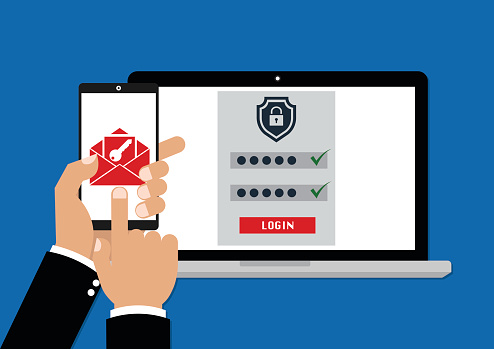
You probably use messaging for communications every day, but how secure are your messages? Messaging apps are as susceptible to hackers as any other type of electronic communication, and if you are concerned about privacy then it’s time to learn the basics about secure messaging apps.
Why You Need a Secure Messaging App
We use messaging more and more to communicate, but we don’t always realize how many eavesdroppers there may be. Those eavesdroppers may include internet service providers, government agencies, and hackers. If your messaging involves your company, it might be the target of industrial espionage. These are all good reasons to consider using a secure messaging app.
What Makes a Messaging App Secure?
We probably all remember playing around with coded messages as a kid, but never dreamed that coded messages might become important in our day-to-day communications. As it turns out, one of the key aspects of a messaging app is end-to-end encryption.
When your messages are encrypted, that means they are encoded in such a way as to make it extremely difficult for someone to eavesdrop on the information being transferred. The messages are basically scrambled, and in order to unscramble them, you must have the correct key. In the case of an end-to-end encrypted message app, only the sender and the receiver have the decryption keys.
There are messaging apps that offer encryption, but encryption is not the default setting. That means that you would have to navigate to the settings for your messaging app and turn on encryption – if it even offers that feature.
Metadata can still be an issue even with encryption. Metadata includes things like who you talk to based on your contact list, how much time you spend talking to them, your phone number, your IP address, and more. You should avoid messaging apps that collect metadata.
Believe it or not, one of the signs of a secure messaging app’s integrity is making its source code available to the public. Open source code is actually better than proprietary code because it provides experts access to the code for review. Experts who did not develop the code will be far more likely to notice vulnerabilities and bugs that could be exploited. The result is a highly robust source code and a bulletproof app.
Secure Message Apps
There are several messaging apps on the market that qualify as secure messaging apps. What follows are five of the top options that are available for Android and iOS operating systems.
Dust: If you want messages that don’t hang around, then Dust is your app! Messages disappear within 100 seconds of being read or within 24 hours – your choice. You’ll also be notified if any screenshots are taken. It includes end-to-end encryption, no permanent storage, and you can even erase your message off someone else’s phone. The major drawback of Dust is that its source code has never been released.
Signal: The Signal messaging platform uses end-to-end encryption and its source code has been released. There is an option that makes messages disappear after a certain amount of time has passed and it can be password protected. It only stores the metadata it needs to function properly on your device. As far as drawbacks go, there are virtually none associated with Signal.
Telegram: The Telegram app was banned in Russia because they refused to hand over the encryption keys. It offers end-to-end encryption through a feature called “Secret Chat” that must be turned on. It can be locked by a passcode and has a Self-Destruct timer option for Secret Chat messages. The drawback of Telegram is that it lacks transparency about the protocol that it uses.
WhatsApp: With WhatsApp, end-to-end encryption is the default and provides an option for you to verify that encryption is in place. Messages are not stored on your phone, and it makes available a two-step verification feature. WhatsApp’s major drawback is that it does keep track of metadata and backups of messages are not encrypted for Android users.
Wickr : Unlike most messaging apps, Wickr offers both a personal (Wickr Me) and an enterprise edition. It provides end-to-end encryption and a host of additional features that make it one of the best options for businesses that are looking to keep their messages secure. It recently released its cryptographic protocol. And when Wickr deletes things, it “shreds” them so that they cannot be recovered. Wickr doesn’t really have any drawbacks from a security perspective.
Conclusion
Not all secure messaging apps are equally as effective. When selecting one, you should look for end-to-end encryption (and by default is even better) and the storage of little to no metadata. Also, keep in mind that companies that have released the source code behind their app are considered more reliable and their apps more robust. If privacy is important to you, then it’s time to check out secure messaging apps.
Before installing or investing in any messaging app…always consult with your technical support provider.

by Felicien | Oct 6, 2018 | Education
Happy Thanksgiving From Our Team To Yours!
Why Not Show Your Thanks By Helping Another Business Use Technology To Succeed?
As the days get shorter, and the nights get cozier, Canadians across the nation turn our minds to gratitude. It’s a season where we take a little time to appreciate the best things in our life.
We’re thankful for family, for friends, for a job we love, and for you, our clients who make it all worthwhile. Thank you for putting your trust in us as your IT service company.
We know that you have options for your IT service. And to show our thanks as your technology service provider, we’d like to offer a complimentary assessment to a local business that you refer.
Why Are IT Assessments Important?
An IT Assessment is a comprehensive view of your business and technology needs. It reveals the health of your IT assets and infrastructure. Routine assessments mitigate the risk of downtime and security breaches. They also ensure your technology is running at peak performance, so your workers can too.
What Do IT Assessments Reveal?
An IT assessment will optimize your system to improve security, mitigate the risk of computer crashes, interruptions and inefficiencies. It also ensures you’re getting the ROI from your technology investments that you expect.
It tells you:
If technology is truly supporting your business goals and objectives.
If best practices are being employed in when using technology solutions.
The strength of your IT security posture and if there are any gaps in your defense.
If your business could stay up and running after a disaster like a fire, flooding, accidental data deletion, or malware infections.
If you are getting the most value and use from your IT investments.
If your IT solutions are integrated properly.
What steps to take to improve your IT environment.
Why Are Regular IT Assessments Valuable?
An IT Assessment will tell you what is working and what isn’t. The ever-evolving nature of technology and rapid changes and advancements make IT Assessments more important than ever. You won’t always need the latest applications or solutions, but it’s essential to detect any deficiencies that may be impacting your efficient and secure operations.
The most technically knowledgeable companies continually evaluate the status of their IT operations and whether they match their organizational goals. Assessments provide insight into what you will need for the future as your company grows and changes. It’s like an IT business plan that helps you stay on course and use the tools that will help you succeed.
Are You Wasting Money On Technology Solutions?
Are you getting the most value from your current technology? An IT Assessment will reveal if you’re paying for software and hardware you don’t need. It determines what technology is required to fill gaps without you buying more (or less) than you require. Plus, it helps you better control your IT spending.
Newer technologies like cloud computing can significantly lower your technology costs. Software-as-a-Service and Hardware-as-a-Service and other pay-per-user solutions can provide the technology you need without the upfront costs. They also provide flexibility and scalability as they can be increased as your company grows or decreased in slow times.
Is Your Technology Properly Integrated?
It’s not enough to know what applications you have and how they work, you must understand how well they integrate. With so many types of software and hardware being used today, integrating them correctly can be a challenge. And, if they’re not properly integrated, this can negatively impact your operating efficiencies.
For example, say you purchase a new software application. If it’s not supported by your operating system and web browsers, it won’t work as it should. Or perhaps you’re using a VoIP business phone system. Does it integrate with your data network as it should? It’s essential that all elements of your technology infrastructure work together seamlessly.
What Can You Expect After An IT Assessment?
We’ll provide a written report detailing your current IT standing and any suggestions we have for improvement. If during the course of the Assessment we detect backup failures, security gaps or misconfigurations, we’ll report on these right away and how they can be cost-effectively remediated.
Your leadership team will be apprised of our findings, so they can make decisions and work with us to develop an IT Plan that prioritizes recommendations based on their importance and impact on your business.
An IT Assessment Is The “Gift That Keeps On Giving”
Referring a business associate or other organization for an IT Assessment will not only help them succeed through the best use of technology but it will build goodwill between your companies. And once they realize the value an IT Assessment provides, they’ll refer another business, and so on, and so on.
So, give thanks by sharing your knowledge about technology and how it can help others succeed. Contact us, and we’ll get the process going. And thank you again for your business.
Happy Thanksgiving.

by Felicien | Oct 5, 2018 | Education
Everyone has Wi-Fi. We all expect to see it wherever we go, and most of us have more than one Wi-Fi-enabled device. Grocery stores, fast food restaurants – even your mechanic has Wi-Fi. But does that mean you REALLY need it in your school? Isn’t it less secure than wired?
To answer the first question: “Don’t be coy.” You know how backward wired-only connections look. You’re either a Luddite or unbelievably cheap trying to avoid the expense and work of building a new network. You are now out of time. The government itself says you need Wi-Fi, and in this 2017 report plainly states that a reliable, fast wireless connection is a necessity on par with other utilities such as gas, electricity, or water.
As to the second question: Well, no. Not so much anymore. With advances in encryption, Wi-Fi networks that are properly safeguarded offer security comparable to that of wired set-ups. If you still prefer to use wired internet for select devices, such as a handful of desktops and a designated copier/printer/fax machine, you can enjoy the advantages of a wireless network. Wired is a bit faster and more reliable than Wi-Fi, but this is more because of how easy it is to ensure that only a handful of users are on that hard-wired data line. Employees must literally be plugged into a wired network, so there is no issue of people overloading it by all signing on and demanding bandwidth at once.
So the advantages of wired over wireless can really be solved by properly planning out the wireless network. From there, advantage is all wireless: portability, ease-of-use, and, if you plan for it, scalability.
Why use a scalable wireless network?
Setting up a scalable wireless network means looking at the present with an eye to the future. You know that you’ll potentially have more students or employees, or even more devices per person, or more demanding apps. If you’ve built scalability into the network in the first place, you’ll easily adapt to the increased demand on your connectivity. Re-wiring not only costs money, it’s disruptive. Contractors can come out when school is not in session, but off-hour calls often cost more. To do everything more or less at once, having access points ready for later expansion allows for a nearly seamless expansion when it becomes necessary.
Adding people in will not be a matter of climbing around above the ceiling tiles, drilling holes in walls, but just a matter of entering a new user and password and updating the server. Oftentimes, it won’t even cost anything to do it.
Scalable Wi-Fi Saves Budgets In Situations Where:
Schools are growing
Private or charter schools with variable populations
Schools under construction, adding more devices as they go
Anyone in the current technological climate where new innovations increase user numbers every year
Variable income
BYOD programs
Factoring in the potential for future expansion will pay off in the long run when the entire network doesn’t require a re-design within a couple of years. By planning for scalability, using multi-purpose devices that can handle increased connectivity and streaming demands, you are ensuring that the initial investment pays off. The more manageable maintenance budget will be easier to get approved, and you can plan for a complete overhaul when it becomes truly necessary, rather than prematurely, due to an initial refusal to plan for growth.
Devices Are Everywhere
Smartphones have risen in popularity at a pace that’s nearly alarming for its potential ramifications. In fact, the amount of active mobile phone subscriptions in the US is 349.9 million – more than the total US population of 325.3 million. These consumers are using their phones for far more than phones. They’re on apps that often require data usage, which allows for less memory and storage use on their phones. Even apps that do not apparently require internet connection often do for this reason. People have grown to rely on their phones as a connection to their families, coworkers, and also as a means of keeping themselves organized, of keeping their emotional well-being up through habit-changing apps, diaries, and more.
As the mobile devices, we use speed towards true ubiquity, it will not do to simply watch as the tide rises. Plan for the eventuality of increasing connectivity needs by designing a scalable wireless network. This direction offers better services for the future, along with lower overall budgetary requirements. It removes some of the stress of growing. All school administrators understand the need to reduce stress and lower the budget.

by Felicien | Oct 5, 2018 | Education
Health information technology is more talked about than really understood. Part of the reason for this is that providers and their staffs usually interact with a restricted subset of health IT – the Electronic Health Record (EHR), the radiology imaging system, the billing system, and so forth. Only the organization’s IT staff and Chief Technology Officer (CTO) are in a position to see the big picture. Even they may not see all of it. This blog post tries to cover at least the larger components of Health IT.
What’s The Most Important Piece?
The EHR is arguably the central component. In an ideal system, all the information a provider or patient wants, from demographic information to lab results to radiological images to records of office visits should be there. Making the EHR the centerpiece is one way to avoid “siloing” of information that makes research and analysis difficult or impossible. If the EHR is complete, every other component—statistical reporting, radiology, billing, appointment scheduling, and lab results are present, and can be used to drive other systems.
This, of course, is an ideal situation. One barrier to accomplishing this is money. Putting in a new EHR system can cost a lot. Recent figures for installation are around $33,000 per full-time physician. Maintenance runs $1,500 per month per full-time physician. A hospital system with 500 physicians is looking at a minimum of around $17 million for initial installation and around $9 million for annual maintenance.
If the system is hosted in the cloud, storage, input, and “egress” fees (sending data to the providers for use from data stored in the cloud) have to be considered. Cloud hosting can run around $165 per “seat” per month, where “seat” is a computer linked to the cloud. Assuming an employment of 3,000, this will run around six million dollars per year. But cloud hosting may well be cheaper than buying and maintaining hardware and paying a large IT staff. Cloud hosting offers better security and offloading a lot of IT headaches as well.
What Are Some Other Components?
There will be radiology and lab subsystems, at least, plus billing and accounting. How tightly these are integrated into the EHR system and the cloud will vary. Analytical systems may include big data handling and artificial intelligence. Of course, if a physician is a hospital employee or a member of an affiliated group, it makes sense for their in-office IT systems to be integrated with, or be part of, the hospital IT operation.
What’s So Great About AI?
Artificial intelligence (AI) is still in its infancy. Studies have shown that AI systems are better at reading radiology imagery than human radiologists, and of course better at catching prescription errors and medication conflicts. But many legal questions, particularly about liability, remain unanswered. In addition, AI is intelligent only within a limited sphere. It will be far into the future before AI is able to display the kind of general intelligence that a human physician can bring to a patient.
What AI is good for now is dealing with well-defined tasks and helping to narrow down the “unknown unknowns” – interactions, sources of error, and opportunities for improvement that humans would never have suspected. Their principal role in the near term most likely will be relieving the “cognitive overload” that all physicians, no matter how narrow their specialty, have to deal with.
What Are Patient Portals?
Patient portals – interfaces, usually web-based, are systems that allow patients to see their lab results, talk to their providers, make appointments online, find providers, and do other things that patients would normally do over the phone. If properly designed and implemented, they can have a major impact on operational efficiency and patient satisfaction. On the other hand, a patient portal that is too complex and too clunky to be easily used can drive patients away.
What Are The Incentives For Using All This Stuff?
The Affordable Care Act (ACA) and the Health Information for Economic and Clinical Health Act (HITECH) provide billions of dollars for providers who implement EHR and other health IT systems and “meaningfully” use them. They are a de facto requirement for any provider which receives Federal funds, which is virtually all of them.
What Are The Downsides?
The biggest one, of course, is the expense. Even though it is large, it may well be cheaper than maintaining one’s own equipment and IT staff. It also permits renting out a lot of headaches. The downside is that, for HIPAA purposes, one has to devote as much attention to the vendor’s security practices as to one’s own. Also, system modifications and customizations necessarily involve the vendor’s staff and consulting services, which may be very extensive.
And, of course, there is training. This is not so much expensive as extensive. The example of one Pennsylvania health system that changed EHR systems three times in one year probably represents an extreme outlier, and training the entire staff three times in one year was no doubt a task worthy of being avoided if at all possible.
Finally, if the organization is moving from primarily paper-based systems to health IT, the organization’s culture needs to be adjusted, and the transition may be wrenching. Still, the advantages of health IT outweigh the disadvantages, and all providers should be making the switch as soon as possible.
by Felicien | Oct 5, 2018 | Education
Are you aware of a potentially serious data breach involving Facebook?
According to many top news outlets, 50 million users accounts may have been impacted and Facebook now faces potential huge fines in the EU.
Read more at https://www.theguardian.com/technology/2018/oct/03/facebook-data-breach-latest-fine-investigation.
Need steps to protect your Facebook account? Here’s an interesting article containing steps to protect your personal information and security. https://www.experian.com/blogs/ask-experian/facebook-data-breach-how-to-protect-yourself/
We are continuing to follow this news and will update more on our blog as we learn more.