
by Felicien | Mar 14, 2019 | Education
Depending on their scope and impact on your workday, tech issues can take hours to resolve, if not days. In some cases, you may spend far too much time tracking down a problem, only to come up empty-handed in the end. In others, such as security breaches, you may not even know there is an issue until the damage has been done. If you and your team have been handling any tech issues that arise on your own, you could greatly benefit from partnering with a managed IT service provider. Here are some of the benefits you can expect from this partnership.
Increases Speed of IT Repairs
When you acquire managed IT services for your company, you can report any and all tech issues as they arise and receive a prompt response. Upon receiving your call, your managed service provider will immediately look into the problem and find the most effective solution. With their years of experience in this realm, their IT experts have likely come across the problem before and already know how to fix it. This makes for very speedy service that helps keep your business operations moving forward without disruption.
Prevents Tech Issues
Managed IT services prove extremely valuable in the prevention of tech issues of all kinds. From malware attacks to hardware failure, your IT service professionals can stay ahead of the leading issues and potentially keep them from cropping up at all. Through these preventative actions, you can avoid unnecessary downtime that could otherwise derail the work efforts of your entire staff.
Improves Employee Productivity
When your employees can hand off tech issues to a dedicated, outsourced team, they can remain on task in fulfilling their daily work duties. This keeps their productivity high, so you can meet your daily business goals and continue to push the annual growth of the company. With your employees on task, rather than dealing with IT issues, your business operations can continue running smoothly day after day.
Boosts Data Security
Computer software and hardware issues can have a detrimental impact on the security of your business data. Especially since most of these problems remain hidden from view until a catastrophic loss of data occurs. Therefore, your company and client information likely remain at risk without help from a skilled IT expert. These professionals specialize in optimizing security at the network, server and workstation levels, so you can focus on running your business without worry.
Ensures Regulatory Compliance
With improved data security, you can rest assured that you are not breaching regulatory compliance rules for your industry. Your managed IT service professionals stay on the cutting edge of security to ensure their clients always remain in compliance. You can customize your service plan with the right level of protection for your company and its associated industry regulations.
Decreases Equipment Upkeep and Repair Expenses
You can decrease the amount you spend on upkeep and repair of your equipment with oversight from skilled IT professionals. These pros will only perform the necessary tasks that are required to maintain your daily business operations. Their ability to track down the problem and fix it the first time around will likely prove invaluable as you work on minimizing downtime and boosting employee productivity. These professionals can also help you time and plan your equipment upgrades perfectly to avoid wasting money on unnecessary items or overspending on parts.
Works Well for Any Budget
With your managed service partnership, you can build your custom IT plan around the exact needs of your company. You can select the items that will benefit you the most and leave the rest. If you only need computer and cloud support, for example, you can leave all server-related services off your plan. You are not locked into the services you select in the beginning either. You can also make adjustments to the scope of your managed IT service plan as you expand your operations.
Ability to Easily Expand
As your business achieves phenomenal growth, you will likely need to add computer equipment and make other key adjustments to accommodate your team and their needs. Your managed IT service provider can help you develop a plan that supports your current and future levels of growth. You can build a stronger network, upgrade your software and add computers to your workplace, for example, in support of your company’s continued success.
Peace of Mind
When you sign up for managed services, you will give yourself true peace of mind in knowing that all your IT needs are handled. You can call for service any time that your computer equipment acts up or software programs fail to operate as expected. You will receive support and oversight in the prevention of problems that would otherwise cause much downtime for your employees. Through all the managed IT service benefits, peace of mind comes out on top as it allows you to focus on what really matters –accelerating the success of your company.
Setting Up Your Managed IT Service Plan
With a look at these managed IT service benefits, it is clear that there are many ways this arrangement can boost the success of your business. You can get started in building this partnership by calling your preferred managed service provider. With this call, you can share the network, equipment and other IT needs of your company to start building your plan.
If you are uncertain of your company’s IT needs, that is okay. Using their skills and expertise, your service provider will assist in identifying the areas that will help your business grow and thrive. Your IT pros will also take a close look at your industry, including all regulations, to help you find the appropriate level of service for your company’s success through the years.

by Felicien | Mar 14, 2019 | Education
Financial service firms: beware. Your data is a target. A new report out of the United Kingdom (UK) cannot underscore enough the severity of the issue. But it is nothing new. The FBI has put the alarms on since 2011, from threats of account takeovers to third-party payment processor breaches to securities and market trading exploitation to mobile banking exploitation and even supply chain infiltration, among other ways. Hackers are more advanced and more prevalent than ever. What is shocking about the new statistics from the Financial Conduct Authority (FCA) is the sheer increase of breaches after the implementation of the General Data Protection Regulation (GDPR). Here’s what to know and what to do.
Alarming Statistics from the FCA
The numbers are alarming and demonstrate a real concern among financial institutions and the protection of their assets and data. The total number of breaches reported by UK financial services firms to the FCA was 145 in 2018, which was up from 25 in 2017. That makes it an increase of 480%.
The breakdown of the 145 reported breaches is shown in the below chart (as provided by the FCA) with the last three years also included — this demonstrates the stark increase in reported breaches over the course of four years.
Sector
2018
2017
2016
2015
General Insurance & Protection
33
7
1
3
Pension Savings & Retirement Income
9
Retail Banking & Payments
25
1
1
1
Retail Investments
11
1
Retail Lending
21
4
1
Wholesale Financial Markets
34
3
Investment Management
12
10
3
Why was there a dramatic increase in breaches in 2018?
There are a number of theories why financial services firms in the UK reported 480% more data breaches in 2018 than the previous year. The percentage alone is enough to send warning alarms throughout the work, but do the reasons justify the urgency?
First, the financial services sector offers a lot of what hackers want: data and money.
Second, much of the financial services sector has not been using the most advanced technology and artificial intelligence (AI) to protect their information and data, according to a report conducted by Accenture and released in 2018, Cost of Cybercrime: Financial Services. In fact, “only 26% have deployed AI-based security technologies and 31% advanced analytics.”
Third, hackers themselves are becoming more numerous, bolder, and more sophisticated — alongside the advancement of technology.
Fourth, the GDPR came into effect in 2018, which requires reporting breaches within 72 hours of discovery — so the increase in the statistics may be — in part — due to a legal requirement to report the breaches.
Thus, the combination of all these things: the financial services’ data, the desire of hackers to obtain that data, the limited protections financial services firms have had in place until recently, and the new requirement to report all play a role in the dramatic increase in reported breaches. So, not all is as bad as it seems. The increase can be in part attributed to the new requirement to report the breaches as opposed to earlier years when such a requirement was not present, and such reporting could be damaging to the reputation of the financial institution — thus, an incentive not to report until it became required.
What can financial services firms do to protect themselves better from hackers and data breaches?
Whether you are in the UK or the United States or elsewhere, financial services firms can protect themselves. It all involves a well-crafted IT plan-of-action that can include any of the below options according to the firm’s needs, wants, and specifications.
Implement and Education & Training Strategy
First thing’s first, you need to educate yourself and your firm on cybersecurity and cyber attacks. You need to know how hackers are hacking into your systems. You need to know what the latest technology is to counter hackers, including AI. You need to be informed on data management and data destruction and disposal. And you need to inform all staff and employees. The problem in data breaches is not only related to hackers hiding in a dark space using malware and other devices and software to obtain access to confidential information, but they use tricks via email and other means to gain access from, for example, unsuspecting and uninformed employees who open emails without thinking twice and who use poor passwords without consideration for how easy they are to be hacked.
An informed company and an informed staff are your first line of business. An internal team can conduct education awareness and training or else a third-party vendor can be hired to do so. It comes down to how large your firm is and what your resources are to manage it.
Assess Your Current Technology & Identify What You Need
You need to assess the current status of your technology, challenges, and vulnerabilities so that you can recognize what you need and where you need it. There are different ways or approaches a firm can take to assess its technology needs, but in general, it should include:
Gathering information on company and employee needs, considering functional needs, software requirements, technical requirements, and security needs (i.e., natural threats from environmental conditions, intentional human threats (e.g., hackers and disgruntled employees), and unintentional threats (e.g., poor password creation or unintentional leaks).
Reviewing the information gathered and prioritizing identified needs.
Document the results from your findings so that you have the information in one accessible location from which you can build a plan.
Acquire the Technology You Need & Implement It
Once you have the information you need, design a multi-layered system that is:
Adaptive;
Responsive; and
Preventative.
Financial services firms can no longer stand to be reactive; too much is at stake. Once you know and prioritize what you need, acquire it and implement it. Research to ensure you purchase the best in technology and/or hire the best third-party vendor (e.g., a managed services firm). The goal here is to bring those statistics back down, or in the least, maintain them.

by Felicien | Mar 14, 2019 | Education
Microsoft Office 365 has rolled out an impressive array of new features that business owners will appreciate. These range from handy mobile-to-PC interactions to intuitive, behind-the-scenes IT integrations to keep a business running smoothly. Here are some of the standout new additions to Office 365 that were specifically created with business managers in mind.
1. New Digital Pen Features
The Microsoft digital pen has some new tricks up its sleeve that make it easier than ever to edit your important documents. It’s like having an entire editing suite rolled into a single device, and it all but eliminates the need to type or use the mouse while editing. The digital pen lets you insert words or line breaks, split or change words, cross out paragraphs, circle text and leave detailed comments.
2. Embedded 3D Animations
3D animations can now be embedded directly into Word documents and PowerPoint slides with no coding required. Microsoft made this extremely easy to use: Insert a 3D model into the slide, select from a list of pre-built animations, click ‘Apply’ and the animation does its thing.
3. Blurred Background on Video Calls
Business managers who use a remote workforce will appreciate this feature. Video callers can now automatically blur out their backgrounds to minimize distractions and increase meeting productivity. No more worrying about video calls from the home office or a busy workplace — just blur it out.
4. Powerful PowerPoint Upgrades
This is a really cool feature for managers. Need a PowerPoint slide in a hurry? Office 365 now lets you draw your slides by hand on a tablet and convert your “chicken scratches” into a professionally-designed PowerPoint presentation in just a few minutes. PowerPoint now has digital design recommendations that it will make to recreate your sketches. This includes layouts, text suggestions and icons. The end result will look like you had the graphic design department laboring over it for hours.
5. Publish-to-Web Upgrades
Microsoft Office has allowed users to publish documents as web pages for years, but this feature just keeps getting better. Office 365 now allows users to publish docs as Sway websites by clicking ‘File’ and ‘Transform.’ It’s a big time-saving feature. It can also be used for publishing training documents, newsletters, pitch decks and product pages.
6. Compatibility Checks
This Office 365 addition allows you to make system upgrades without suffering any downtime from incompatibility issues. Microsoft’s most recent desktop application lets you check compatibility of apps before you run a system upgrade. Managers can save time and money, and keep things running smoothly by using this upgrade.
7. Robust Data Compliance
Office 365 has a long list of compliance certifications that are now directly integrated with the software. This is an incredibly helpful feature for public-private businesses, government organizations and non-profits that deal with a lot of regulatory compliance issues. For example, Office 365 now offers HIPAA and HITRUST CSF Certification for medical organizations, which allows them to remain security- and privacy-compliant in their documentation. Other certifications include AICPA Service Organization Control Reports, FedRAMP authorizations, FIPS 140-2 Cryptography, and much more. Microsoft also maintains a dedicated compliance team that monitors regulatory changes and quickly recommends changes to keep data compliance up-to-date.
8. Increased IT Management and Resolutions
Microsoft’s SharePoint Admin Center has some upgrades that IT departments will truly appreciate. The system now allows easier management of Office 365 group-connected sites and hubs. IT admins can now restrict access from non-compliant devices, automatically kick idle users out, and restrict or allow access from known IP addresses. The latest iteration also has a number of security upgrades and compliance upgrades.
These Office 365 upgrades were clearly designed from a business manager’s perspective. Microsoft has made the latest additions intuitive and simple to integrate in order to keep your business running as smoothly and efficiently as possible.

by Felicien | Mar 14, 2019 | Education
Not even Georgia county governments are safe from ransomware attacks.
Jackson County just paid a $400,000 ransom after hackers used a ransomware attack to deactivate their computer systems. It’s still not known how the hackers managed to breach their county IT defenses and breach the computer network.
You can read about it here.
Concerned about ransomware? Don’t want to get stuck paying a $400,000 ransom?
Call me at {phone} or drop me an email at {email}.
by Felicien | Mar 13, 2019 | Education
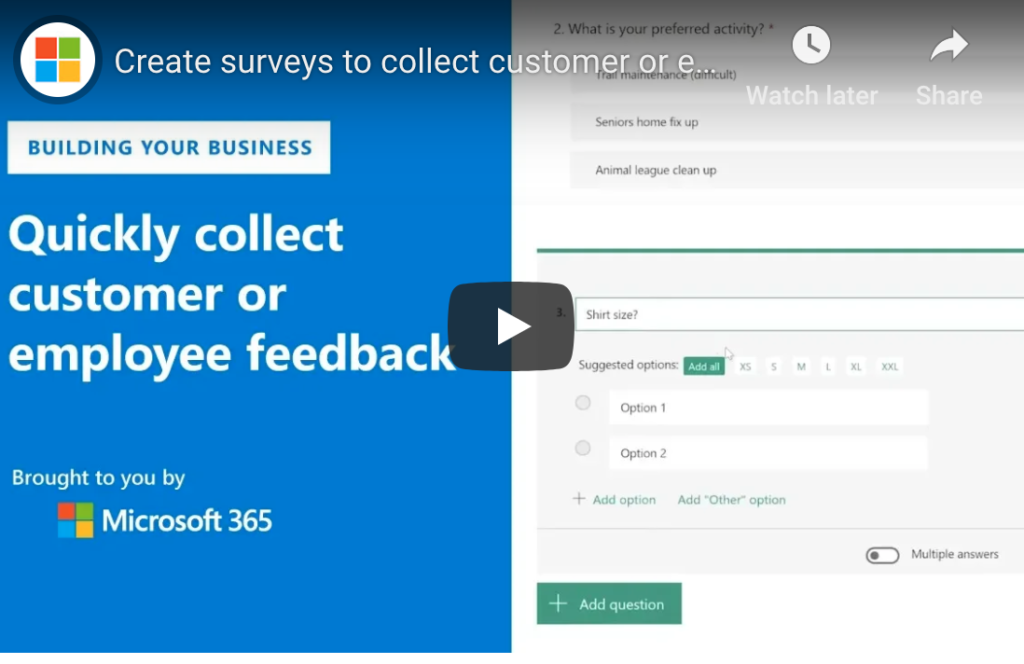
It may surprise you, but Microsoft Office 365 has a fantastic solution for creating simple quizzes, polls and surveys — and you already have access to this functionality! Microsoft Forms is relatively new, as it was only launched in June 2016, but this lightweight web app is an excellent way to gather feedback or plan activities. You can even use the information offline, which makes it handy for reviewing information that was submitted even if you’re not physically at your desk.
How Can I Create Forms and Surveys with Office 365?
The steps required to create surveys are straightforward and don’t require a great deal of technical knowledge. You can find the full instructions on Microsoft’s support website, but this quick snapshot should be enough to get most people started. Since the forms use Microsoft Office 365, each cloud-based form or quiz saves automatically as you move through the questions.
Log into your Office 365 account by going to forms.office.com.
Select the option to create a new form or quiz.
Enter a title for your new form and the optional subtitle — be specific enough that the name will make sense out of context for others!
From here, you can add questions and include a variety of options for answers such as Choice, Text, Rating, Ranking or Date questions. You can even create Net Promoter Score questions when you click the “More ***“ option.
Complete your form or quiz by adding as many questions and types of answers as you would like.
You can even add “Other“ options that allow users to input additional text
As you’re moving through your questions, be sure to select “Required“ on any questions that you want to force users to answer before stepping to the next question. If you do not select “Required“, users will be able to advance through the survey without making a selection.
The user interface is very simple, but quite intuitive for most users. There are several thoughtful additions to the form setup that will help you stay productive and quickly create your forms. For instance, when you create a question such as “Which day of the week should we go?“ the artificial intelligence in the form will automatically suggest all seven days. You can then select which days you’d like to add as answers.
User-Friendly Options to Automate Your Form
Creating a form is pretty easy, but what about organizing the various questions? The Office 365 Form module allows you to shift the order of the questions once you’ve created the quiz or survey, smoothing the process for form creators and for users. You can also copy questions to reduce the amount of typing required during the form creation process. Need to have someone enter an answer only in numbers? No problem! You can restrict responses to only accept numbers, and even limit the range of numbers that you will accept in the form. That means less time on the back end as you’re interpreting survey or form results. You can even select a theme for your form or add some graphics to make it more fun and engaging for users.
How Can I Send My Form or Survey to Users?
Once you have finalized your form, the only thing left to do is send it out to your users! Fortunately, this is just as intuitive as the form creation process since everything is fully integrated into Microsoft Office 365′s cloud-based platform. You’ll simply choose whether to share the survey to others in your organization or if you want to open the form for those outside your Office 365 ecosystem. Once you’ve determined your sharing options, copy the link to the survey and include it an email, SMS text or instant message to your selected audience. You can even create and download QR codes or embed the form on a landing page.
How Do I get Responses to Microsoft Office 365 Forms or Surveys?
The Microsoft team has made it extremely easy to gain access to the form or survey responses. Each survey has a “Responses“ tab, where you will find everything that you need to know, including;
Number of responses
Average time it took respondents to complete the survey
The current status of the survey (Active or Inactive)
You can also download the results of the survey to Microsoft Excel or even flow the data to Microsoft’s analytics platform: Power BI.
While the Microsoft Office 365 Forms option doesn’t have quite as many options for branching as you would find in a dedicated survey tool such as SurveyMonkey or Typeform, it is a fast and intuitive way to quickly get responses from your audience. What makes it even more attractive is that it’s included for free in your Office 365 license.