Wisdom Wednesday: Tips and Tricks: Voice to Text Apps

Wisdom Wednesday: Tips and Tricks: Voice to Text Apps

Over time, you’ll learn how to master the art of creating the perfect voice to text transcriptions. Voice to text applications helps speed up workplace communications.  

Voice dictation can be a huge timesaver. Instead of using your device’s keyboard to awkwardly type out an instant message or email, you can use an application to convert all your utterances to readable text. If you search for voice to text applications in your Android or Apple stores, you’ll find dozens of choices. Standouts include TalkBox, Dragon Dictation, iSpeech and Voice Assistant. To make the most out of dictation applications, use the following tips and tricks.
Slow Down
Racing through your transcription will undermine the end result. Talking too fast causes voice to text applications to misunderstand your words. Enunciate clearly as you speak naturally into your phone’s microphone. You don’t have to take long breaks between each word, but try to sound off each word fully before moving on to the next. Many speech recognition programs improve over time. The application is programmed to learn how to better familiarize itself with your distinct speech patterns.
Quiet Please
Don’t make the mistake of trying to dictate a message while the TV or radio is blaring in the background. The voice to text application is likely to transcribe any recognizable words emitting from the background. Within some applications, there may be an option for ambient noise reduction to improve speech recognition capabilities.
Get Familiar With Commands
Each voice to text application will operate differently. Find out what commands are accepted by the application you use before dictating messages. For instance, to add punctuation you’ll typically speak the words “comma” or “period.” To format the message, you could say things such as “new line” or “tab key.” Another option may be “caps on” or “spacing off.”
Always Proofread
Want to avoid an epic voice to text fail? Then, always glance over the final product before pushing the send button. All voice to text applications plan for a certain margin of error. Take the time to reread your messages and correct any typos. This is especially important with any messages containing proper nouns. After manually entering a word your speech recognition application doesn’t recognize, the word is typically automatically added to the software’s virtual dictionary. The program may also have a built-in censor to block curse words from being dictated.
The application Voice Assistant will check your message for proper grammar and make suggestions on screen. In most cases, changes and deletions must be performed from the screen and not through speech commands.
Direct Send
Applications such as Dragon Dictation and Voice Assistant permit you to send your voice to text dictations directly from the application. Share instantly to your social media pages or create a new email message. Alternatively, you can press down on the text and copy and paste the message into the desired location. Multiple applications allow you to save your dictated message for later use. The application Evernote saves both the audio and text file of each transcription session. The majority of apps require an online connection to work properly.
Mobile voice to text applications are easy to use and come in handy when you’re trying to increase the efficiency of workplace communications.

Disabling SMBv1 – One Defense Against Wanna Cry Ransomware

As part of our ongoing efforts to warn the public about the Wanna Cry ransomware plague that is ravaging computer systems across the globe, the Computer Network Systems (CompNetSys) team is putting together educational articles such as this one to accurately describe ways you can fortify your business IT against the onslaught of pain being wielded by these criminals.

One of the methods of defense against Wanna Cry – suggested by many IT professionals – is the disabling of Server Message Block (SMB)v1 in Windows and Windows Server.

Warning: We do not recommend that you disable SMBv2 or SMBv3. Disable SMBv2 or SMBv3 only as a temporary troubleshooting measure. Do not leave SMBv2 or SMBv3 disabled.

Here are the instructions from Microsoft:

How to enable or disable SMB protocols on the SMB server

Windows 8 and Windows Server 2012

Windows 8 and Windows Server 2012 introduce the new Set-SMBServerConfiguration Windows PowerShell cmdlet. The cmdlet enables you to enable or disable the SMBv1, SMBv2, and SMBv3 protocols on the server component.

Notes When you enable or disable SMBv2 in Windows 8 or in Windows Server 2012, SMBv3 is also enabled or disabled. This behavior occurs because these protocols share the same stack.

You do not have to restart the computer after you run the Set-SMBServerConfiguration cmdlet.

  • To obtain the current state of the SMB server protocol configuration, run the following cmdlet:

Get-SmbServerConfiguration | Select EnableSMB1Protocol, EnableSMB2Protocol

  • To disable SMBv1 on the SMB server, run the following cmdlet:

Set-SmbServerConfiguration -EnableSMB1Protocol $false

  • To disable SMBv2 and SMBv3 on the SMB server, run the following cmdlet:

Set-SmbServerConfiguration -EnableSMB2Protocol $false

  • To enable SMBv1 on the SMB server, run the following cmdlet:

Set-SmbServerConfiguration -EnableSMB1Protocol $true

  • To enable SMBv2 and SMBv3 on the SMB server, run the following cmdlet:

Set-SmbServerConfiguration -EnableSMB2Protocol $true

Windows 7, Windows Server 2008 R2, Windows Vista, and Windows Server 2008

To enable or disable SMB protocols on an SMB Server that is running Windows 7, Windows Server 2008 R2, Windows Vista, or Windows Server 2008, use Windows PowerShell or Registry Editor.

Windows PowerShell 2.0 or a later version of PowerShell

  • To disable SMBv1 on the SMB server, run the following cmdlet:

Set-ItemProperty -Path “HKLM:\SYSTEM\CurrentControlSet\Services\LanmanServer\Parameters” SMB1 -Type DWORD -Value 0 -Force

  • To disable SMBv2 and SMBv3 on the SMB server, run the following cmdlet:

Set-ItemProperty -Path “HKLM:\SYSTEM\CurrentControlSet\Services\LanmanServer\Parameters” SMB2 -Type DWORD -Value 0 -Force

  • To enable SMBv1 on the SMB server, run the following cmdlet:

Set-ItemProperty -Path “HKLM:\SYSTEM\CurrentControlSet\Services\LanmanServer\Parameters” SMB1 -Type DWORD -Value 1 -Force

  • To enable SMBv2 and SMBv3 on the SMB server, run the following cmdlet:

Set-ItemProperty -Path “HKLM:\SYSTEM\CurrentControlSet\Services\LanmanServer\Parameters” SMB2 -Type DWORD -Value 1 -Force

Note You must restart the computer after you make these changes.

Registry Editor

Important This article contains information about how to modify the registry. Make sure that you back up the registry before you modify it. Make sure that you know how to restore the registry if a problem occurs. For more information about how to back up, restore, and modify the registry, click the following article number to view the article in the Microsoft Knowledge Base:

322756 How to back up and restore the registry in Windows

To enable or disable SMBv1 on the SMB server, configure the following registry key:

Registry subkey: HKEY_LOCAL_MACHINE\SYSTEM\CurrentControlSet\Services\LanmanServer\ParametersRegistry entry: SMB1
REG_DWORD: 0 = Disabled
REG_DWORD: 1 = Enabled
Default: 1 = Enabled

To enable or disable SMBv2 on the SMB server, configure the following registry key:

Registry subkey:HKEY_LOCAL_MACHINE\SYSTEM\CurrentControlSet\Services\LanmanServer\ParametersRegistry entry: SMB2
REG_DWORD: 0 = Disabled
REG_DWORD: 1 = Enabled
Default: 1 = Enabled

How to enable or disable SMB protocols on the SMB client

Windows Vista, Windows Server 2008, Windows 7, Windows Server 2008 R2, Windows 8, and Windows Server 2012

Note When you enable or disable SMBv2 in Windows 8 or in Windows Server 2012, SMBv3 is also enabled or disabled. This behavior occurs because these protocols share the same stack.

  • To disable SMBv1 on the SMB client, run the following commands:

sc.exe config lanmanworkstation depend= bowser/mrxsmb20/nsi
sc.exe config mrxsmb10 start= disabled

  • To enable SMBv1 on the SMB client, run the following commands:

sc.exe config lanmanworkstation depend= bowser/mrxsmb10/mrxsmb20/nsi
sc.exe config mrxsmb10 start= auto

  • To disable SMBv2 and SMBv3 on the SMB client, run the following commands:

sc.exe config lanmanworkstation depend= bowser/mrxsmb10/nsi
sc.exe config mrxsmb20 start= disabled

  • To enable SMBv2 and SMBv3 on the SMB client, run the following commands:

sc.exe config lanmanworkstation depend= bowser/mrxsmb10/mrxsmb20/nsi
sc.exe config mrxsmb20 start= auto

Notes

  • You must run these commands at an elevated command prompt.
  • You must restart the computer after you make these changes.


Other important safeguards against Wanna Cry ransomware include backing up all your essential files and applications, running a respected antivirus program, and being careful not to open any emails attachments that are from an unknown source.

Is your business prepared? Our cyber-security professionals are ready to help you fortify your business against this Wanna Cry ransomware onslaught.

Call us now at 866.205.8123 or send and email to support.staff@compnetsys.com for a cyber-security consultation.

Encryption backdoors – necessary or not?

Encryption backdoors – necessary or not?

Over the course of his recently concluded tenure as FBI Director, James Comey has repeatedly called for built-in backdoors to get around encryption on devices such as smartphones and tablets. Citing national security needs, Comey has on many occasions attempted to work with domestic organizations (and most recently, members of the international community) to implement a standard for backdoors.

encryption backdoor

“The ubiquitous default full-disk encryption on devices is affecting now about half of our work,” testified Comey during his testimony for the Clinton email investigation. “First six months of this fiscal year, FBI examiners were presented with over 6,000 devices for which we have a lawful authority search warrant or court order to open and 46 percent of those cases we could not open those devices with any technique. That means half of the devices that we encounter in terrorism cases, in counterintelligence cases, in gang cases, in child pornography cases, cannot be opened with any technique. That is a big problem.”

Encryption is a standard security practice used on millions of devices today, in which data is converted into a code in order to prevent unauthorized access. Comey’s intention is that companies that produce such devices, like Apple and Microsoft, would build a backdoor to allow authorized third parties, in the name of the law, or national security, to bypass encryption without the user’s consent.

The subject of encryption has been shrouded in debate since the FBI took on Apple earlier in 2016 when they needed access to a smartphone they believe contained information pertinent to their investigation of the San Bernardino shooting. In an effort to gain access to the terrorist’s smartphone, the FBI wanted Apple to create a backdoor system that would allow them to bypass any type of encryption at any time. The argument was that a “golden key” like this would allow the “good guys” to always have a way to make sure the “bad guys” weren’t hiding anything. Apple refused and ultimately won the day, both in terms of its own liability and in the court of public perception.

Even then, Comey didn’t give up. Even as recently as March of this year, Comey suggested the idea of an International Encryption Backdoor Partnership in the global community.

“I could imagine a community of nations committed to the rule of law developing a set of norms, a framework, for when government access is appropriate,” said Comey at the University of Texas during a national security symposium.

Despite the fact that Comey is no longer the FBI Director, the debate over the need for built-in backdoors around device encryption still stands – does it threaten and undermine personal privacy rights? Or is it ultimately necessary in order to uphold national security?

As Comey has stated on numerous occasions, encryption is a serious obstruction of justice when it comes to investigating terrorists and criminals that have potentially used encrypted devices to communicate with other contacts and store vital data. With a backdoor in place, the FBI could simply circumvent the encryption and access the data in question, potentially speeding up the investigation, making better use of government time and resources, and in the most dire of circumstances, saving lives.

However, that’s a lot of “ifs”. By the very nature of the situation, the FBI will never truly know whether they’re bypassing encryption to get useable data or not; it’s only once they’ve gotten in that they’ll know whether using the backdoor was worth it. At best, the implementation of backdoors isn’t a guarantee for stronger national security, and effectivity on the part of the FBI – it’s an educated guess.

Furthermore, the fact of the matter is that it’s not in the interest of companies like Apple to willingly compromise their user’s security (even when legally compelled to do so, as was the case with the San Bernardino shooting), and so there likely won’t be an initiative to implement backdoors on the developer side.

So what’s at stake if backdoors were to be implemented across devices?

If companies like Apple and Microsoft were to create built-in back doors for the FBI to bypass encryption, it would fundamentally weaken personal security across the nation. Many watchdogs and personal users involved in the debate worry about two key points: where the FBI will draw the line when it comes to using the backdoor on a case by case basis; and how likely it is that cybercriminals could steal the backdoor access from the FBI once it’s been created.

That said, if a backdoor in your device (and everyone else’s) would speed up investigations, prevent attacks, protect innocents, and ultimately save lives, some would argue that the infringement on personal security would be justified.

Given that Comey is no longer director of the FBI, for now, the debate will continue. What do you think? Are backdoors justifiable in the name of the judicial process and homeland security? Or will their abuse by government organizations and hackers be inevitable?

Wanna Cry Ransomware

Wanna Cry Ransomware

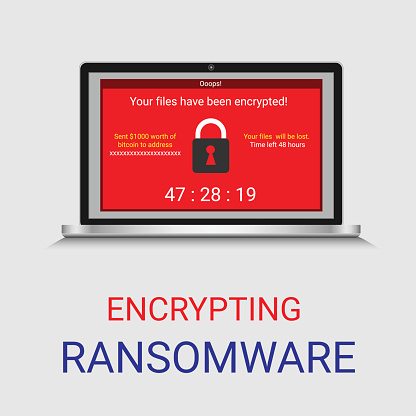
As most of you have heard by now, last Friday a massive cyberattack struck organizations around the globe, shutting many of them down. Although the attack was slowed down by later Friday night, attacks continue to spread around the world this weekend. We expect that the cyberattack will ramp up again this week.

Wannacry Ransomware

The criminals responsible for the attack have not yet been identified, but over up to 100 countries have hit with WannaCry ransomware, with Russia, Ukraine and Taiwan among the top targets.

We want to assure our clients that we have done everything possible to protect your networks and systems. We embrace the security methodology promoted by the National Institute of Standards and Technology (NIST): Prevent – Detect – Respond. We install security patches and updates as they are made available, maintain up-to-date anti-malware endpoint security software and protect your networks with state-of-the-art firewalls. That said, it is impossible to guarantee that a network is 100% secure; we will, however, remain vigilant and strengthen our security posture as necessary.

Most ransomware is spread through email attachments. If you or a co-worker are not paying attention and accidentally open one of these phishing email attachments, you might infect not only your own workstation, but immediately everyone else’s computer too. Be very careful when you get an email with an attachment you did not ask for. If there is a .zip file in the attachment, do not click on it but delete the whole email. Remember: “When in doubt, throw it out!”

Many of our clients have opted to invest in our enhanced security tools, CyberProtectTM, which provide additional protection.  If you are interested in learning more about CyberProtectTM, please contact your account manager.

Please feel free to contact us if you have any additional questions.

Benefits of Office 365’s Email Archiving Features

Benefits of Office 365’s Email Archiving Features

Outlook’s new feature allows you to hold onto deleted emails longer than ever. By setting a later purge date, you can hold onto important communications without cluttering your email folders.  

Office 365 Archiving

Most people have likely suffered the heartache of deleting an important email. You search and search again through your inbox and the communication is nowhere to be found. Although some providers archive emails automatically instead of deleting them forever, the emails are eventually purged from the server. With Outlook’s new feature you can hold onto emails longer and not worry about those emails disappearing for good a short month later.

Why Save Deleted Emails?

For each opened email, you have to make a clutch decision: archive or delete the communication? In some cases, like if you receive any spam, deleting the offending email is a no brainer. However, emails from contacts are often different. For instance, if a colleague sends a link to a website you need, you may decide to delete the email after finding the URL. However, a couple months down the road you may wish to bring up the email. If the email has yet to be purged, this saves you the headache of having to get in touch with your coworker to ask for him or her to resend the information. Another case for not prematurely deleting emails is to retrieve contact information. If you accidentally delete an email without copying contact details, you may have a hard time tracking down the sender to get back in touch.

Office 365 Presets

In most cases, deleted Outlook emails are automatically set to purge from the system after 30 days. For onsite Outlook inboxes run on an Exchange server, an administrator is responsible for setting the length of time for emails to stay in the Deleted folder. This timeframe is managed through the system’s Messaging Records Management feature. The default setting is for emails older than 30 days to get moved to a recoverable subfolder. The subfolder holds onto the emails for 15 days before completely removing them from the system. Onsite Exchange users were able to change this default setting in the past, but Office 365 administrators were stuck with losing emails permanently after 30 days. Luckily, the retention policy is now changed for Office 365 and administrators have the option for allowing the purge to take place a maximum of 24,855 days in the future. The date used by the system is the timestamp of the email or the last time the message was edited.

Don’t worry about any of these settings getting rid of your archived items. Once you save an email to a particular folder, the email can only be manually deleted from the server. Keep in mind there is a setting to delete expired items in Outlook within your Office settings. For instance, emails in your inbox have a default aging period of six months while outbox emails age after three months.

If you don’t have any system recovery options in place, prematurely purging Outlook emails can be disastrous. Make adjustments to your purge settings to have a holding place for emails you’re unsure if you should permanently delete or not.

The 5 Biggest Cybersecurity Risks & How to Protect Your Business from Them

At nearly $1 Trillion in earnings a year, the cybercrime business is now at record proportions. Hackers make big money from stolen data. Please, don’t let it it be your data.

In case you missed the news last week a massive ransomware attack called WannaCry shut down work at 16 hospitals across the United Kingdom and is still spreading accross the USA.

Download our free Ebook to learn more about the 5 biggest cybersecurity risks you must be aware of TODAY!

Download our free Ebook to learn more about 5 biggest cybersecurity risks you must be aware of TODAY!

<!-- Note :<!-- [et_pb_line_break_holder] --> - You can modify the font style and form style to suit your website. <!-- [et_pb_line_break_holder] --> - Code lines with comments “Do not remove this code” are required for the form to work properly, make sure that you do not remove these lines of code. <!-- [et_pb_line_break_holder] --> - The Mandatory check script can modified as to suit your business needs. <!-- [et_pb_line_break_holder] --> - It is important that you test the modified form before going live.--><!-- [et_pb_line_break_holder] --><div id='crmWebToEntityForm' style='width:600px;margin:auto;'><!-- [et_pb_line_break_holder] --> <META HTTP-EQUIV ='content-type' CONTENT='text/html;charset=UTF-8'><!-- [et_pb_line_break_holder] --> <form action='https://crm.zoho.com/crm/WebToLeadForm' name=WebToLeads2287140000000445009 method='POST' onSubmit='javascript:document.charset="UTF-8"; return checkMandatory()' accept-charset='UTF-8'><!-- [et_pb_line_break_holder] --><!-- [et_pb_line_break_holder] --> <!-- Do not remove this code. --><!-- [et_pb_line_break_holder] --> <input type='text' style='display:none;' name='xnQsjsdp' value='fb8a45dfc98d91120a8fd5e90cf97ce092cbc5eb10ed77b22d91f6c7ad49baf6'/><!-- [et_pb_line_break_holder] --> <input type='hidden' name='zc_gad' id='zc_gad' value=''/><!-- [et_pb_line_break_holder] --> <input type='text' style='display:none;' name='xmIwtLD' value='e145708d49be7419b4da42b3289786a5c33dc6856f931ab958d49885cc7e7eb9'/><!-- [et_pb_line_break_holder] --> <input type='text' style='display:none;' name='actionType' value='TGVhZHM='/><!-- [et_pb_line_break_holder] --><!-- [et_pb_line_break_holder] --> <input type='text' style='display:none;' name='returnURL' value='https://s3-us-west-2.amazonaws.com/content-delivery-ap/ebooks/ebook_Cybersecurity_cns.pdf' /> <!-- [et_pb_line_break_holder] --> <!-- Do not remove this code. --><!-- [et_pb_line_break_holder] --> <style><!-- [et_pb_line_break_holder] --> tr , td { <!-- [et_pb_line_break_holder] --> padding:6px;<!-- [et_pb_line_break_holder] --> border-spacing:0px;<!-- [et_pb_line_break_holder] --> border-width:0px;<!-- [et_pb_line_break_holder] --> }<!-- [et_pb_line_break_holder] --> </style><!-- [et_pb_line_break_holder] --> <table style='width:600px;background-color:white;color:black'><!-- [et_pb_line_break_holder] --><!-- [et_pb_line_break_holder] --> <tr><td colspan='2' style='text-align:left;color:black;font-family:Arial;font-size:14px;'><strong>Leave us some basic information to claim your free eBook</strong></td></tr><!-- [et_pb_line_break_holder] --><!-- [et_pb_line_break_holder] --> <tr><td style='nowrap:nowrap;text-align:left;font-size:12px;font-family:Arial;width:200px;'>First Name<span style='color:red;'>*</span></td><td style='width:250px;' ><input type='text' style='width:250px;' maxlength='40' name='First Name' /></td></tr><!-- [et_pb_line_break_holder] --><!-- [et_pb_line_break_holder] --> <tr><td style='nowrap:nowrap;text-align:left;font-size:12px;font-family:Arial;width:200px;'>Last Name<span style='color:red;'>*</span></td><td style='width:250px;' ><input type='text' style='width:250px;' maxlength='80' name='Last Name' /></td></tr><!-- [et_pb_line_break_holder] --><!-- [et_pb_line_break_holder] --> <tr><td style='nowrap:nowrap;text-align:left;font-size:12px;font-family:Arial;width:200px;'>Company<span style='color:red;'>*</span></td><td style='width:250px;' ><input type='text' style='width:250px;' maxlength='100' name='Company' /></td></tr><!-- [et_pb_line_break_holder] --><!-- [et_pb_line_break_holder] --> <tr><td style='nowrap:nowrap;text-align:left;font-size:12px;font-family:Arial;width:200px;'>Email<span style='color:red;'>*</span></td><td style='width:250px;' ><input type='text' style='width:250px;' maxlength='100' name='Email' /></td></tr><!-- [et_pb_line_break_holder] --><!-- [et_pb_line_break_holder] --> <tr style='display:none;' ><td style='nowrap:nowrap;text-align:left;font-size:12px;font-family:Arial;width:50%'>Description </td><td> <textarea name='Description' maxlength='1000' style='width:250px;'>5 biggest cyber security </textarea></tr><!-- [et_pb_line_break_holder] --><!-- [et_pb_line_break_holder] --> <tr><td colspan='2' style='text-align:center; padding-top:15px;'><!-- [et_pb_line_break_holder] --> <input style='font-size:12px;color:#131307' type='submit' value='Download' /><!-- [et_pb_line_break_holder] --> <input type='reset' style='font-size:12px;color:#131307' value='Reset' /><!-- [et_pb_line_break_holder] --> </td><!-- [et_pb_line_break_holder] --> </tr><!-- [et_pb_line_break_holder] --> </table><!-- [et_pb_line_break_holder] --> <script><!-- [et_pb_line_break_holder] --> var mndFileds=new Array('Company','First Name','Last Name','Email');<!-- [et_pb_line_break_holder] --> var fldLangVal=new Array('Company','First Name','Last Name','Email');<!-- [et_pb_line_break_holder] --> var name='';<!-- [et_pb_line_break_holder] --> var email='';<!-- [et_pb_line_break_holder] --><!-- [et_pb_line_break_holder] --> function checkMandatory() {<!-- [et_pb_line_break_holder] --> for(i=0;i<mndFileds.length;i++) {<!-- [et_pb_line_break_holder] --> var fieldObj=document.forms['WebToLeads2287140000000445009'][mndFileds[i]];<!-- [et_pb_line_break_holder] --> if(fieldObj) {<!-- [et_pb_line_break_holder] --> if (((fieldObj.value).replace(/^\s+|\s+$/g, '')).length==0) {<!-- [et_pb_line_break_holder] --> if(fieldObj.type =='file')<!-- [et_pb_line_break_holder] --> { <!-- [et_pb_line_break_holder] --> alert('Please select a file to upload.'); <!-- [et_pb_line_break_holder] --> fieldObj.focus(); <!-- [et_pb_line_break_holder] --> return false;<!-- [et_pb_line_break_holder] --> } <!-- [et_pb_line_break_holder] --> alert(fldLangVal[i] +' cannot be empty.'); <!-- [et_pb_line_break_holder] --> fieldObj.focus();<!-- [et_pb_line_break_holder] --> return false;<!-- [et_pb_line_break_holder] --> } else if(fieldObj.nodeName=='SELECT') {<!-- [et_pb_line_break_holder] --> if(fieldObj.options[fieldObj.selectedIndex].value=='-None-') {<!-- [et_pb_line_break_holder] --> alert(fldLangVal[i] +' cannot be none.'); <!-- [et_pb_line_break_holder] --> fieldObj.focus();<!-- [et_pb_line_break_holder] --> return false;<!-- [et_pb_line_break_holder] --> }<!-- [et_pb_line_break_holder] --> } else if(fieldObj.type =='checkbox'){<!-- [et_pb_line_break_holder] --> if(fieldObj.checked == false){<!-- [et_pb_line_break_holder] --> alert('Please accept '+fldLangVal[i]);<!-- [et_pb_line_break_holder] --> fieldObj.focus();<!-- [et_pb_line_break_holder] --> return false;<!-- [et_pb_line_break_holder] --> } <!-- [et_pb_line_break_holder] --> } <!-- [et_pb_line_break_holder] --> try {<!-- [et_pb_line_break_holder] --> if(fieldObj.name == 'Last Name') {<!-- [et_pb_line_break_holder] --> name = fieldObj.value;<!-- [et_pb_line_break_holder] --> }<!-- [et_pb_line_break_holder] --> } catch (e) {}<!-- [et_pb_line_break_holder] --> }<!-- [et_pb_line_break_holder] --> }<!-- [et_pb_line_break_holder] --> }<!-- [et_pb_line_break_holder] --> <!-- [et_pb_line_break_holder] --></script><!-- [et_pb_line_break_holder] --> </form><!-- [et_pb_line_break_holder] --></div>