by Felicien | May 30, 2018 | Education
Cybercriminals are getting more fearless by the day and their crimes are getting more and more sophisticated. Cybercrimes are costing businesses and organizations billions of dollars each year. This has spawned a new generation of cybercrime fighters who search for ways to end this threat once and for all. With each new attack, the crimes get more sophisticated. Hackers are learning from their mistakes and tweaking their methods to make them even more effective.
While most attempts to end hacking seem futile, it is an industry that will continue to require experts in managed threat detection. Stopping thieves before they can get into your database is the preferred method and this has now become possible. The latest technology can assess your network’s weaknesses and your IT professional can recommend various ways to shut down those weak areas.
Why the rise in popularity of managed threat detection?
Investments in technologies that prevent cybercrimes are currently on the rise. There are now a number of solutions that prevent intrusion into your computers. But many companies feel they just don’t have the money to install the latest threat detection equipment. Though there is an initial expense involved, business owners with these new threat detection systems do enjoy greater peace of mind. One cyber-attack is now estimated to cost approximately $1.3 million on average. In addition, customer trust is eroded once the public learns of the breach and overall sales can go down. The expenses for a breach can often linger for years.
What is Managed Detection and Response?
MDR is a combination of technologies and skills that provide global threat intelligence, deep threat analytics, and earlier incident mitigation. The most effective response to a breach requires a collaborative, far-reaching effort.
Managed Detection and Response works well because it is set up to function every minute of every day. It provides more thorough protection from the viruses, worms, ransomware, and malware that exist on the World Wide Web.
MDR is commonly used together with traditional managed security services (MSS) to ensure complete protection. These services can be provided by specialized vendors who focus mainly on threat management. They can also be provided by specialists who have MDR capabilities. Managed detection is chiefly distinguished by the fact that it works even in circumstances where the traditional methods of protection, which are focused on limited log collection and rules-based analysis, do not work.
How is MDR delivered?
Today, businesses will find a few cybersecurity experts who understand the ever-changing landscape in the world of cybercrime. Thieves utilize a number of methods that evolve with each new attack. The only truly effective response to these attacks is to develop a system of crushing cyber-attacks that also evolves with each new event.
New technology focuses on a series of effective approaches to threat detection and elimination. The initial step is known as threat anticipation, which measures the level of a company’s preparedness. This determines how high a company’s chances are of being targeted by cyber thieves. MDR also includes threat hunting. Instead of waiting for an event to occur, this technology actively hunts for threats and eliminates them.
Third, security monitoring is essential. This service is basically exactly what it says. A system is put in place that constantly monitors all hardware, software, and networking equipment, looking for loopholes that thieves might exploit. Security monitoring should include alert response, incident response, and breach management.
Why is Managed Detection and Response popular?
For most business owners, there just isn’t time each day to worry about cyber breaches and data leaks. Though the costs to address them can be enormous, a business person needs to focus on running his company. Your business can suffer if you must constantly be pulled away to address potential security threats. That’s the major reason why business owners are opting for a greater level of protection for all their computers and networking equipment.
Threat detection and prevention is a full-time job and most business people just don’t have the time or skills to deal with it. Your company needs the finest protection available so you can get back to work without the stress of knowing that a breach could occur at any moment.
MDR service providers are able to collect data from various sources on the threats that your organization may face. This enables them to know exactly which threats are more pronounced. Once an organization knows where their weaknesses lie, they are in a better position to respond, repair those flaws, and move forward with more confidence.
Of course, a good managed detection and response program should also include all the measures to respond should a breach occur. In spite of all the advances in technology, if just one of your employees clicks on a malicious link, they could download ransomware or other harmful malware into your system. You can mitigate the damage though, by knowing exactly what to do.
Final Thoughts
Managed Detection and Response (MDR) is designed to handle anything that cyber-thieves can throw at you. It initially seeks to find and close any weaknesses, but it also includes a sound response plan should a breach occur. It utilizes today’s best detection tools, threat intelligence, forensic investigation tools, and human analysts. It can give business owners the peace of mind they need to get back to running their companies without the constant worry of an expensive data breach.

by Felicien | May 29, 2018 | Education
It’s one thing for a business to have installed Wi-Fi networks, but it’s another thing to ensure that the equipment is and will continue to work properly. This means the network should be able to continue supporting the growing demands of a business. It should be able to upgrade automatically whenever necessary to provide the latest and most convenient improvements available. This may sound simple and manageable by the IT staff, but it can be challenging.
Having in-house IT staff means that you have to get in line with other departments and wait your turn before you get help. They already have enough work each day so your Help Desk request may get pushed to the back. This is just one reason why it can be beneficial to have a trusted partner manage your Networks and computers.
The Right Fit
So many managed IT providers say that they’ll be there when you need them. How can you find the right fit for your business? It can be challenging in this day and time, simply because of all the many great choices. But, it can be helpful to sit down with your supervisors and talk to them about the ideal IT provider – someone who will take the time to listen to you, show concern about getting it right for you, someone who really will become a trusted partner.
A good IT partner will stay on top of daily maintenance for your hardware and software. They’ll keep the Wi-Fi equipment running smoothly. They will make recommendations about new products your company could benefit from. If you could find an IT service provider who stands by their promises, imagine how much easier your life would be. Your company would stop demanding so much of your time. You might actually get a vacation this year.
How to find your IT Managed Services Provider
Talk to other businesses owners in your area. Ask them to recommend someone. Check all names, credentials, and reputations online. You can find out quickly whether someone has a good strong reputation in the business world. Visit the company and meet some of their staff members. Do they seem capable, knowledgeable and skilled? If you walk in and find a young receptionist on the phone with her boyfriend and two of the techs in the back flirting, then get out of there quickly! That’s not the right place for you.
You’re serious about your business. You want it to succeed for yourself and especially for your family. So don’t settle for lame vendors that never show up and don’t do good work when they do meander by your place. Take as much time as you need finding a professional team of IT techs who know their jobs exceptionally well and love to come to work each day. These guys will know what’s going on when you get the Blue Screen of Death. They can fix it remotely in just a few minutes and you’re back to work.
Communicate your needs
When you find the right IT managed support team, sit them down at your office and make it clear that you want the very best they can give. You’re in this to win it and if they want to go along for the ride, they’re welcome. But they will have to pull their weight.
When you set down some guidelines right at the beginning of any relationship, you’ll find that the relationship is much more rewarding for both people. Of course, there will be contracts to sign that will state and include everything you talk about. A good contract is clear about what your responsibilities are and what the IT provider will provide. The cost should be included and can be a monthly charge or a fixed price you pay several times a year. Most vendors will work with you because they want your business.
Below, are just a few of the more important IT and networking services/products that your business needs:
Cloud storage and backup
Remote monitoring/management of servers, desktops, mobile devices
Business continuity plan in case of disaster
Cybersecurity for all computers and devices
Regular preventative maintenance
Scalability
24/7 tech support
There are many other services you could opt for and you should discuss this with your IT professional.
The best managed wireless is all about handling many different services well. Every phone and computer should be secure even those of remote workers. Communications should be up and running 99 percent of the time. If you run a hospital or medical office, then you understand the importance of a good communication system. Most providers will suggest VoIP. It’s cloud-based and dependable, plus it can fit nicely in any budget.
With managed services, an organization should not have to worry about maintaining their Wi-Fi networks. Work with someone you have confidence in; someone who will exceed your expectations. You need a good, trusted IT service provider who is willing to get to know your business and work right alongside you to see it grow. Don’t settle for less than the best!

by Felicien | May 29, 2018 | Education
Two of Canada’s largest banks have reported that cyber thieves may have stolen the financial information for over 90,000 of their customers. The thieves sent a message to the two banks over the weekend stating they had successfully stolen customer data and banking records for thousands of their customers. This caused an immediate reaction by both banks.
The Simplii Financial Breach
One of the banks, Simplii Financial, a subsidiary of the Canadian Imperial Bank of Commerce (CIBC), issued a statement that read in part:
“Simplii Financial is advising clients that it has implemented additional online security measures in response to a claim received on Sunday, May 27, 2018, that fraudsters may have electronically accessed certain personal and account information for approximately 40,000 of Simplii’s clients.”
The financial institution began its investigation immediately upon learning of the breach. They sent letters out to customers informing them of the breach, stating they had implemented stronger fraud monitoring and detection, among other security measures.
In part of the statement that Simplii sent to their customers, they reassured them that Simplii would provide full reimbursements to anyone who had lost money due to this hack. They also stated that they were actively working with law enforcement and cybersecurity experts to contain the damages.
Simplii Financial said the breach had only affected a limited number of individuals. They believe that around 40,000 accounts were breached by cyber thieves. At this time, they are not certain of exactly what information was stolen and which accounts were affected.
The Bank of Montreal Breach
The Bank of Montreal (BMO) was also affected by the data breach and officials at BMO stated that they believed the financial and personal information for approximately 50,000 customers could have been compromised due to a cyber breach.
Both banks issued strong statements to their customers saying that they were on top of the situation and taking stringent measures to shut down the fraud and protect their other clients from cyber theft. They also reminded customers to change their passwords and PIN numbers. They recommend using complex passwords and stated that easy-to-guess PINs like 12345 should be avoided, as these are easy targets for cyber thieves. The banks also recommended that their customers watch their accounts for any signs of unusual activity and report that at once to banking officials.
The Breaches Originated Outside Canada
Simplii Financial and the Bank of Montreal both said they had been contacted by “fraudsters” who said they were in possession of personal and financial information belonging to their customers.
Authorities are not certain which hacking group is responsible for the attacks but they stated that they were fairly certain the attacks originated from outside of Canada.
A spokesman for BMO said, “They appear to be related,” referring to the two attacks and also that the hacker’s claims were as yet “unverified.” In an email statement, the spokesman also said, “We are working with the relevant authorities and are conducting a thorough investigation.”
BMO officials said they believe that the attacks and exposure to customer data had been shut down and that no further data leaks would occur. Both financial institutions sent letters to their customers reassuring them that every step would be taken to find and prosecute the fraudsters.
The Royal Canadian Mounted Police is working with all Canadian law enforcement agencies to help the two banks conduct their investigations. They do not believe that any other Canadian banks were affected.
by Felicien | May 29, 2018 | Education
Russian Hackers Target Routers in 50 Countries Worldwide
In a day and time when everyone is being super careful not to click on suspicious links, there’s a new threat lurking. Just about every home and office has a router. It’s an inconspicuous piece of equipment that most of us rarely think about. And now, a new alert issued by the FBI says that Russian hackers have targeted routers in 50 countries around the world.
Just last week, the FBI issued a warning stating that a malware botnet known as VPNFilter was responsible for taking over millions of routers worldwide. The affected routers are thought to be primarily consumer-grade routers purchased at Best Buy and other retail and online electronic stores. The authorities also believe that routers provided by internet service providers such as Frontier Communications, Spectrum, and Charter have been affected. Commercial grade routers found in many businesses are also at risk.
Why the router?
Routers are rarely updated. Unlike the operating system on a smartphone or computer, most router manufacturers do not send out regular updates for their products. Last January, a complaint was filed against router manufacturer, D-Link. In the complaint, the FTC said that the manufacturer was leaving their users at risk by not installing adequate security measure. Their failure to do so had left many consumers open to attacks from hackers.
Experts are now saying that there’s no incentive for router manufacturers to release regular updates to their products that could stave off attacks. Up to now, these manufacturers have not been held liable and when there’s no liability, manufacturers will often take cost-saving shortcuts.
How hackers are getting in
Using malware to target the VPNFilter, cybercriminals are able to collect user data. Once the hacker has control of the router, they can use it to eaves drop on consumers. This weakness also allows hackers a doorway to all home computers, TVs, smartphones, or anything connected via the router.
The FBI recently discovered one website that hackers had set up to use in their attack. This website was designed to give instructions to the routers that had been taken over. Though shutting this site down did cut off one avenue of attack, the FBI warned that millions of routers were still infected. This leaves millions of consumers around the world vulnerable and most users will not even realize they’ve been hacked.
Who is responsible for the hacks?
The Justice Department said the hacking group referred to itself as “Sofacy” and that they answered to the Russian government. The hacking group also goes by the names Fancy Bear and APT28 and they have been involved in some very high-profile targets over the last few years. This group was blamed for the hacks carried out during the 2016 presidential campaign that targeted the Democratic National Convention.
Cisco Systems Inc. performed its own investigation and found that the targeted routers include Netgear, Belkin’s Linksys, QNAP, Mikro Tik, and TP-Link. There may be others involved as well and most were purchased by consumers at local electronic stores and online. Cisco shared the results of their investigation with the Ukrainian government and the U.S. The FBI said that they believe some of the affected routers were also provided by internet service companies.
What routers have been infected?
Authorities have put together a list of the known affected routers, but recommend that everyone take the precaution of rebooting the router and changing the password as soon as possible. The known affected routers include:
Linksys (Models E1200, E2500 & WRVS4400N)
Netgear (Models DGN2200, R6400, R7000, R8000, WNR1000 & WNR2000)
Mikrotik Cloud Core Routers (versions 1016, 1036 & 1072)
TP-Link R600VPN
QNAP NAS devices running QTS software
QNAP (Models TS251 & TS439 Pro)
New types of warfare between Russia and the Ukraine
Russia has long been involved in attacks against the Ukraine and Ukrainian companies due to ongoing hostilities between the two countries. In the past, these attacks have cost millions of dollars and exposed the personal, confidential information of both businesses and individuals. At least one attack was responsible for an electricity blackout in the Ukraine.
The Ukrainian government recently stated that the Russian government was planning a cyber-attack against some privately held companies, along with Ukrainian state bodies. They believe these attacks were meant to disrupt the Champions League soccer finals which were being held in Kyiv.
What to do next
Experts are recommending that everyone using a router shut it down and reboot it. They also recommend disabling remote manager settings. If at all possible, upgrade the router to the latest firmware and change your password.
Managed IT providers are recommending many commercial grade firewalls and routers for business owners who have quite a bit more to lose than the average consumer. They have stated that commercial grade firewalls and routers offer powerful firewall technologies and some offer wireless access point that offers stronger protection for the home or office.
Consumer-grade routers used by the average individual are most at risk. Businesses who have remote employees working from home often forget that these workers present a weak area that hackers can take advantage of. Most individuals have never upgraded their router’s firmware or changed the original password that came with the router. IT experts believe that hackers will eventually exploit all weaknesses like this.
An ongoing risk
The FBI warned, “The size and scope of the infrastructure by VPNFilter malware is significant.”
Their experts said that hackers could render the routers affected completely inoperable if they wanted to, but that wasn’t their primary goal. Instead, they were planning to steal data off the computers, phones, and other connected devices by taking over the routers that controlled internet access. The FBI stated that the malware would be very hard to detect even by professionals because of encryption and other tactics used by the hacking group.
In addition to rebooting routers and changing passwords experts recommend contacting your internet service provider for possible firmware updates or other guidance.
by Felicien | May 29, 2018 | Education
As you may be aware, the FBI issued a warning last week about a malware botnet called VPNFilter. This malware originated in Russia and attacks “consumer-grade” routers typically purchased from retailers such as Best Buy andor installed in homes by Internet Service Providers such as Spectrum, Time Warner, and Charter.
The malware has not been found to infect commercial grade routers typically installed in your business, such as those from Cisco, Fortinet, SonicWALL or others. If you or any of your staff has one of the following routers installed at home, we recommend the Internet Service Provider be contacted for guidance.
At a minimum, the router should be rebooted – and the router password should be changed to one with a fair amount of complexity. (ISP technicians have a reputation for often not changing the simple “factory default” password when they install a router.) In some cases, a router firmware upgrade may be required.
The affected routers identified so far are:
Linksys (Models E1200, E2500 & WRVS4400N)
Mikrotik Cloud Core Routers (versions 1016, 1036 & 1072)
Netgear (Models DGN2200, R6400, R7000, R8000, WNR1000 & WNR2000)
QNAP (Models TS251 & TS439 Pro)
QNAP NAS devices running QTS software
TP-Link R600VPN
While we are unable to manage the consumer-grade routers targeted in this attack, We can offer you a powerful network security appliance (router/firewall/wireless access point) that can provide commercial-grade protection at your home or office.
If you have teleworkers or executives who access your network by working from home, you should be concerned about business risks created by consumer-grade routers. A relatively inexpensive corporate or business-grade firewall is likely an appropriate solution. Please let us know if you would like more information.
by Felicien | May 29, 2018 | Education
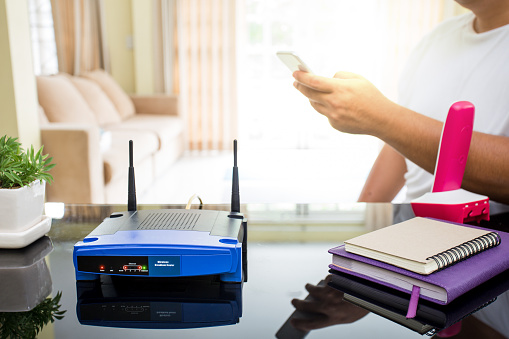
In a day and time when everyone is being super careful not to click on suspicious links, there’s a new threat lurking. Just about every home and office have a router. It’s an inconspicuous piece of equipment that most of us rarely think about. And now, a new alert issued by the FBI says that Russian hackers have targeted routers in 50 countries around the world.
Why the router?
Routers are rarely updated. Unlike the operating system on a smartphone or computer, most router manufacturers do not send out regular updates for their products. Last January, a complaint was filed against router manufacturer, D-Link. In the complaint, the FTC said that the manufacturer was leaving their users at risk by not installing adequate security measure. Their failure to do so had left many consumers open to attacks from hackers.
Experts are now saying that there’s no incentive for router manufacturers to release regular updates to their products that could stave off attacks. Up to now, these manufacturers have not been held liable and when there’s no liability, manufacturers will often take cost-saving shortcuts.
How hackers are getting in
Using malware to target the VPN filter, cybercriminals are able to collect user data. Once the hacker has control of the router, they can use it to eavesdrop on consumers. This weakness also allows hackers a doorway to all home computers, TVs or anything connected via the router.
The FBI recently discovered one website that hackers had set up to use in their attack. This website was designed to give instructions to the routers that had been taken over. Though shutting this site down did cut off one avenue of attack, the FBI warned that millions of routers were still infected. This leaves millions of consumers around the world vulnerable and most users will not even realize they’ve been hacked.
Who is responsible for the hacks?
The Justice Department said the hacking group referred to itself as “Sofacy” and that they answered to the Russian government. The hacking group also goes by the names Fancy Bear and APT28 and they have been involved in some very high-profile targets over the last few years. This group was blamed for the hacks carried out during the 2016 presidential campaign that targeted the Democratic National Convention.
Cisco Systems Inc. performed its own investigation and found that the targeted routers include Netgear, Belkin’s Linksys, QNAP, Mikro Tik, and TP-Link. There may be others involved as well and most were purchased by consumers at local electronic stores and online. Cisco shared the results of their investigation with the Ukrainian government and the U.S. The FBI said that they believe some of the affected routers were also provided by internet service companies.
New types of warfare between Russia and Ukraine
Russia has long been involved in attacks against Ukrainian companies due to ongoing hostilities between the two countries. In the past, these attacks have cost millions of dollars and exposed the personal, confidential information of both businesses and individuals. At least one attack was responsible for an electricity blackout in Ukraine.
The Ukrainian government recently stated that the Russian government was planning a cyber-attack against some privately held companies, along with Ukrainian state bodies. They believe these attacks were meant to disrupt the Champions League soccer finals which were being held in Kyiv.
What to do next
Experts are recommending that everyone using a router shut it down and reboot it. They also recommend disabling remote manager settings. If at all possible, upgrade the router to the latest firmware and change your password.
The FBI warned, “The size and scope of the infrastructure by VPNFilter malware is significant.”
Their experts said that hackers could render the routers affected completely inoperable if they wanted to, but that wasn’t their primary goal. Instead, they were planning to steal data off the computers, phones, and other connected devices by taking over the routers that controlled internet access. The FBI stated that the malware would be very hard to detect even by professionals because of encryption and other tactics used by the hacking group.