by Felicien | Aug 16, 2017 | Education
That Are Costing Your Business Money.
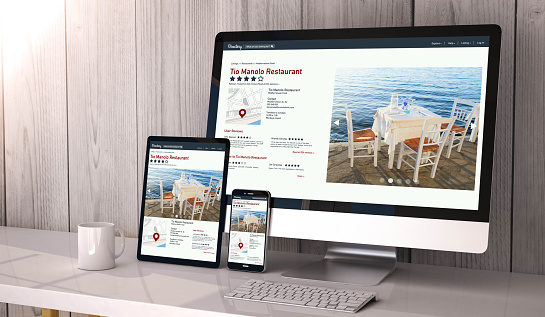
Have you fallen prey to these common website mistakes— Ones that will alienate your customers and deplete your revenue?
If you tried to save money by constructing your own website, or had it built by someone without the latest knowledge in digital marketing, you’re wasting money, and probably losing business. Check out these common mistakes, and find out how you can overcome them.
Lack of Credibility
The first thing prospects look for when visiting your website is a professional image that inspires confidence in your brand. When the information on your home page is weak, outdated or inaccurate, the trust you’re trying to develop will never happen.
Here’s a tip: If you’re part of a larger consortium, or have recommendations from organizations like the Better Business Bureau, list these prominently throughout your site. Readers will find these brandings comforting, as they represent a known entity. This is especially important if your brand is new, or you’re reaching beyond your market to bring in new customers.
Inconsistent Branding
Branding your business consistently with professional logos, images, and language is just as important online as it is in print materials. If your website is slick and stunning, but looks completely off-brand, you run the risk of confusing potential customers.
The template that your site is built upon is another issue. If you use stock images, it’s a good possibility that viewers will recognize this. Visuals are important. Pay for professional images, or better yet, use photographs that truly represent who you are and what you’ve accomplished. This will elicit honesty and promote trust.
Long Page-Load Times
People are busy. If it takes upwards of 4 to 5 seconds to load a web page, viewers will give up and Google your competitor. Free websites that offer low-cost hosting may seem attractive. However, as you know, you get what you pay for in this regard.
Shared hosting accounts run thousands of websites on the same server, causing latency issues along with significant security concerns. Successful businesses work with local IT Managed Services Providers to create secure, highly-structured websites that provide consistent experiences with quick load times. This encourages visitors to dig deep into a site, increasing the possibility of sales.
Missing a Call to Action
You’ve got a gorgeous website design. You’ve nailed the mobile experience. Your branding is on point. However, you’re still not making any sales! What’s wrong? You’re probably missing an obvious call to action.
After you lead customers down the path to learn about your business and brand, it’s crucial that you ask for them to take an action. This can be as simple as having them sign up for a newsletter, download a PDF document, or create an account and purchase an item.
Inadequate Mobile Experience
More than 50 percent of website views are using a mobile device. It’s critical that your website is mobile-optimized. Google, Bing and other large search engines provide preferential treatment to websites with a great mobile experience. This will raise your search-result rankings without much effort.
If you’re not sure whether your website is mobile-friendly, grab your phone or tablet and start clicking. If you see images that flow off the page, forms that require you to scroll before you can submit them, and you’re constantly frustrated with the whole thing—chances are you need to work with a professional to create a mobile-first website that uses responsive design.
Sub-Standard SEO
One of the best ways you can differentiate your business on the web is to have stellar SEO (search engine optimization) rankings. This means your business shows up in the first page of search engine results for your product or service.
Online discoverability is of critical importance to growing your business. It will increase traffic to your website. Work with a partner who can create a website structure that’s consistent with SEO best practices.
{company} in {city} has digital marketing professionals who can work with you to beat your competitors online. They can quickly and easily walk through your site and identify places where you can effectively gather information, encourage people to sign up for services or make a purchase.
Contact us at {phone} or email {email} to get started. We’ll help you open your digital front door.

by Felicien | Aug 16, 2017 | Education
Apple has long been known as a high-end brand that caters to the younger, wealthier consumer. However, market shifts and changes in the industry have them rethinking their business model. They are now focusing on mid-market consumers to maintain market share.
Apple’s marketing efforts have long been legendary throughout the world. In the past, their target demographic was young, hip urbanites who had plenty of discretionary income. Owning an Apple brand was a self-expression of belonging and achievement.
Apple’s drive for efficiency, expedited access to information and advanced capabilities goes as far back as the iPod release and continues today. As a result, Apple has grabbed over 14 percent of the global smartphone market share.
However, fast-moving Chinese companies, along with market leader Samsung, are now taking command of global smartphone sales with their lower-cost products. This new fierce competition has Apple considering a jump into the fray of mid-market offerings.
Global Market Shifts
U.S. consumers may believe that they’re the most technologically advanced in the world—However, they are sorely mistaken. More than 44 percent of global users will own smartphones in 2017— And that number is even greater in countries like South Korea, which leads the world in smartphone ownership, with a whopping 88 percent of the population owning a smart device.
In fact, the U.S. is barely in the top five when you consider usage, with Australia, the UAE and Israel ranking higher, and Spain, the U.K, Canada, Chile and Malaysia following a few percentage points behind. This, in part, is fueled by the prevalence of lower-cost Android phones that offer much of the same functionality and design points as an Apple phone, but at a more affordable price.
Apple’s Marketing Prowess
Part of the reason that Apple has maintained their market dominance, even with their expensive price points, is due to their exceptional marketing prowess. Apple product releases are major events that the media and consumers flock to in mass. Their usability testing focus helps Apple understand their customers at a deep level, fulfilling not only their physical needs (a smartphone), but their aspirational needs (acceptance and a chance to be the “cool kids”). Apple’s strict focus on customer needs, combined with the highest quality in product design and packaging has created an attractive, premium brand.
The Shift in Cellular Provider Models
Another factor that is increasing Apple’s focus on the mid-market is the monumental shift in the cellular industry. Providers such as Verizon and Sprint no longer subsidize the cost of handsets. What this means is that consumers who may have paid on a monthly basis for phones without realizing it was part of a 2-year contract, are now being forced to shell out upwards of $650 for a new Apple phone every year or so. This will limit the range of consumers who can make this type of purchase, further narrowing Apple’s target market range.
Shifting to Mid-Market
Apple has already expanded into the mid-market with their various levels of Macs, such as the less-expensive MacBook Air at around $999 versus the MacBook Pro at several thousand dollars. They also continue to offer older model phones when new models are introduced, to provide customers with an entry-level option. The recent introduction of the iPhone SE seems to be taking off, and the iPad Mini offers a lower-cost option for the tablet crowd without sacrificing much in functionality.
Services Income
Apple’s services business is the size of a Fortune 100 company, with a 30 percent revenue from each sale on the iTunes and App stores, plus Apple Pay, storage payments for iCloud, and their new Apple Music offering. Services continue to outpace product sales by a significant margin, and this may be one reason Apple is looking to broaden their scope of offerings to appeal to a larger market.
Currently, Apple targets younger consumers to lock them into the services infrastructure early on. They know that as this population ages, and moves upwards in their careers, making a change to a new service will be hurdle.
While targeting the budget market is not likely for Apple, other smartphone and tablet manufacturers should continue to watch their back as Apple extends their reach into the mid-market with offerings that appeal to a broader base of consumers.
Want to learn how to leverage Apple or other technologies for your business in {city}? Contact {company} at {phone} or via email {email} to speak with one of our IT experts.

by Felicien | Aug 16, 2017 | Education
4 Problems with Remote Working and 4 Ways to Overcome Them
I love the idea of working remotely. It’s a convenient solution for a variety of personal issues, ranging from lack of transportation to reduced physical mobility. And hiring remote workers is good for business. Studies show that remote workers are more productive, and it allows companies to hire the best talent available from a broad geographical region.
Plus, companies save an average of $11,000 a year on each remote employee. That’s a lot of money, but it’s only a drop in the bucket when comparing the costs of replacing an employee who quits because of a move or the need for a more flexible work schedule. That price averages 20 percent of the person’s annual salary!
However, before you start scouring the Internet sites looking for new remote hires, there are things you need to consider. Relying on off-site workers presents a unique set of problems. For example, when remote workers don’t have the proper software to work effectively, it can lead to misunderstandings and delays. Luckily, one of my favorite business suites, Office 365 Business Premium offers some applications you can use to solve most of these issues.
Problem #1: Your workers are spread out across the country. One of the greatest strengths of hiring remote workers is also one of the biggest problems – different time zones. If the time difference is only one or two hours, there’s not much of a problem. But, when your company is employing workers from the other side of the world, how do you overcome such a large time difference? One option is to arrange meetings for the time when the workday overlaps. If that’s impossible, then record meetings using Skype For Business. Co-workers who can’t attend a meeting can download reports from SharePoint or OneDrive.
Problem #2: Keeping in touch with supervisors, colleagues, and adapting to sudden changes. Goals and priorities are fluid. You can keep all of your employees up to date on new developments instantly with Office 365 Business Premium programs like Microsoft Teams and Yammer. Microsoft Teams brings everyone together in a customizable virtual workspace to chat, share ideas and collaborate on projects. Yammer lets you create groups to help your employees learn, share and socialize. Plus, it keeps everyone on the same page, even when they’re miles away from one another.
Problem #3: Accessing software and shared documents. It can be difficult to provide your remote workers with current word processing, spreadsheet and presentation software. However, with Office 365 Business Premium, the most popular productivity applications like Word, Excel and PowerPoint are already included and available anywhere your staff has an Internet connection. When employees use the same software, coworkers will never have to deal with frustrating compatibility issues. One of my favorite features is the capability to view and edit in real time with my colleagues. OneDrive makes it easy to upload and download any type of digital media quickly, easily and securely.
Problem #4: Remote workers feel isolated and separated from the company culture. Today a “workplace” is no longer tied to a physical location, but a digital space as well. Of course, this is a quite a change for older workers who are accustomed to going to work at a physical location with a high level of interactions each day. But for younger workers who grew up interacting with people thousands of miles away online, a remote work lifestyle is much more acceptable. These workers already have the experience creating meaningful collaborations and relationships online. Applications like Skype For Business and Yammer can help remote workers feel more like a part of a team by allowing them to interact and develop stronger bonds and trust.
I recommend to my clients that they consider hiring remote workers only once they’ve developed the proper framework for collaboration. With Office 365 Business Premium, you’ll get a complete system, ready from day one.
Want to learn about Microsoft Office 365 or other technologies for your business in {city}? Contact {company} at {phone} or via email {email} to speak with one of our IT experts.
by Felicien | Aug 11, 2017 | Education, Free Reports, General
Outsourcing your IT support may not be something you’ve thought about, but the cost savings and innovative growth they can bring will energize your business.
Today more than ever, business leaders are being pushed to provide speedy access to services and products that may be outside their technical expertise. The rapid change in technology is driving deep specialization in niche markets, often without the broad spectrum of knowledge that’s required.
With looming security challenges and the need for constant innovation, smart business owners and managers are looking outside their organizations to IT Managed Service Providers (MSP). This trend is growing as organizations see a greater need to save money while continuing to drive growth and innovation – goals that can’t be achieved without a focus on IT planning for the future.
A Strategic Focus on Growth and Innovation
Innovation is a term that’s used loosely throughout the business world. What does it mean for small to mid-sized businesses (SMBs)? It can be challenging for them to be leading adopters simply due to the cost of entry.
IT decision-making is vastly different for SMBs than it is for larger enterprises. Leaders of SMBs often have more input into how technology dollars are spent than their larger counterparts. However, it typically takes them longer to implement innovative IT projects. The answer for many is to outsource this task to a managed services provider rather than using in-house techs.
Structured, Reliable Budgeting
The bane of every IT manager is having to go back to a finance team to request additional funds for technology, especially when it can be tough to justify why they need things like additional servers or other peripherals.
Unexpected expenses can siphon funds away from technology upgrades, which potentially makes an organization vulnerable to security issues. If patches are applied late, or not applied as recommended, data breaches can result. This is expensive and damaging to an SMB, leaving them in a defensive position where they must clean up problems instead of proactively working towards improving the status quo.
Relying on an IT Partner provides the peace of mind knowing that an expert is watching over your technology infrastructure. Plus, budgeting is easier because expenses can be budgeted on an annual basis instead of on an emergency basis.
Rock-Solid Business Infrastructure
The speed of your network affects a variety of factors: customer and employee satisfaction, long-term customer retention, and relationships with vendor partners and suppliers. On the flip side, a network that fails, or is unreliable, erodes customer trust, along with significant employee frustration and turnover. This is NOT a great recipe for long-term success.
Partnering with an IT Managed Services Provider improves network uptime, and ensures that emergencies such as power failures or natural disasters won’t be catastrophic for your business.
Quick Access to New Technology
Whether it’s the latest in spam filters, or a new firewall, having a dedicated IT support partner means you’re gaining ready access to software and hardware that will be a great fit for your organization. No longer will you incur technology costs and discover later that a solution is incompatible with your system.
Few in-house IT teams in SMBs have time to research or stay certified in new tools and solutions. Fortunately, when you leverage the power of an IT MSP, you’re gaining the depth-of-bench and group research power of a much larger organization, without the high cost of employment.
Proactive Security and Support
When something goes wrong with your network, you need to know that someone is immediately jumping into action to bring your services and infrastructure back online. While not all failures can be prevented, the good news is that early detection can often help mitigate damage, and ensure that critical data is secure at all times.

by Felicien | Aug 11, 2017 | Education
When it comes to today’s business communications, there are some essential rules you should abide by.
Communication is, and always will be, the backbone of any successful business. How and where these conversations take place is something that changes all the time. Ten years ago, communication occurred in conference rooms, at meetings, and around the popular water cooler. These days, apps like Slack and Skype are the new norm as more employees work remotely. If they visited your physical location, they probably couldn’t find the water cooler if their job depended on it.
Even though the informal conversation is now the new norm, the essential rules of etiquette remain the same. Here are some tips to follow:
Be Careful with Emojis.
Everyone loves emojis. (Except film critics, apparently—Reviews of “The Emoji Movie” were brutal!) However, legal professionals increasingly recommend that businesses keep them OUT of modern communication. The problem is, the meaning behind an emoji is incredibly subjective—It changes depending on who’s doing the sending and receiving, which could land you in a world of trouble if you’re not careful.
The emoji problem has the potential to become so severe that people like Michelle Lee Flores are already presenting seminars to educate people on when to (and when not to) use them.
You may think that the eggplant emoji is just a funny little thing—But others may see it as a phallic symbol!
That oncoming fist emoji you intended as a celebratory “fist bump” may come across as an “angry punch.”
Just because you sent someone a winking-face emoji doesn’t mean they’ll see it that way. Oftentimes, it’s perceived as being flirtatious, or even sexual harassment, which is a big “no-no” in the work environment.
One San Francisco lawyer said that he saw an emoji used as evidence in lawsuits that alleged harassment and issues of workplace discrimination. Plus, if you accidentally use the wrong gender, or fail to use the correct skin pigmentation, you could deeply offend someone, and open up your business to a world of legal hurt.
With this in mind, perhaps the number-one rule of etiquette should be: “Just because your phone will let you send an emoji doesn’t mean that you should.”
Smartphones have changed the way we will communicate forever. This can be both good and bad in terms of etiquette. Here are some things to consider when making business calls with your cell phone:
Don’t put your phone on the table when meeting with others. Even if you’re not expecting a call or text, your phone will likely be firing push notifications and news updates every few minutes. Many people will see this as a distraction, or worse – a sign that you’re not interested in what they have to say.
Choose a normal ringtone. You may think it’s great that your iPhone lets you set the theme song to the hit show “Friends” as your ringtone. But, consider how embarrassing it will be if it goes off in the middle of your crowded office. Or worse, at your next client meeting. Consider how others will react to your ringtone before choosing one, and in most situations, remember that “playing it safe” is highly recommended.
Let a caller know when they’re on speaker phone, or if someone else is in the room during a conference call. This is just common sense, and extends to the world of video communication, as well. Just because someone can see you on Skype doesn’t mean that they can see others in your office who may be watching and listening. Make sure the person you’re talking to is aware of others in the room, and trust that they’ll extend the same courtesy to you.
Don’t leave long voicemails. Every form of communication has its intended purpose, and ignoring this is the perfect way to irritate anyone. Keep voicemails short and to the point. If you believe your message is going to be longer than 30 seconds, consider using email instead. This way, essential information will be properly conveyed and received.
Remember that you very rarely, if ever, want to “reply all” to an email. At best, you’re sending additional messages to recipients who may or may not be interested, and wasting their time. At worst, you’ll invariably trigger a “reply-all apocalypse” the likes of which recipients may never escape.
When delivering bad news, choose your medium very carefully. Just because instant messaging and SMS text messaging are easy and efficient, doesn’t mean they’re an appropriate way to tell someone they’ve been fired or that they just lost a big account. If you must deliver bad news, it’s best to do it face-to-face. If that’s impossible, choose a form of communication that allows you to SEE the other person’s reaction, like a Skype video call.
Be careful what you put in writing. This just makes good legal sense. Never put anything in writing via text message, email or other form that might come back to bite you later. Pick up the phone instead. Or better yet, pay a visit and communicate in person. Your legal team will be glad you did.
If your business is in {city} and you’d like to learn more about business communications or other IT issues, please contact {company} at: {phone} or {email}