
by Felicien | Sep 21, 2017 | Education
Do people respond to your emails?
YES – You probably do 5 key things.
NO – You could do 5 key things.
Subject Line:
Add “Response Needed” at the end of the subject line.
Greeting:
Make it positive and personalized to set the email tone and indicate this isn’t a mass email.
Call to Action:
Tell the reader what you want at the beginning of the email. Use bold, color or type size to further highlight your request/deadline.
Information:
Email content is best with:
1 subject per email, to stay on topic
1-3 short sentences per paragraph
bulleted points, for easy reading
Note: Emails between 50 and 125 words are 50% more likely to be read (according to Boomerang).
Closing:
Solidify your relationship with the reader and encourage/discourage a response.
Use these 5 key tips to get a response to your emails, as the average office worker receives 120 emails every day.
Thanks to Karen Turner for sharing this tip with us.
by Felicien | Sep 20, 2017 | Education
Are you one of them? If so, what should you do?
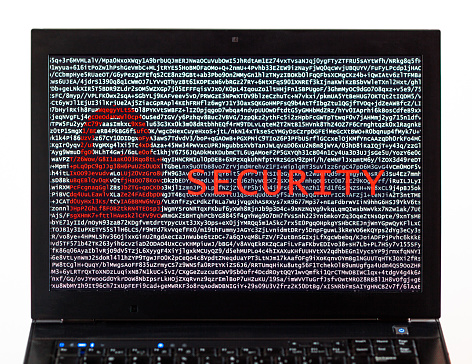
Addresses, social insurance numbers, and credit card details were compromised in the massive Equifax hack that hit 143 million Americans, and now we’ve learned 100,000 Canadians.
While 100,000 Canadian victims compared to the143 million Americans, seems quite small, if you’re one of the few whose confidential information was compromised, these numbers don’t matter.
Equifax set up a website for Americans to check whether their information was affected by the breach, but that website doesn’t work for Canadians! However, Equifax said that they’ll be sending notices out in the mail to all impacted customers, with instructions as to what to do. Credit card companies are also expected to reach out to those Canadians who were affected as well.
What’s not clear is whether those affected are limited to Canadians with dealings in the U.S. And you can only ask for a replacement SIN if you can prove to the Canadian government that it’s been fraudulently used.
In the meantime, take a proactive stance against identity theft:
Sign up for Equifax’s free credit monitoring and identity theft protection. Also, consider freezing your credit report. The majority of Canadian banks offer credit monitoring, which helps keep track of any suspicious activity that could potentially be linked to identity theft.
Be sure to scrutinize your credit card and bank statements every month for charges that you don’t recognize. (You should be doing this anyway.)
Watch out for any notifications that new credit applications have been filed on your behalf. If your personal information is circulated on the black market, other criminals will try to find ways to take advantage of it.
Keep a lookout for con artists. Cybercriminals often sell stolen personal information for use in email “phishing” and “spear-phishing” campaigns that persuade victims to hand over additional sensitive information, including bank account numbers. Never send sensitive information via email. Instead, contact the sender of the email by telephone to make sure the correct person really requested the information from you. And, don’t trust anyone who contacts you offering to protect you from the Equifax breach
For more information about what you can do, go to: https://www.consumer.equifax.ca/canada/equifaxsecurity2017/en_ca/
Or contact {company} in {city}. We’re always here to help. {phone} {email}

by Felicien | Sep 20, 2017 | Education
ADVISORY: Apple Mail Is Incompatible With Microsoft Office 365
Our Microsoft Office 365 experts want to keep you informed about the latest developments in Office 365 and the Apple iOS and any other technologies you use every day.
As necessary as software updates are for keeping programs effective and users safe, they can occasionally cause issues. In the process of fixing a number of other problems and adding new features, software developers can often cause a new issue that won’t be known until the update releases – especially when it involves how another provider’s software works with the software in question.
Case in point: iOS 11, which was released on September 19th, has exhibited compatibility issues when using the native Mail app. If you have recently updated your iPhone or iPad, you won’t be able to send or reply from Outlook.com, Office 365, or Exchange 2016 in the native iOS Mail app.
Luckily, our Microsoft Office 365 experts in {city} are here to help. We want you to know there is an available solution while Microsoft and Apple work to resolve the issue. Simply download the free Outlook for iOS client from the App Store, which fully supports a range of email services, including those affected by the iOS update.
The fact is that as technology continues to evolve and improve, compatibility issues like this will continue to occur – that’s why it’s so important to have the {company} team of Microsoft Office 365 experts in {city} on your side.
Microsoft Office 365 connects each and every Microsoft application with the cloud, which makes accomplishing your tasks more convenient and user-friendly. As the leading name in cloud business productivity software, Microsoft Office 365 has an extensive range of services and features designed to help you and your employees do more each day.
However, that’s not all – as one of the world’s biggest technology companies, Microsoft knows their products have to continually change in order to keep up with the ever-changing demands of users. Always innovating, Microsoft Office 365 has a range of new features being introduced this year to offer even further productivity and efficiency to those that use it for their business:
Outlook MFA: Securely access content anywhere with Multi-factor Authentication for when you’re away from the corporate network.
New DLP Policies: Significantly reduce the risk of leaking sensitive data with built-in Data Loss Prevention across Word, PowerPoint, Excel, and Outlook.
Deferred Updates: Never miss a security update because Office 365 provides automatic monthly security updates and feature releases.
Single Sign-On: Say ‘Hello’ just once. Windows 10 Hello and Office 365 log you into your PC and Office – all in one simple step.
And much more!
Don’t forget – as is the case with Microsoft Office 365, these many features are in addition to the already considerable number of solutions offered by Microsoft Office 365 experts in {city}.
Not getting everything you think you should from Microsoft Office 365? Allow {company} to help.
The {company} team of Microsoft Office 365 experts in {city} are well-versed in everything that Microsoft Office 365 has to offer, from the core functions of workhorses like PowerPoint and Excel to the hidden features and handy tricks that will allow you to use old standards in new and exciting ways. Upgrading to Microsoft Office 365 and actually using this new version to its full potential requires a solid grasp of exactly what it has to offer, which features and applications will have the most benefit for your unique business, and how to leverage the cloud aspect of this productivity suite to improve the way your staff gets work done.
Partnering with Microsoft Office 365 experts in {city} takes the guesswork out of it and offers your business a valuable resource to help your team use this game-changing Office suite to your maximum advantage. After all, what’s the point of investing in high-end technology if you’re not going to use it the way it was intended?
The key to finding real success with Microsoft Office 365 experts in {city} is having the needed resources and support in place to keep things running smoothly. That means having an experienced {city} IT provider like {company} taking care of needed patches and updates, monitoring and maintaining the security of your entire IT environment, and helping you manage the devices that have access to business-critical data and applications.
Our Microsoft Office 365 experts in {city} can provide you with many benefits in your Microsoft experience, including:
Sensible Costs: Due to the very nature of Microsoft Office 365 and cloud computing, there is almost no up-front capital required to pay for any physical hardware or the space to store it. Furthermore, pay-as-you-go pricing offers both predictability and flexibility in your budgeting process.
Convenience: Microsoft Office 365 helps you keep content, meetings, and contacts synced across all your devices for use on the go when you’re away from the office.
And much more!
Microsoft Office 365 is flexible, versatile, and surprisingly simple – not to mention the extensive storage it offers users! It’s just a matter of having the right IT provider to help you leverage this incredible productivity tool, making sure you’re not missing out on what our Microsoft Office 365 experts in {city} have to offer.
Interested? Call the {company} Microsoft Office 365 experts in {city} right away at {phone} or email {email} to learn more.
by Felicien | Sep 20, 2017 | Education
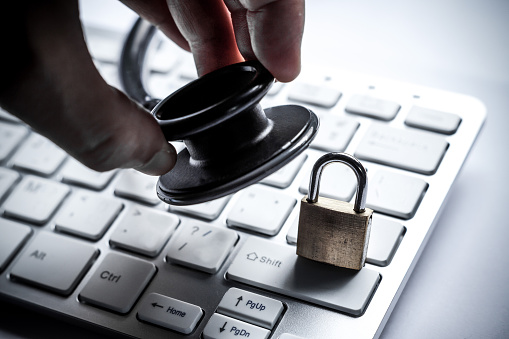
Cybersecurity is a key topic for our healthcare tech professionals, especially as the cost of data breaches continues to rise. As I tell all of my clients, only a layered approach to security will provide a framework for complete protection.
Did you know that millions of records of data are impacted by data breaches every year? — And few industries are impacted as much as healthcare.
The sheer volume of personally identifiable healthcare information makes healthcare organizations like yours a prime target for cybercriminals—Especially since the going price for these details is $50 per record!
HHS has identified more than 200 data breaches so far in 2017, with each representing the PHI of a minimum of 500 individuals. Every breach requires notification of the individuals affected. The costs of remediation are taxing the resources of overworked healthcare professionals throughout the country.
Is Your Data Vulnerable?
As you know, your caregivers need access to patient data to do their jobs. However, even the most rigorously-trained may forget and leave their computer unmanned for a few moments, potentially exposing PHI to dishonest individuals.
Your nurses, doctors, and administrators need quick access to the most detailed and personal information in order to provide the highest possible quality of care—And if this access is provided on an unsecured workstation or on personal devices such as mobile phones or tablets, the information can easily be laid bare for all to see. The result? You’ll pay the price.
Digital Records and Devices Are Essential But Pose a Risk to Your Organization.
EMRs and EHRs provide portability to an individual’s healthcare that your doctors and providers can track information over time. They’ve proven to be much more efficient than using the traditional paper records of the past.
A person’s EHR contains a great many details that can easily be passed between different medical practices, hospitals or other healthcare providers—And, as helpful as this is, information can be lost or exposed if connections lack the proper security.
Lost laptops and mobile phones are also a critical concern as someone could quickly grab a device that’s been left out for only a moment. If you allow your staff to BYOD (Bring Your Own Device) you face an additional hurdle as individual phones or tablets accessing your intranet or medical records may be easier to hack than computer devices in your facility.
A Data Breach It Can Have a Far-Reaching Impact on Your Patients.
If you experience a data breach and immediately notify those affected, they can usually protect their personal accounts. However, if the notification isn’t received or acted upon, they may find themselves spending weeks, months and even years trying to untangle the web of fraudulent credit accounts and charges.
Identity theft causes an average of $2,500 in out-of-pocket costs to each person whose data has been misappropriated—a staggering sum that most American families would find difficult to recover from. This is especially distressing as fewer than one-third of the individuals a healthcare organization attempts to notify, receives the intended notification.
A Data Breach = Lost Business and Legal Fees
Studies show that more than 90 percent of individuals whose data is exposed due to a data breach move to a different healthcare provider—while others file lawsuits, change insurance providers and take actions against the organization that was the target of the cyberattack.
Unfortunately, consumers don’t typically report the data breach to the organization where the breach occurred—which can make it even more problematic for smaller healthcare providers to determine the cause of the breach, or even discover that an attack has happened.
Healthcare providers are trusted with a great deal of information. This can cause a strong negative reaction from those they serve when they find that the details of their personal health and life have been obtained by cybercriminals. The best way to maintain positive relations with your patients is by implementing stringent security protocols to ensure data integrity and preservation.
So, What’s the Lesson Learned?
Attacks will continue to grow in sophistication as your information systems grow in complexity, resulting in a perfect nexus of data that are ripe for attack. To avoid paying the price of a data breach, you must implement a sound basis for your IT operations that only a layered approach to security can provide. Contact us and we’ll be happy to explain what this is.
{company}
{phone}
{email}
by Felicien | Sep 19, 2017 | Education
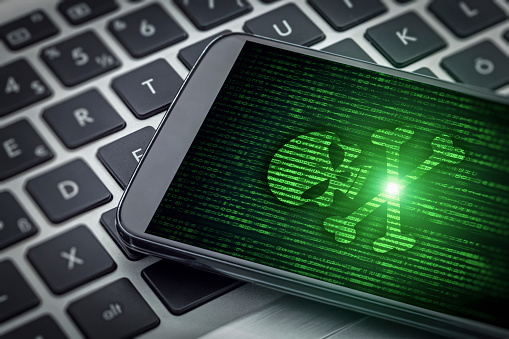
As malware continues to adapt and overcome conventional IT security, it’s more important than ever to have powerful cybersecurity support.
Malware remains among the top cyber threats that businesses face today. As malware becomes more prevalent and evolves, it’s more important than ever for businesses of all sizes to be aware of what threats are out there, and which specific threats they need to be the most concerned about. However, trying to do this on your own, without cybersecurity support in {city}, can be difficult given how effective cybercriminals are.
Case in point – Cisco Talos has recently discovered that the download servers used by Avast Piriform have been penetrated in order to distribute dangerous malware through the popular maintenance app, CCleaner. The app in question is designed to remove cookies and offer further security features and has been downloaded more than 2 billion times. It is estimated that more than 2.27 million users have been affected by the attack so far, but according to Avast Piriform, any harm to users has been prevented.
“Piriform believes that these users are safe now as its investigation indicates it was able to disarm the threat before it was able to do any harm,” said a spokesperson from Avast Piriform.
Whether the incident harms any users in the end or not, the precedent set by this attack is clear: there is a malware epidemic going on in the world today – but just how bad is it? Or in other words, just how necessary is the right cybersecurity support in {city}?
For an accurate diagnosis, turn to the researchers at Malwarebytes, who spent six months collecting detailed statistics on a wide range of malware threats. Their findings covered more than 200 countries, with data from over 100 million Windows and Android devices and nearly 1 billion malware detections.
The focus of the study was on six major threat categories – ransomware, ad fraud malware, android malware, botnets, banking Trojans, and adware. The results make a convincing case for investing in cybersecurity support in {city}.
Unsurprisingly, ransomware topped the threat list as the favorite method of attack against businesses, with just under 400 different variants cataloged in the fourth quarter of 2016 alone. Between June and November of that year, the rate of ransomware incidents went up a staggering 267%. Worldwide, 12.3% of all businesses targeted by cyber threats were hit with ransomware.
Across the pond, Asia and Europe saw a spike in botnet activity. The rate of Kelihos botnet attacks went up by 960% in October 2016 alone. The IRCBot went up 667% in August 2016, and the Qbot went up 261% in November 2016. Germany seems to be the most affected by this trend, with overall botnet activity in the country going up 550% between 2015 and 2016. Europe as a whole is the most malware-riddled continent, averaging 20% more infections than North America, and 49% of all ransomware infections globally happened in Europe.
So what do these statistics mean for your business? For starters, they paint a very clear picture of just how dangerous ransomware is. It’s all but inevitable that your business will be targeted by some form of malware if it hasn’t been already.
This doesn’t mean your business has to become a victim. There are many security precautions you can put in place to reduce or even eliminate the chances of malware finding its way inside your systems successfully, and steps you can take to minimize the damage done if you do become infected.
Next-gen firewalls, antivirus and antimalware software are getting better and better at keeping up with the latest malware variants and can create a layered security that can stop an infection dead in its tracks. This kind of robust cybersecurity defense is even easier to equip at your business when you have comprehensive cybersecurity support in {city}.
A solid Business Continuity plan that involves thorough data backups stored in a secure, offsite location can act as your last line of defense against threats like ransomware, giving you the option to wipe your systems clean of the infection, and restore vital data and applications in less time than it would take to rebuild your systems from scratch.
The good news is that you don’t have to handle any of this on your own – {company} is proud to provide tried and tested cybersecurity support in {city} that will ensure your business is more than prepared to deal with the ongoing threat of malware, no matter what shape it takes.
Without the necessary protections and precautions in place, a business hit by a malware infection will likely never fully recover. Lost productivity, lost profits, and the damage to your business’ reputation are huge hurdles to overcome. Preparing today in anticipation of tomorrow’s disaster might be the only thing that makes it possible to keep your doors open – but only if you keep up with the ever-evolving threat of malware.
Want to learn more about the steps you can take to protect your business against threats like the many common types of malware? Contact us {company} at {email} or {phone} right away to connect with the best cybersecurity support in {city}.