by Felicien | Mar 2, 2018 | Education
Each year seems to bring even bigger and more expensive data breaches. It’s become commonplace to hear that your favorite retailer was just breached and millions of records were lost to hackers somewhere on the other side of the world. In spite of our best efforts, cyber crimes are now the number one leading crime worldwide. Every organization is vulnerable on some level.
Stopping Cyber Thieves
Though most companies now employ much stronger cybersecurity than they did 10 years ago, our society is light-years away from being impenetrable. Some industry experts believe we’ll never be able to fully stop all breaches from occurring. The reasons for this vary but the most logical line of thinking is that that technology is evolving at nearly a daily rate. With each new invention, we open another window that cybercriminals can climb through. Every new convenience we gain through technology is another potential vulnerability just waiting to be exploited.
Password Protected
According to a recent survey, about 60 percent of all internet users confess that they use the same passwords across multiple accounts. That means that a hacker only has to discover one password instead of a dozen. It makes the work of cybercriminals much easier. Once they have learned the password to one of your online accounts, they’ll go to work trying it on other accounts.
As a society, we must realize that cybercrime is escalating. Data breaches are becoming the norm. One of our most important defenses is to make it as difficult as possible for criminals to learn our passwords by creating log-ins that are hard to decipher. A 2017 Verizon Report on Data Breaches found that 81 percent of all data breaches occurred because user passwords were weak and easy to decrypt.
This is one area we all need to improve upon and it’s not difficult or expensive. Simply start today by creating passwords that begin with numerals and contain symbols and upper-case letters. Be sure to write the passwords down so you don’t have to memorize them all. Change all passwords on at least a quarterly basis.
Two-Factor Authentication
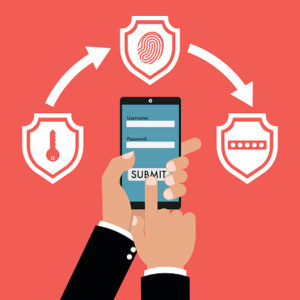
Another key element is our log-in security. Two-factor authentication (2FA) is one way to keep your data more secure. 2FA requires the consumer to utilize two methods to confirm that they are the rightful account owner. There are three categories of information that can be used in this process:
Something you have: Includes a mobile phone, app, or generated code
Something you know: A family member’s name, city of birth, pin, or phrase
Something you are: Includes fingerprints and facial recognition
Though 2FA does make it harder for the account owner to access the account, it also makes it difficult for cyber thieves to learn your password. Their job becomes much tougher because they now need to do more than just hack your password. They’ll need personal information about the account owner. With so many accounts being too easy to break into, hackers are more likely to just move on instead of trying to break through the multiple factor authentication process.
How to Implement 2FA for Your Business
Many companies now use some form of 2FA to protect their valuable data. In fact, there are apps today that make it much simpler to implement this type of security. Google Authenticator has quickly become a favorite app, along with Duo Mobile and Twilio Authy. Online gaming services have led the way in this type of technology because of their popularity and content.
Blizzard Entertainment, an online gaming service, requires that all users receive a code when first trying to log on to the site. The code is sent to the mobile phone number you have on file. That type of authentication makes it practically impossible for a hacker to steal your password. They would first need to know your mobile phone number and be able to intercept your text messages. As stated above, with so many accounts now so vulnerable, hackers are much more likely to just move to another consumer’s account where there isn’t such a sophisticated level of security.
These codes can also be sent via email instead of text messages, but experts highlight the fact that email accounts are easy to hack. That means thieves can intercept messages.
Time-Based One-Time Passwords
Time-based codes are a very effective method of stopping hackers. With this type of security, a dynamically generated code is sent via email.
A time-based one-time password (TOTP) will not stop the more determined cyber thieves but it is still much stronger than regular passcode methods. You not only need to know the code, but you have a specific window of time to use it before it expires. Though the code can hypothetically be intercepted, it’s a complicated process that hackers might want to avoid.
Other Security Methods
A newer, more complex method of security involves using a Hardware Token. This token is an actual item that the user has with them. Though this is extremely effective, it also has a number of drawbacks and has not been widely used. To date, the 2FA method has been viewed as the most secure while still being convenient for users. It is widely used by financial institutions and developers are working on ways to make this type of security even stronger.
One thing that industry experts warn about is the “set it and forget it” risk. Often, a business will set up the two-factor authentication protocol, but then just assume that everything is well-protected from that point onward. In order to be as secure as possible, all network and internet security require frequent checks to make sure things are still working. Security experts also recommend regular patches and updates to the software. Implement a simple alert system that notifies your IT department of any unauthorized access attempts. These are just a few of the many ways we can all protect our online data.

by Felicien | Mar 2, 2018 | Education
Everyone knows that Silicon Valley is the place to be for high paying, high-tech jobs. However, with the prestige and power that the area holds, there also comes a high cost of living and other unfavorable, namely overpopulation, congestion and limited housing options.
As the area’s population gets denser and denser, companies are looking beyond California to other regions that just could be the next Silicon Valley. Here’s a breakdown of the top five areas in North America just waiting to burst onto the scene.
Provo, Utah
While Provo might not be as exciting or glamorous as coastal California, it has a lot of advantages that are drawing people to the area. Nicknamed the Silicon Slopes, the Provo area has Brigham Young University which has a fantastic STEM program. The state also allows for vast tax breaks. It’s been said that if Silicon Valley knows how to make great engineers, Utah breeds great salespeople who know how to work for the high-tech crowd. It’s no wonder that tech giants like Microsoft and Oracle have placed sales offices and call centers in Utah.
Seattle, Washington
Seattle is known for more than Starbucks and ’90s Grunge bands. The Bay area’s neighbor to the north, nicknamed “Silicon Forest “, is home to commerce giant Amazon and a flourishing tech scene. It’s also adding high tech jobs at a faster rate than Silicon Valley. In the last 10 years, there’s been a rise of a new breed of large Seattle-based tech companies, companies that are smaller than the two local powerhouses, Microsoft and Amazon, yet still big enough to fill out the middle tier of the tech world.
This group includes companies such as Expedia, Zillow, PopCap Games, Adobe, and Isilon. Seattle has an ample number of companies not only at the $100 billion estimation but throughout the $10 billion, $1 billion, or $100 million valuation ranges as well.
Ten years after Google arrived in Seattle, the city has seen an explosion of Silicon Valley companies setting up their second engineering offices. Seattle is now home base to engineering offices for Google, Facebook, Apple, Twitter, Salesforce, eBay, Dropbox, Uber, Groupon and Hulu to name a few. In addition, the University of Washington has one of the top 10 computer science programs in the country, with graduates who want to remain in the region.
Toronto, Ontario
The area surrounding Toronto is home to Google and Shopify, along with thousands of startups. Toronto is poised to be the next tech hub because it offers startups access to some of the world’s best and brightest innovators. According to Michael Katchen of Wealthsimple, “The best thing about running a start-up in Toronto is that it’s the real world, not a tech la-la land. When you’re building a product for real, diverse people, it’s important to do it with and among real, diverse people.”
Huffington Post reports that in the last few years, Toronto has become home to the most high-volume tech companies in the country. In fact, 40 percent of the top 250 technology companies in Canada is headquartered in Toronto.
Pittsburgh, Pennsylvania
Once an old steel town, long gone are the days of smoky skies and working mills. In its place is a more modern and high-tech city backed by colleges such as The University of Pittsburgh and Carnegie Mellon University. Brilliant researchers and students at CMU are developing new computer interfaces, glare-reducing headlights, robotic-assisted prostheses, 3D editing of 2D images, and much more.
Community leaders have established a robust environment to support new companies from the planning stage through startup funding and full growth. Local organizations like the Allegheny Conference on Community Development, Pittsburgh Technical Council and the Regional Investors Council work to ensure that businesses, especially startups, have what they need to get established, grow and — most importantly — stay in southwestern Pennsylvania.
Since 2000, the city’s population has skyrocketed by 40% and the residents are getting younger. Not only that, but the cost of living in Pittsburgh is extremely reasonable, and it’s been named one of the most livable cities year after year.
Austin, TX
Austin is a growing region that has been a hotbed of activity for young people in recent years. The music scene is huge and now it’s also home to a mix of larger companies and shrewd entrepreneurs filing in from California. There are a number of veteran executives operating here as well as startups and large players alike. It’s a market for high-growth companies to thrive. A study conducted by Forbes.com found that one-third of the companies that are moving to Texas originated in California, where the high cost of doing business often sends companies looking for better opportunities. Companies like Dell started in Austin, and other businesses have flocked there including Apple, Microsoft, AT&T, and Samsung.
Thinking Outside the Box
While Silicon Valley is still number one in the technology game, it isn’t running away with the race anymore. As more and more cities compete for technology-based companies to move in, North America will see other major cities benefitting from the high-tech modern world. Independent IT companies in these areas can take advantage of startups while they’re still small and growing, all the while adding to the economy of these five cities. The possibilities are endless, and the future is bright.
by Felicien | Mar 1, 2018 | Education
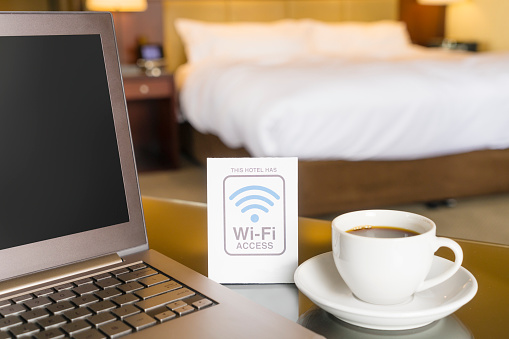
Hotel Wi-fi- has always been an excellent way to bring in more traffic. Below are eight ways that having strong, reliable wi-fi can have a significant impact on your bottom line and why it’s one feature you shouldn’t skimp on.
Wi-Fi seems to be a lifeline these days. There are apps in endless supply to help you find Wi-Fi hotspots no matter if you are in an airport or waiting in the lobby of a doctor’s office. Having Wi-Fi is an excellent way to improve traffic to your business but what does it mean for hotels? Forrester Research reported that 94% of those surveyed agreed that the most important thing that they look for in a hotel is quality Wi-Fi throughout the hotel and in their rooms.
The following are the 8 Nonnegotiable Rules for Hotel Wi-Fi and how Wi-Fi can make a big difference for your bottom line:
Serve your guests
Hospitality is vital when you own a hotel. There is an importance placed on providing and serving your customers whether they have just flown a few hours, or driven for nine – they still need to be served. Wi-Fi is a key part of this service. Ensuring that your customers are comfortable and well taken care of now includes providing high-quality Wi-Fi.
Secure your network
It shouldn’t be surprising that a Wi-Fi attack on an open network can take less than two seconds. While serving the needs of your customers, it is important to also protect your business. Having a Wi-Fi network leaves your company and its data vulnerable. Remember to secure you your Wi-Fi network by using a suitable firewall, profiling, and IDS/IPS. It’s also important to keep the software up to date on your computers in order to be able to efficiently monitor and protect your business.
Plan for capacity
Hotel Chatter reports that 94% of people cite Wi-Fi as the most important amenity. This means that you should assume that 94% of your guests will be using your Wi-Fi, at least. Just as you should plan on how many rooms you can support, you need to plan for how many devices that your Wi-Fi network can support. This helps you to better support and serve your hotel guests. USA today reports that hotel guests typically use the hotel Wi-Fi within seven minutes of checking in. This means that often before your guests have a drink at your bar, swim in your pool, or workout in your gym, they are using the Wi-Fi.
Adjust for demand
Similarly to planning for capacity, you should also expect to adjust to meet the change in demand. If your business grows, so too should your Wi-Fi capabilities. Not having a strong enough Wi-Fi to support the needs of your clients could be just as damaging, if not more so, than, say, the hotel’s pool being shut down for renovations. This is especially important when you are working with corporate guests. Corporations will not book with hotels that have faulty or inadequate wireless internet service. This would snowball into a corporate shutout, as other large companies would make similar decisions, all of which would have a drastic impact on your profits.
Access points
Access points are the key to the high performance of your Wi-Fi. Access points need to be where your customers need them most, in their rooms. This lowers interference and provides higher data rates. All of this improves the performance of your Wi-Fi network and leads to happier hotel guests. It is reported that 72% of travelers prefer Wi-Fi over wired connections, which shows you that having only a wired connection instead of a Wi-Fi access point in the room is no longer acceptable.
Track and monitor performance
You wouldn’t hire someone, place them in an office, and then leave them for years without so much as a checkup, right? You continuously monitor and measure your employee’s performance to ensure that they continue to aid the business and meet the needs of your customers. The same should be true of your hotel’s Wi-Fi – you need to check and measure its performance often to ensure your customers are getting the best service possible.
Picking the right Wi-Fi partner
One of the most important decisions is which provider to partner with for your Wi-Fi network. This is when it is especially important for you to know how many devices you will need to provide for. It is vital that you know how many devices you’ll need to support, as well as how many access points you feel you need to accommodate your guests. These will be your non-negotiating factors when choosing a partner that is right for you and your hotel. Keep in mind this partner will represent you to your customers, so if they aren’t reliable, and your Wi-Fi is cutting in and out during their stay, then you will have to waive or refund fees to customers, which would mean a loss in profit.
Wi-Fi should be free
The J.D. Power 2016 North America Hotel Guest Satisfaction Index Study reported that free Wi-Fi is one of the three most essential amenities that customers look for when deciding on a hotel. Wi-Fi, breakfast, and parking were the top three listed. If forced to choose, 71% of hotel guests said that they would select free Wi-Fi over complimentary breakfast or free parking. Not only could this impact the traffic brought to your hotel, but it could also affect what customers are willing to pay. Research shows that often customers are eager to pay more for a hotel with confirmed reliable Wi-Fi connectivity. This gives them peace of mind that once they check into the hotel, they will be able to complete their work or stream their shows without any interruptions.
Hospitality doesn’t end with check-in – Hotel Chatter explains that 38% of those surveyed say no Wi-Fi is a deal-breaker and will book elsewhere. Given how important Wi-Fi is to your guests, you should know what your needs are, and what the performance capability of your network is. These simple rules will help you better serve your customers during all of their current and future stays. Imagine if your Wi-Fi wasn’t performing at its peak – that would mean you could lose out of 71% of your business which would make a significant impact on your bottom line. Often, we fret over business expenses, but Wi-Fi shouldn’t be one, as it will provide the most significant return on your investment.

by Felicien | Mar 1, 2018 | Education
How often do you buy a new laptop, tablet or mobile phone? Does it seem like there’s an internal alarm clock that predicts the time of your next purchase? We can help you hit the “snooze” button and save more money.
Apple made news recently with an admission of its practice to release updates that would slow performance of older phones as a byproduct, indirectly increasing frustration and thereby prompting consumers to “need” to upgrade their phone. It’s been a long-running joke that, with two-year contracts with mobile service providers, consumers could count on increased frustrations near the 18-month mark to build anticipation for the next smartphone iteration.
The manufacturer’s suggested retail price (MSRP) of consumer goods relies on the basic elements of supply and demand. While consumers maintain the mentality of “upgrade every two years”, manufacturers released new products on a set timetable, and subsidized costs helped to feed our appetite for the newest, fastest tech with the coolest features. Who doesn’t love a built-in schedule feeding supply and demand? Desktop computing systems experience the effect, as well, though the phenomenon doesn’t receive the same coverage, perhaps because these systems have been around for longer than mobile devices and consumers have just come to accept the situation.
Now that the days of service contracts and subsidized phone costs are over, consumers hold more control over their technology – and their wallets. With the barrier to entry centering on higher costs — that are no longer subsidized — consumers are looking for ways to make all types of tech last longer. This is especially helpful given that the cost of tablets, most notably the iPad, continues to inch higher as our dependency on mobile technology increases. How can we make our smartphones, tablets, laptops, and desktop tech last longer and run more smoothly?
Desktops and Laptops
Review your system using these guidelines as a checklist, and see how some light housekeeping may help:
Is your system freezing or crashing more often?
Crashes and freezing can be a reminder to reboot, allow your applications to restart and reset, clear your memory cache and cookies, and just give your machine the chance to let go of anything it’s been unnecessarily holding onto in temporary files.
These can also be a sign of something more serious, and it may be a good idea to run an antivirus program, like Avast, to make sure you’re not a victim of malware, viruses, or ransomware attacks.
Is your storage nearly full?
When a hard drive fills over 75% capacity, the effect on a system is an overall slow-down. Consider moving to a free cloud-based storage solution, like Dropbox or Google Drive. If you’re an Amazon Prime user, take advantage of your benefit of unlimited photo storage that also offers you the ability to organize photos into albums that you can share with friends and family with just a click.
When was the last time you checked for and installed system updates?
Outdated operating systems can significantly decrease a system’s performance. Check for updates and install them, since these almost always contain updates that improve performance and maintain security.
Is your computer clean?
We don’t mean viruses here – we mean “clean”. Dust and particles can get down into crevices and gunk up innards. This can impede airflow, causing a system to overheat, and make your system work harder than it needs to operate effectively. A can of compressed air can do wonders with hidden dust particles in the tiniest of spaces.
Smartphones and Devices
Much like with any computer, smartphones and tablets need routine maintenance to perform at their best. Sluggish and slow speeds hinder your ability to get things done. Never is the phrase “time is money” truer than when trying to send an email or make a call, in attempt to conduct business and finalize a transaction.
Keep your mobile devices operating at their peak efficiency by regularly checking through the following areas:
Photo storage
Ever wondered why smartphones still offer the option of the shutter sound when taking pictures? The sound is both nostalgic and satisfying. We take photos of moments to help us remember – but we take more photos now compared to the days of film.
Our digital memories are eating up our digital storage. Cloud storage is an easy solution, but few take advantage of the opportunity. As we mentioned earlier, Amazon Prime users can take advantage of free unlimited photo storage and create shareable albums. This is a safer option than Facebook, given it’s a service you pay for, and you retain control of the account!
Email Inbox(es)
A single email message has an almost undetectable impact on your phone’s operation, but how many emails do you get in one day? A hundred? More likely a few thousand messages or more come to you throughout the average work week, and that fills space quickly in your device’s memory. De-clutter your inbox, and start seeing a difference.
How many applications do you have installed that you don’t use?
Applications can take up a lot of memory space. You can see which applications have the greatest impact on your phone’s settings, and eliminate applications that you haven’t used. Regain screen real estate, too!
How many applications are running?
Not only can applications take up space, but they can also drain your battery faster. Over time, this can wear down your battery which means it will just drain faster and faster, regardless of how many applications are running at any one time.
Internet windows
Much like on a desktop where you may have more than a dozen tabs open and running in a single Internet browser session, your phone will open a new window as many times as you like. Again, much like with your desktop browser that stores cookies and browser history that takes up RAM, your phone keeps this data stored, as well, slowing down operations.
When in doubt, restart
The occasional restart can act as a “reset” for your phone, and you may see an improvement in performance after rebooting.
Are there updates available?
Whether for an application or your operating system, there are reasons that updates are made available to consumers. Updates are intended to improve the overall operation of your mobile device, and it’s recommended that you keep your phone’s operating system and applications up to date.
Is your device clean?
Keep your screen wiped, your speakers clear of debris, and your camera lens and charging port clean. Dust and grime can creep into the tiniest of crevices and build up, affecting the interior workings of your phone.
Keeping your technology operating efficiently takes effort on your part, but the return on your time investment will extend their lifespan and decrease the long-term maintenance costs you would need to spend otherwise. Following these basic preventive maintenance tips will make your tech last longer and save you time – and money.

by Felicien | Mar 1, 2018 | Education
Nobody likes doing taxes, but everyone has to. Make sure you know when you and your company need to file them this year.
For individual taxpayers, the tax due date is usually the same each year: April 15th. The only exception is when April 15th falls on a weekend. Then, the IRS typically extends the due date to April 16th or 17th. The same is true for those filing an extension. Extensions are due on October 15th unless that date falls on the weekend. Then it is usually extended to October 16th or 17th. This rule also pertains to holidays. If the filing date falls on a holiday, then everyone gets an extra day or two to file.
Rules for Filing Dates for Business Owners
For business owners, the filing dates are not that simple unless your business is a sole proprietorship or single member LLC. Those filers typically must use the same dates as individual taxpayers. However, business owners may be required to file on other dates depending on several factors.
For business owners, the filing date is affected by what type of business entity it is. That’s because the type of business entity determines the company’s fiscal year. If your business is an S Corporation or an LLC, it is considered a flow-through entity and the taxes are due on the fifteenth day of the third month of the fiscal year, which is commonly March 15th (or March 16th or 17th if there’s a holiday or weekend involved).
The filing date for extensions for an LLC and S Corporation is September 15th, unless that date falls on a weekend or holiday. Then it might be extended to the 16th or 17th.
Partnerships
The tax return for a partnership should be filed on the 15th day of the 3rd month following the end of the company’s tax year. For example, if year-end for your business is December 31st, then the due date for tax filing is March 15th. Remember that these dates will change if the filing date falls on a weekend or holiday. March 15th (16th or 17th) is also the date when the individual partners should receive their Schedule K-1. This document shows each partner’s individual share of income or loss. Partners must have this document in order to file their individual tax returns, which would be due approximately one month later.
Limited Liability Company (LLC) with Multiple Members
Multiple-member LLCs may be taxed as partnerships in some states. If this is true where you live, then the filing dates remain the same as for a partnership. The date for distributing Schedule K-1 to the partners is the same as well or March 15th.
If the LLC ceases to exist, whether the company goes out of business or is moved into a C Corp, it’s important to file a short tax return right away. In most cases, the partners only have three and a half months to file this return. If partners fail to do this, the IRS may charge additional monthly penalties on top of regular tax liability.
In situations where a multiple-member LLC is taxed as an S corporation or regular corporation, the following rules apply:
Choose the most convenient filing date for your corporation. The only requirement is that owners have not filed a Subchapter S election. Quarter end dates are typically chosen.
Corporate tax returns are due and payable on the 15th day of the fourth month following the company’s fiscal year.
For a Subchapter S Corporation, taxes should be filed on the same filing date as the individual owner’s personal tax return. The Schedule K-1 shows the individual income for each owner. S Corporations are most often filed using a calendar end date of December 31st unless the corporation can show a valid reason for changing the date.
Charitable Organizations & Nonprofits
Charitable organizations and other nonprofits must file their taxes on the 15th day of the fifth month after the end of the organization’s fiscal year. In most cases, these organizations must file their taxes by May 15th. Charitable organizations only qualify for three-month extensions instead of six months. So, extensions would be due by August 15th.
Tips for Success
Learning the correct tax dates for filing is one of the big challenges for new business owners. Since the penalties can be exorbitant, many tax experts recommend setting up a tax calendar for your business. You can learn the dates by going online or speaking with an accountant. Some people prefer setting up an actual calendar with the dates circled that they can place somewhere in their office. Others prefer setting up a digital calendar using an app or Google.
This can prevent you from worrying about whether you’ve got some type of quarterly filing coming up soon. Business owners certainly have enough to worry about so solving an important issue like tax filings will relieve some of that stress. After you’ve got your tax calendar set up, ask someone in the know to check it over for you and make sure everything is correct.
Penalties & Interest
Filing your taxes on time and correctly is important for both individuals and companies. If you miss a filing date, penalties and interest begin to accrue immediately. The IRS will make no exceptions to these rules. That’s why it’s so important to know when to file and what forms you should file. If you aren’t confident in your ability to file a business tax return, hire a professional. Because of their expertise and experience, an accountant can often save you more than enough money to pay for their services.
Even if you have a professional accounting service doing your taxes for you, it can be a good idea to double check and make sure everything was filed on time each quarter and year-end. Most accountants will not only notify you, but they will send you copies of what they filed on your behalf.
Remember that filing an extension does give you extra time to pay, but it does not stop interest and fees from accruing.
Reducing your Tax Burden with the Right Strategy
There are so many ways to reduce your tax obligation. All it takes is a bit of strategy and planning. An accountant can recommend the best options to help your business take advantage of perfectly legal strategies. For instance, a 401k can be set up for small business investments, real estate, and hard-money lending. This can allow your company to defer taxes on profits.
Your company can make investments in automobiles, property and other big-ticket items. It can also purchase rental property. In many cases, those with rental property can show losses throughout the year due to property maintenance, interest and other charges. Many company owners hire their spouse and/or children. Though they will need to be assigned an actual job with weekly duties, this can be a powerful tax saving tool.
There are so many other ways for businesses to save money on their taxes each year. Don’t be afraid to discuss every legitimate method with your accountant.
