
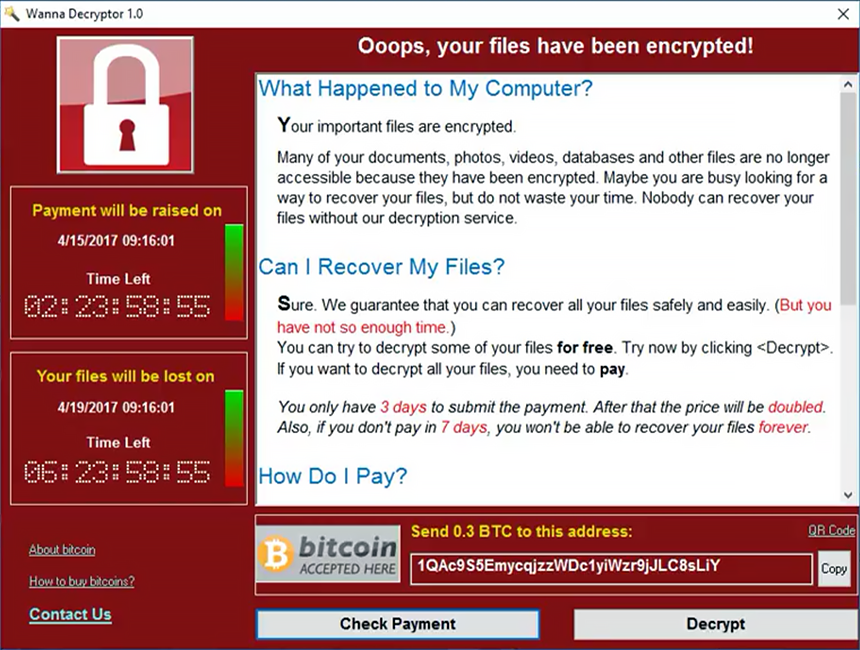
On May 12, 2017 a new strain of the Ransom.CryptXXX (WannaCry) strain of ransomware began spreading widely impacting a large number of organizations, particularly in Europe. This virus specifically targets Microsoft Windows computers.
A hacking tool known as Eternal Blue, developed by US CIA has been enhanced by the hackers to super-charge an existing form of ransomware known as WannaCry, three senior cyber security analysts said.
Wcry is demanding a ransom of $300 to $600 in Bitcoin to be paid by May 15, or, in the event that deadline is missed, a higher fee by May 19. The messages left on the screen say files will remain encrypted. It’s not yet clear if there are flaws in the encryption scheme that might allow the victims to restore the files without paying the ransom.
If you have yet to install the Microsoft fix—MS17-010— you should do so immediately. You should also be extremely suspicious of all e-mails you receive, particularly those that ask the recipient to open attached documents or click on Web links.
If you are an existing client of ours on our Managed Services Platform, you would have already received the fix through your weekly patching cycle, If not please check with your IT and or Security provider to ensure you are covered
Read Reuters Article : http://www.reuters.com/article/us-britain-security-hospitals-idUSKBN18820S

Microsoft Teams Tips and Tricks
Microsoft Teams is a chat-based work hub destined to change the way you communicate with team members. Follow these tips and tricks to make the most of your Office 365 experience. The goal of Office 365 developers is not only to make better productivity applications,...

Wisdom Wednesday: Tips and Tricks: Voice to Text Apps
Over time, you’ll learn how to master the art of creating the perfect voice to text transcriptions. Voice to text applications helps speed up workplace communications. Voice dictation can be a huge timesaver. Instead of using your device’s keyboard to...
Disabling SMBv1 – One Defense Against Wanna Cry Ransomware
As part of our ongoing efforts to warn the public about the Wanna Cry ransomware plague that is ravaging computer systems across the globe, the Computer Network Systems (CompNetSys) team is putting together educational articles such as this one to accurately describe...