
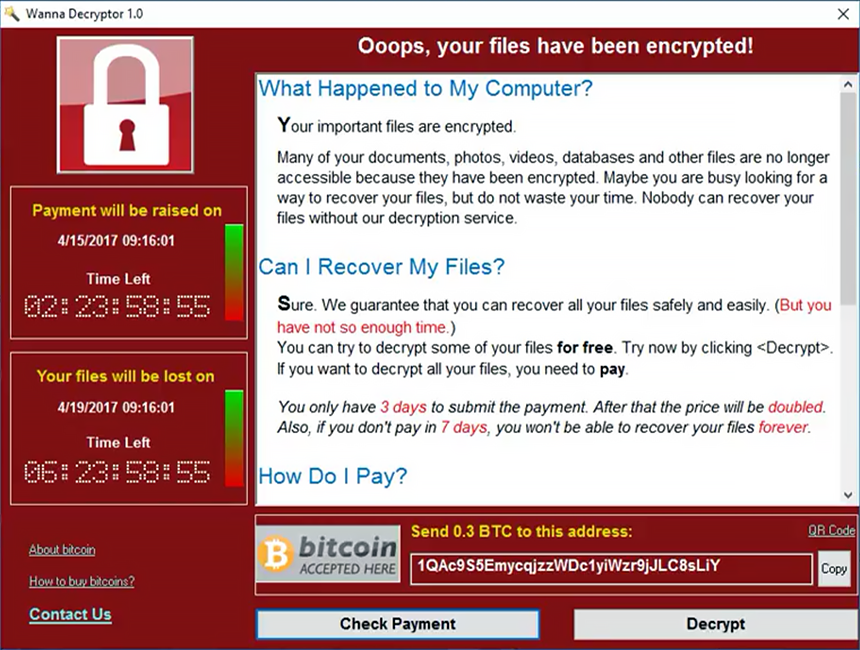
On May 12, 2017 a new strain of the Ransom.CryptXXX (WannaCry) strain of ransomware began spreading widely impacting a large number of organizations, particularly in Europe. This virus specifically targets Microsoft Windows computers.
A hacking tool known as Eternal Blue, developed by US CIA has been enhanced by the hackers to super-charge an existing form of ransomware known as WannaCry, three senior cyber security analysts said.
Wcry is demanding a ransom of $300 to $600 in Bitcoin to be paid by May 15, or, in the event that deadline is missed, a higher fee by May 19. The messages left on the screen say files will remain encrypted. It’s not yet clear if there are flaws in the encryption scheme that might allow the victims to restore the files without paying the ransom.
If you have yet to install the Microsoft fix—MS17-010— you should do so immediately. You should also be extremely suspicious of all e-mails you receive, particularly those that ask the recipient to open attached documents or click on Web links.
If you are an existing client of ours on our Managed Services Platform, you would have already received the fix through your weekly patching cycle, If not please check with your IT and or Security provider to ensure you are covered
Read Reuters Article : http://www.reuters.com/article/us-britain-security-hospitals-idUSKBN18820S

What’s Inside Health IT?
Health information technology is more talked about than really understood. Part of the reason for this is that providers and their staffs usually interact with a restricted subset of health IT – the Electronic Health Record (EHR), the radiology imaging system, the...

Facebook Data Breach
Are you aware of a potentially serious data breach involving Facebook? According to many top news outlets, 50 million users accounts may have been impacted and Facebook now faces potential huge fines in the EU. Read more...
Playing in the Digital Highway: Improperly Secured Data Puts Students At Risk
When you think of cybersecurity, protecting credit card numbers or government files might come to mind, but your students’ PII (Personally Identifying Information) is a target for hackers, too. Young people make great targets because they’re a clean slate. They’re not...